On the opening day, ASEAN leaders held closed-door meetings to address regional stability, focusing primarily on the situation in Myanmar. Philippine President Ferdinand Marcos Jr., the host nation’s leader, stated that members agreed to pursue “constructive and principled engagement” regarding the country. This position reaffirms the bloc’s demand for the Myanmar military junta to implement the five-point peace consensus established after the 2021 coup. However, the path to normalizing relations remains complicated; while the Myanmar regime has shifted its public facade toward a civilian government, Philippine Foreign Secretary Theresa Lazaro told Kyodo News that the decision to restore full relations will be left to Singapore, which will hold the rotating ASEAN chair next year.
Leaders also discussed strategies to mitigate soaring energy costs driven by the ongoing war in the Middle East. Given the region’s heavy reliance on Middle Eastern oil and gas, discussions included the potential establishment of a joint ASEAN petroleum reserve, an initiative Japan is reportedly planning to support. In parallel, the summit addressed territorial disputes in the South China Sea, a primary point of contention between ASEAN and China. While tentative agreements have been reached on approximately 80 percent of the clauses for a Code of Conduct, core issues regarding legal binding force remain unresolved. The Associated Press reported that a breakthrough on these specific issues during the current meeting appears unlikely.
U.S. President Trump, visiting Asia for the first time since the recent midterm elections, is expected to hold a summit with ASEAN on November 17. According to the South China Morning Post, he is likely to urge Southeast Asian nations to join “Pax Silica,” a U.S.-led consultative body for artificial intelligence supply chains. He will also convene the Quad—a security forum involving the U.S., Japan, Australia, and India—for the first time in two years to discuss responses to China’s expanding military influence in the Indo-Pacific. Japanese Prime Minister Takaichi plans to seek dialogue with Trump through this forum and other events during his stay.
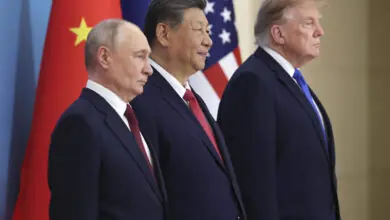
Following the conclusion of the ASEAN summit, many leaders, including Trump, are expected to travel to Shenzhen, China, for the Asia-Pacific Economic Cooperation (APEC) summit on November 18 and 19. The White House confirmed on November 13 that Trump aims to hold a summit with Chinese President Xi Jinping and participate in the first-ever trilateral summit involving the U.S., China, and Russia, which would include Russian President Vladimir Putin. South Korean President Lee Jae-myung will also maintain a dense diplomatic schedule, attending the ASEAN-Korea, Mekong-Korea, and East Asia Summits on November 16 and 17, while holding bilateral talks with various leaders in between.
The immediate focus for delegates remains the resolution of the remaining South China Sea Code of Conduct clauses and the logistics of the upcoming U.S.-China-Russia trilateral meeting in Shenzhen.