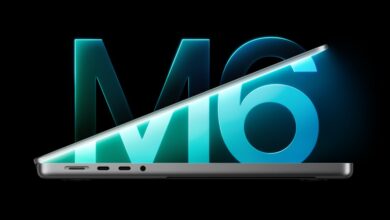
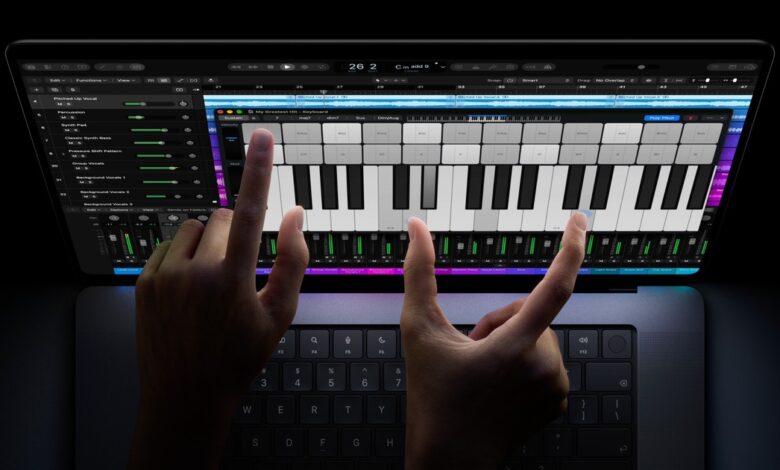
Apple has officially unveiled the MacBook Pro with PROLED XDR Display, marking the first time the company has introduced both tandem OLED technology and touch interface to the Mac platform. This move signals a significant shift in the company’s hardware strategy, bifurcating the existing lineup into two distinct tiers: the traditional LCD-based MacBook Pro and the new, premium OLED model. The technological significance of this split lies not just in the display panel itself, but in how it redefines the entry price point for high-end Macs, pushing the top-tier experience to a $2,899 price tag, while the standard 14-inch M6 MacBook Pro remains at $1,999.
The PROLED XDR display utilizes tandem OLED layers, a technology that allows for deeper blacks and higher brightness without the need for the heavy backlighting systems found in mini-LED LCD screens. This architectural difference has tangible physical consequences. The new OLED models weigh 3 pounds, notably lighter than the 3.5-pound standard M6 MacBook Pro. The weight reduction is attributed primarily to the display assembly, as OLED layers are inherently lighter than their liquid crystal counterparts. Furthermore, the OLED models replace the notch cut into the screen for the 12-megapixel Center Stage camera with a Dynamic Island, a design element previously exclusive to iPhones. This change addresses a long-standing user concern regarding the visual intrusion of the notch on professional laptops.

Under the hood, both the OLED and non-OLED 14-inch models feature the new M6 chip, which is built on Apple’s new 2-nanometer process. This fabrication node is designed to improve efficiency, supporting Apple’s claim of 24-hour battery life, though independent observers caution that such figures typically refer to low-brightness video playback tests rather than heavy professional workloads. The M6 includes a 12-core CPU and a 12-core GPU. Apple claims a 30% jump in graphics performance. Independent benchmark comparisons between an M6 Mac mini and the previous M5 MacBook Pro in Geekbench 6 Metal GPU tests showed a 24% improvement, suggesting Apple’s claims are likely accurate, though real-world performance will vary. The chip also features increased memory bandwidth of 170Gbps, dependent on the user opting for 24GB or 32GB of unified memory.
Connectivity has also seen a generational update. Thanks to Apple’s new N1 chip, the 14-inch M6 MacBook Pro now supports Wi-Fi 7 and Bluetooth 6. Previously, these standards were reserved for models equipped with M5 Pro or M5 Max chips. The hardware chassis of the non-OLED model remains familiar, retaining three Thunderbolt 4 ports, a MagSafe charging port, HDMI, an SD card reader, and a 3.5mm headphone jack. Notably, there is no support for Thunderbolt 5, which offers improved power and data throughput, on this model. The 16-inch MacBook Pro does not receive the M6 chip; it remains available only with M5 Pro or M5 Max processors, meaning those seeking the most powerful Apple silicon without the OLED touchscreen can technically save money by opting for the current-generation larger models.
The software experience is heavily tied to Apple Intelligence, which aims to make applications smarter and more useful. In Safari, the AI powers tools that automatically organize tabs into topics, notify users of website changes such as product restocks or price drops, and allow for the creation of custom extensions based on natural language descriptions. In the Shortcuts app, users can create complex automations simply by describing the desired outcome, while the Photos app gains intelligent editing capabilities. The user interface is refined through “Liquid Glass” design elements, with a new slider in Settings allowing users to personalize the visual effect from ultraclear to fully tinted. App icons have also been updated to be sharper and more defined.
Environmental considerations remain a cornerstone of Apple’s marketing, with the new MacBook Pro containing 55 percent recycled content overall. This includes 100 percent recycled aluminum in the enclosure, 100 percent recycled cobalt in the battery, and, for the first time for Apple, 100 percent recycled tantalum in multiple capacitors. The manufacturing process utilizes 45 percent renewable electricity across the supply chain, and the packaging is 100 percent fiber-based and designed for recycling. The device is designed to be durable and repairable, meeting Apple’s standards for energy efficiency and safe chemistry.
The commercial implications of this launch are significant for the Mac ecosystem. The price gap between the $1,999 base model and the $2,899 OLED model is substantial, creating a clear tier separation. For many users, the standard M6 MacBook Pro, with its updated chip, Wi-Fi 7 support, and familiar chassis, may represent a more reasonable value proposition. However, the absence of the M6 in the 16-inch model and the reservation of top-tier performance chips for higher-end configurations suggest a future where display technology and processor power are increasingly linked. As memory and storage costs rise, the premium push for OLED and touch may drive the cost of high-end Macs even higher. For now, the 14-inch M6 MacBook Pro is up for preorder, with shipments beginning on November 6, offering a capable mid-range option in a rapidly shifting landscape.