

The CJEU’s judgment follows preliminary reference proceedings initiated by two Spanish courts seeking guidance on whether the 2024 law could lawfully extinguish terrorism-related prosecutions and financial liability claims tied to the independence movement. The cases at the center of the inquiry involved 12 individuals facing terrorism charges and 35 former Catalan officials accused of misusing public funds to organize the 2017 independence referendum and promote secession abroad. The court rejected nearly all challenges to the law’s validity, affirming that the adoption of amnesty laws falls primarily within the prerogative of member states, particularly when pursued for objectives of national reconciliation or political compromise.
“The court finds that the Spanish amnesty law concerns a field which falls within the competence of Member States,” stated Judge Koen Lenaerts during the delivery of the verdict. The court further clarified that it does not oppose legislation designed to reduce institutional and political tensions and facilitate reconciliation, provided such laws result in the extinction of criminal liability. This ruling aligns with the position long held by the Spanish government, which argued that the amnesty was a matter of national sovereignty regarding political crimes.

The legal measure was approved by the Spanish lower house in 2024, serving as the cornerstone of a political agreement that allowed Prime Minister Sánchez to form a minority government following inconclusive elections in 2023. In exchange for parliamentary support from Catalan secessionist parties, Sánchez proposed the amnesty to annul the criminal records of hundreds of officials and activists involved in the secessionist push from 2011. The law specifically targets conduct connected to the Catalan independence movement between November 2011 and November 2023. While the measure drew sharp criticism from the conservative People’s Party (PP), which characterized the pardoning of alleged sedition and terrorism as unreasonable, the Spanish Constitutional Court had previously supported the law’s constitutionality.
Despite the broad endorsement, the CJEU established specific limits and procedural requirements. The court noted that the amnesty cannot apply where claimed terrorism intentionally caused serious human rights violations, a determination left to national courts on a case-by-case basis. Additionally, the judges ruled that Spain cannot mandate courts to terminate proceedings or lift interim measures while a request for guidance is still pending before the EU court. Such a requirement would undermine the integrity of the preliminary ruling process. The court also dismissed arguments that a hypothetical independent Catalonia would indirectly harm the EU budget by reducing Spain’s future contributions, ruling that the amnesty may extend to cases involving only Spanish public funds, provided EU funds are not directly at issue.

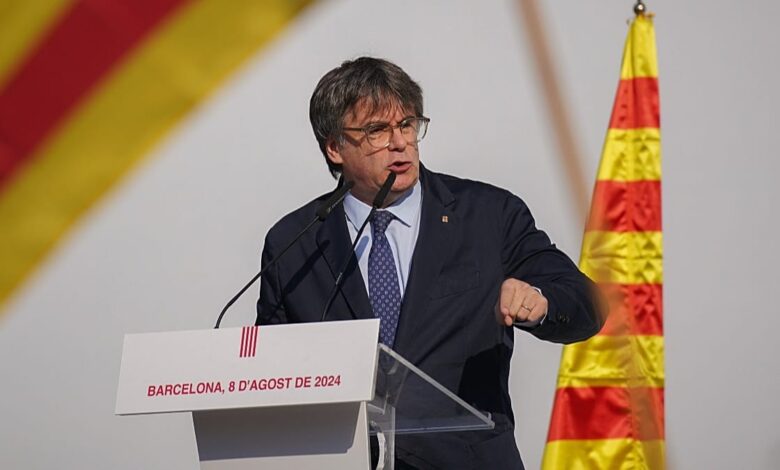
The ruling has significant practical consequences for the ongoing legal proceedings in Spain. By confirming the law’s compatibility with EU law, the decision allows stalled terrorism and public funds cases to move forward in Spanish courts, potentially leading to the termination of proceedings for those covered by the amnesty. This includes the possibility for the return of Carles Puigdemont, the exiled leader of the movement, who remains the target of an arrest warrant for misuse of public money related to the 2017 referendum. Spanish Justice Minister Félix Bolaños stated in a televised address that the ruling removes any doubt about the law’s legality and that the amnesty has helped normalize the political situation in Catalonia.
The decision marks the conclusion of a major legal challenge to the amnesty but does not end all related litigation. National courts in Spain must now apply the CJEU’s framework to individual cases, determining whether specific defendants fall within the scope of the amnesty or the exceptions for serious human rights violations. The ruling reinforces the principle of national competence in matters of political amnesty while maintaining the supremacy of EU law in procedural matters, setting a precedent for how member states may address political conflicts through legislative means.