
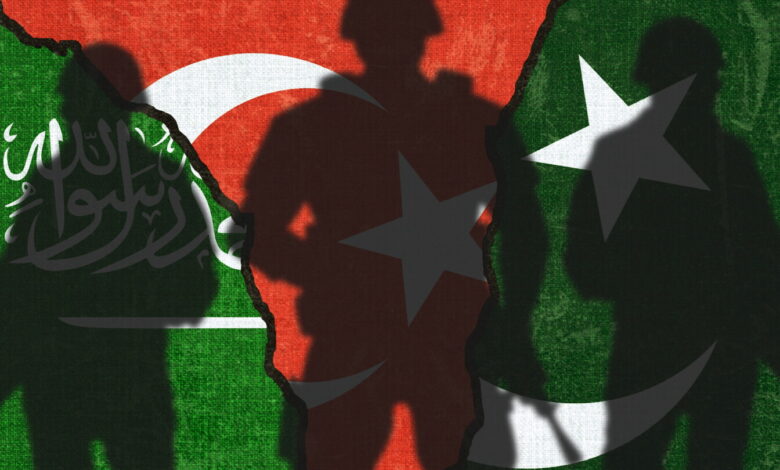
The alliance, formed by Pakistan, Saudi Arabia, and Turkey, was codified by the Mecca Joint Defense Agreement signed on August 7, 2026. Under the pact, an armed attack against one member is treated as an attack against all three. At their first Strategic Political and Defense Committee meeting in Istanbul on August 31, the nations agreed to establish a permanent secretariat, with Pakistan holding the secretary-generalship for the first three years.
Mahmood’s selection highlights the alliance’s anticipated focus on asymmetric warfare. His 36-year military career, which ended with his retirement in April 2023, was defined by operations against militant groups utilizing guerrilla tactics, drones, and intelligence-driven strikes. He commanded an infantry division in North Waziristan, a key area in Pakistan’s campaign against militants operating near the Afghan border, before serving as director general of the Analysis Directorate at Inter-Services Intelligence. His background in strategic analysis and counter-terrorism aligns with the security challenges facing the alliance, particularly regarding threats to Saudi energy infrastructure and shipping corridors from Yemen’s Houthis, who combine conventional forces with drones and missiles.
The timing of the alliance’s activation coincides with a significant escalation in Pakistan’s own counter-terrorism challenges. Since the Taliban’s return to power in Afghanistan in 2021, the Tehrik-i-Taliban Pakistan (TTP) has resurged, leveraging a “permissive environment” across the border. The group has expanded its operational reach through the adoption of modern technology, particularly commercial drones. Pakistani police reported foiling 341 drone attacks in Khyber Pakhtunkhwa province in the first half of 2026. In 2025, the Pakistani military faced approximately 405 drone attacks by the TTP and its affiliates, the majority of which were repelled.
TTP’s technological advancement includes the use of drones for surveillance, reconnaissance, and precision targeting, as well as the acquisition of anti-drone technology to disrupt state security operations. The group announced the establishment of a dedicated drone unit in December 2025. These capabilities have increased the lethality of attacks; in the first half of 2026, more than 100 drone attacks in Khyber Pakhtunkhwa resulted in at least 29 security personnel killed and 89 injured.
Pakistan’s response to the TTP has shifted from large-scale kinetic operations to small-scale, intelligence-based operations (IBOs) and cross-border airstrikes. This pivot has been strained by civil-military tensions and interprovincial disagreements over the scope of military action. In late February 2026, Pakistan conducted airstrikes on multiple Afghan cities, including Kabul and Kandahar, leading to border skirmishes. Pakistan’s Defense Minister declared an “open war” on Afghanistan at the time.

Recent tensions have intensified following a September 18 attack in Kohat district, Khyber Pakhtunkhwa, which killed 23 people, mostly police, and injured approximately 100 others. In response, Pakistan launched “Operation Ghazab lil Haq” against terrorist hideouts. On September 21, Pakistan conducted drone attacks on 10 locations in Afghanistan, including Kunar and Paktika provinces. Pakistani authorities claimed the strikes targeted terrorist infrastructure and killed more than 28 militants. However, Afghan officials condemned the strikes as a violation of sovereignty, stating that three civilians were killed. The credibility of Pakistan’s counter-terrorism claims remains contested, with Kabul accusing Islamabad of causing civilian casualties under the guise of anti-terror operations.
The establishment of the Mecca Defense Alliance’s secretariat in Riyadh will likely prioritize coordination on these shared asymmetric threats. The next phase of the alliance’s development is expected to focus on operationalizing the joint defense mechanisms outlined in the August agreement, with further strategic discussions anticipated among the three member states.