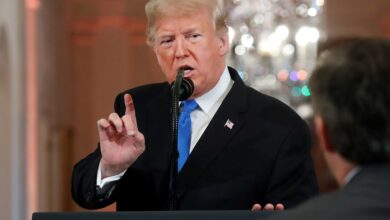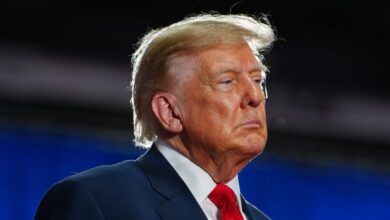
The president’s comments underscore a recurring point of tension between the White House and the Nobel Committee, an independent body based in Oslo that selects the laureate without government input. Trump has been outspoken about his desire to receive the award, a sentiment he reiterated during the rally by claiming he had settled eight wars and was “about to settle or win two more.” He did not provide specific evidence for these claims. Instead, he directed his criticism at the committee’s members, stating that the Nobel Peace Prize has been “forever discredited by a handful of radical ideologues who are anti-democracy and really enemies of civilisation.” He further characterized the decision as “disgraceful and embarrassing.”
The 85-year-old Pillay, a South African who served as the UN High Commissioner for Human Rights and as a judge at the International Court of Justice, was recognized by the committee “for her efforts to promote peace and international law.” Jørgen Watne Frydnes, chair of the Norwegian Nobel Committee, explained that Pillay’s work had been “instrumental in ensuring that war crimes, crimes against humanity, and genocide are prosecuted.” According to the committee, her contributions paved the way for a “more comprehensive global legal order.”
Pillay reacted to the news from Nuremberg’s Palace of Justice, where she expressed surprise, saying, “it must be a joke.” She thanked the crowd that had gathered to applaud her and offered a lighthearted response to the political fallout, joking, “If you clap a little bit more I may share this prize with Trump.”
This is not the first time Trump has publicly complained about missing out on the Nobel Peace Prize. In 2025, the award was given to Venezuelan opposition leader María Corina Machado. Last year, the White House accused the committee of placing “politics over peace” following that decision. In a notable development last year, Machado personally gifted her Nobel medal to Trump during a meeting at the White House, stating the gesture was in recognition of his commitment to Venezuela’s freedom. Trump praised the move on social media as “a wonderful gesture of mutual respect.” However, the Nobel Committee later clarified that the prize is not transferable, a rule that stands regardless of any physical exchange of the medal.
The independence of the selection process has been a point of clarification for Norwegian officials. Last year, Norwegian Prime Minister Jonas Gahr Støre explained to Trump that the decision rests solely with the independent committee based in Norway, not the Norwegian government. Despite these clarifications, the US president’s rhetoric has remained critical, framing the committee’s choices as ideologically driven rather than merit-based.
The divergence in perspective highlights the complex intersection of diplomatic recognition and domestic political strategy. While the Nobel Committee emphasizes the legal and humanitarian contributions of its laureates, such as Pillay’s role in strengthening international justice mechanisms, the White House views the award through the lens of geopolitical influence and personal recognition. The president’s repeated assertions of peace settlements, contrasted with the committee’s focus on international law and human rights enforcement, illustrate the differing criteria used to define and measure peace in the current political landscape.
As the Nobel Committee continues to operate independently, the public spats between the US presidency and the organization serve as a reminder of the prize’s sensitivity in a polarized global environment. For Pillay, the award validates decades of work in international law, while for Trump, the omission remains a subject of public grievance. The next few weeks may see further commentary from both sides, but the committee’s mandate to select based on its own criteria remains unchanged, insulating the prize from direct political pressure, albeit not from political scrutiny.