
The US move was described by Ukrainian President Volodymyr Zelenskyy as a “weak decision by strong partners,” who he said were using the peace negotiations as a “smokescreen.” Zelenskyy stated that it was “certainly not how partners should treat each other,” marking a sharp break in tone following his visit to Washington last month, where he lobbied US lawmakers for tougher sanctions on Russia. Trump justified the deal on his Truth Social network, citing the need to reduce soaring fuel prices in the United States, which he attributed to his decision to engage in conflict with Iran.
US envoy Steve Witkoff, who was in Florida meeting with Ukrainian officials alongside Jared Kushner, later described the trilateral discussions as “productive.” The talks focused on a postwar economic package for Ukraine and the potential establishment of a new security architecture between Europe and Russia. However, the timing of the sanctions relief has drawn sharp criticism from both sides of the US political aisle. Senate Democratic leader Chuck Schumer, along with Senators Jeanne Shaheen and Elizabeth Warren, labeled the announcement a betrayal of Ukraine, European allies, and US national security. They urged the President to end the war with Iran rather than “funding Russia’s war machine.” Prominent Republicans, including Congressman Don Bacon, also condemned the policy, stating that it lacked moral clarity.
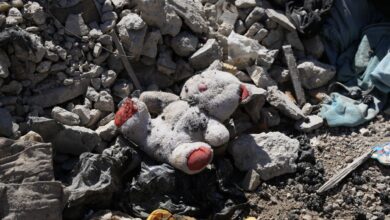
The diplomatic tensions unfold against a backdrop of intensifying military strikes. Russian air attacks on the southeastern Ukrainian city of Zaporizhzhia killed at least 15 people, according to the Ukrainian prosecutor’s office. Zelenskyy noted that Russia responded to the lifting of diesel sanctions by dropping five glide bombs on residential buildings. He said, “Today, Russia expressed its thanks for the lifting of sanctions on diesel exports by dropping five glide bombs on residential buildings in Zaporizhzhia.” Rescuers continued to search for survivors under the rubble as of Saturday.
Russian forces also struck three cargo vessels in and around Ukraine’s Black Sea ports on Friday, according to Russia’s defence ministry. The ministry claimed the vessels were supplying the Ukrainian military, though this assertion has not been independently verified. Ukrainian officials reported that Russian strikes killed three people and wounded at least eight across Ukraine on Friday, part of a broader campaign that has killed more than 50 people over the past three days. In a separate development, Ukraine struck a major datacentre operated by Russian technology company Yandex in the Kaluga region, partially disabling the facility in the second such action in consecutive days.
The convergence of peace negotiations and escalating military violence highlights the fragility of the current diplomatic track. As the US seeks to balance domestic fuel price concerns with its support for Ukraine, the next expected step involves the potential formalization of the security architecture discussed in Miami, though the immediate sanctions reversal has cast a shadow over the efficacy of the talks.