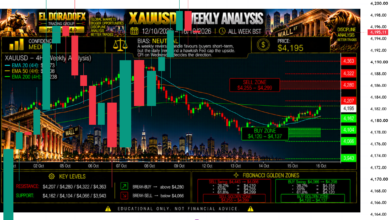
The recent volatility comes against a backdrop of significant depreciation for gold and other base and precious metals. Since hitting an all-time high of $5,627 on January 29, gold has lost over 25% of its value. The metal remains down approximately 5% year-to-date, a performance that has lagged behind traditional safe-haven currencies. In contrast, the U.S. dollar, Japanese yen, and Swiss franc have all appreciated, with the dollar index recently reaching a 17-month high. This strength in the greenback has made gold more expensive for foreign buyers, dampening demand in key markets such as Asia and Europe.
The primary driver of gold’s underperformance is the opportunity cost associated with holding a non-yielding asset in a high-interest-rate environment. U.S. Treasury bond yields have reached their highest levels since 2002, compelling investors to favor fixed-income securities over bullion. The Federal Reserve’s decision to raise interest rates in September to a range of 3.75%–4.00% has further tightened financial conditions. While higher rates are intended to curb inflation, they invariably hurt assets that do not generate income. This dynamic has not affected all metals equally; silver and platinum have suffered sharper declines, losing 14% and nearly 20% of their value respectively, due to their heavy reliance on industrial demand which is sensitive to economic slowdowns.
“A pause in rate hikes will weaken the dollar and lower real yields, thus reducing the cost of holding gold.”
Image by PDPhotos on Pixabay
Market sentiment regarding future monetary policy has shifted in recent weeks, providing a catalyst for the current rebound. Officials, including New York Federal Reserve President John Williams, have signaled that there is no immediate rush for additional rate increases. Consequently, market pricing for an October rate hike has dropped significantly to 22%, down from approximately 70% just one week earlier. San Francisco Federal Reserve President Mary Daly has also noted that if recent shocks from tariffs and oil prices prove to be temporary, further tightening may be unnecessary. This perceived softening of the hawkish stance has led to a pullback in the dollar and yields, allowing gold to recover some of its recent losses.
Despite the near-term relief, structural headwinds remain. The shift toward electric vehicles continues to erode long-term demand for platinum, which has historically relied on autocatalysts for more than half of its consumption. Similarly, silver faces supply-side pressures from new solar panel recycling methods, which could exert structural downward pressure on prices following a nearly 150% rally in 2025. However, physical demand indicators suggest that lower prices are stimulating buying activity. Sales of gold from the Perth Mint nearly doubled in September to 47,300 ounces, the highest level in seven months, indicating that retail and physical investors are stepping in at these lower price points.
Long-term forecasts remain divided but largely constructive for the latter half of the decade. Analysts project that gold could move above $5,000 per ounce in 2027, supported by steady purchases from exchange-traded funds and growing sovereign demand from global central banks. Continued political tension in Europe and instability in international government bond markets are expected to keep institutional and retail buyers leaning toward safety. Additionally, the expansion of Asian market infrastructure, including Hong Kong’s planned central clearing system and Singapore’s new central bank vaulting services, may broaden the buyer base and provide additional structural support. For now, however, the path to recovery remains contingent on the Federal Reserve’s ability to deliver a sustained pause in tightening, a move that would weaken the dollar and reduce the real yield burden on the asset.
John Harris covers the economy with a focus on trade, financial policy, inflation, markets, and major business developments. He follows economic data, government decisions, central-bank developments, and changes in international commerce. John aims to explain what the numbers show while avoiding unnecessary speculation, giving readers a practical view of wider economic conditions.