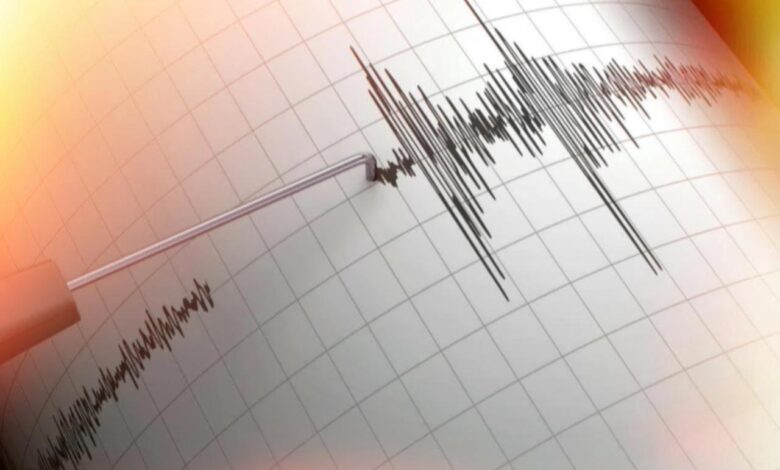
This event follows an unusually dense seismic swarm that rattled the Sea of Marmara off Istanbul’s coastline over a 24-hour period between August 19 and 20. Authorities recorded 32 distinct tremors in the region, with magnitudes ranging from 1.1 to 3.2. The strongest tremor in this sequence, measuring 3.2, struck at 5:43 p.m. local time on Wednesday. The activity accelerated in the evening, with a 2.6-magnitude earthquake recorded at 7:17 p.m., followed by a 2.5-magnitude tremor at 8:58 p.m. and a 1.9-magnitude quake at 10:51 p.m. The seismic activity persisted throughout the night, with 21 additional tremors detected between midnight and 8:18 a.m. Thursday. Focal depths for these events generally varied between 7 and 17 kilometers. No casualties or structural damage have been reported from the swarm.
Concurrently, southern Türkiye experienced a separate sequence of tremors on a Sunday, beginning with a magnitude 4.8 earthquake in the Saimbeyli district of Adana province at 2:19 p.m. local time. A second magnitude 4.9 quake struck the same district at 2:36 p.m., followed minutes later by a magnitude 5.2 earthquake in the Sumbas district of neighboring Osmaniye province at 2:43 p.m. AFAD stated that no adverse situation had been reported at the time of the initial assessment, with field survey work continuing to verify conditions. The tremors were felt in neighboring provinces, including Adana, which was significantly affected by the massive February 6, 2023, earthquakes that killed over 53,500 people in Türkiye and nearly 6,000 in neighboring Syria.
Seismic Context and Risk Assessment
The Marmara Sea region sits near the North Anatolian Fault, one of the most active fault lines in the world. The area has long been monitored for seismic activity due to its proximity to densely populated Istanbul. Scientists have noted that the fault is capable of producing a magnitude 7 or greater earthquake, with probability estimates for the coming decades hovering between 40% and 60%. While magnitude 3.5 earthquakes are generally classified as minor and rarely cause structural damage, they can be widely felt, particularly in areas with soft ground or tall buildings.
Türkiye has experienced high levels of seismic activity recently. Over the past year, the country recorded more than 53,000 earthquakes, averaging six per hour. The vast majority of these were harmless, with fewer than 500 exceeding magnitude 4. Balikesir province was the most active, recording approximately 21,000 earthquakes over a four-and-a-half-month period, including two magnitude 6.1 events in August and October. A notable magnitude 6.2 tremor also occurred off the coast of Silivri, near Istanbul, in April.
Despite the high frequency of seismic events, human casualties have remained remarkably low, with only three recorded deaths and fewer than 600 injuries over the past year. However, officials maintain that preparedness, public awareness, and urban renewal projects remain critical for minimizing damage from future major earthquakes. Professor Ovgun Ahmet Ercan has urged the public not to panic over recent quakes, warning that earthquake forecasting cannot be based solely on the number of small tremors.