
In retaliation, the Houthis announced a blockade on July 20, 2026, targeting Saudi oil exports through the Bab al-Mandab Strait. They subsequently struck Saudi petroleum facilities and oil tankers in the Red Sea. In early October, Saudi-backed government forces began retaking territory captured by the Houthis on September 10, 2026, when the group seized Yemen’s Red Sea coastline and strategic islands. Saudi Arabia has launched a punishing air assault on Houthi positions, with France, Pakistan, and the United States sending personnel to assist the kingdom in countering the offensive.
The resurgence of conflict is driven by a shift in Houthi strategy. For years, the group’s domestic legitimacy was tied to its support for Palestinians, particularly following Israel’s assault on Gaza in October 2023. However, after Israel’s stated commitment to a ceasefire in Gaza in October 2025, the Houthis paused their attacks on Israel to avoid open conflict with Tel Aviv. Instead, they shifted their focus to Saudi restrictions on their airspace and seaports. In a June 2026 speech, Houthi leader Abdul Malik al-Houthi declared the group ready for combat, framing the conflict as a response to over 11 years of Saudi aggression. This narrative shift allowed the group to consolidate its control over Yemen, a political objective it would pursue regardless of broader regional agreements.

The violence in Yemen is increasingly viewed through the lens of the broader geopolitical contest for the Red Sea. Stretching from the Suez Canal to the Bab el-Mandeb Strait, the region covers approximately 438,000 square kilometers and serves as a critical maritime route for global trade and energy. Approximately one-third of east-west maritime trade passes through this waterway. The area has become a focal point for competition between global powers, including the United States and China, and regional actors such as Saudi Arabia, Iran, and the United Arab Emirates.
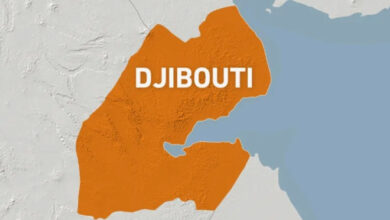
China has deepened its footprint in the region, with cumulative investment in Egypt’s Suez Economic and Trade Cooperation Zone exceeding $5 billion by the end of 2025. Djibouti, at the southern entrance to the Red Sea, hosts both Camp Lemonnier, the only permanent American military base in Africa, and a Chinese military base just 10 kilometers away. Meanwhile, Turkey has expanded its influence through military cooperation and economic interests. These external investments often exacerbate local tensions, as competitive approaches by Middle Eastern states undermine existing collective security mechanisms in the Horn of Africa.
The instability in the Red Sea is not solely a product of great power rivalry but also stems from unresolved local conflicts. The ongoing war in Sudan, the fragility in Yemen, and tensions in the Horn of Africa create an environment where armed groups utilize the maritime domain as a tool for political pressure. Littoral states like Djibouti and Eritrea have leveraged their strategic geography to monetize their sovereignty, hosting multiple external military bases. For instance, Djibouti serves as a crowded hub for great powers while refusing to host Russia, whereas the Sudanese Armed Forces have converted Port Sudan into an asset for securing geopolitical influence.

Experts suggest that the current crisis represents a visible manifestation of a deeper imbalance in the maritime security architecture. The region is no longer merely a transit corridor but a strategic space where national security, economic transformation, and digital sovereignty intersect. A proposed “Red Sea compact” between the Intergovernmental Authority on Development and the Gulf Cooperation Council, emphasizing transparency and mutual recognition, has been identified as a potential path to restore stability. However, until such frameworks are implemented, the Red Sea remains a high-risk zone where the intersection of local warlordism and global competition continues to threaten the flow of global commerce.
As Saudi forces continue their aerial campaigns and the Houthis maintain their blockade, the next phase of this conflict will be determined by whether regional states can establish a unified security architecture. The ability to secure the Bab al-Mandab Strait is no longer just a military objective but a critical economic imperative for global markets dependent on uninterrupted energy and trade routes.