
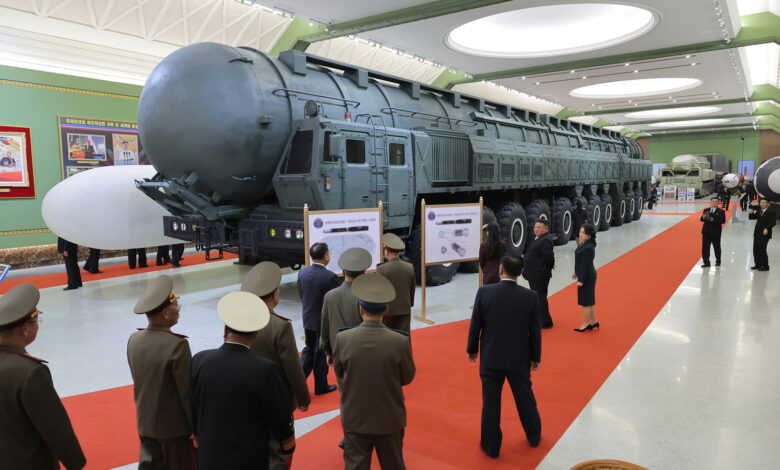
The opening of the museum coincides with a recent series of ballistic missile launches. South Korea’s Joint Chiefs of Staff (JCS) confirmed that multiple ballistic missiles were fired toward the sea off the east coast on Monday. According to the JCS, one missile launched from the Pyongyang area traveled more than 900 kilometers (559 miles). Japanese Deputy Defence Minister Takashi Koyari stated that at least two missiles were launched 17 minutes apart, landing in waters outside Japan’s exclusive economic zone. Koyari noted that the second missile flew over 910 kilometers (565 miles) on an “irregular” flight path, suggesting it may have been a hypersonic weapon.
While state media did not disclose the specific location or size of the new museum, accompanying photographs indicate the facility may be constructed underground, featuring long, tunnel-like rooms for weapon displays. Images released by state media showed various categories of military hardware. One room displayed intercontinental ballistic missiles (ICBMs), including both newer solid-fuel models such as the Hwasong-20 and liquid-fuel variants like the Hwasong-17. Other exhibits included hypersonic intermediate-range ballistic missiles (IRBMs), submarine-launched ballistic missiles (SLBMs), and a range of unmanned aerial vehicles, including large combat and reconnaissance drones as well as smaller suicide drones.
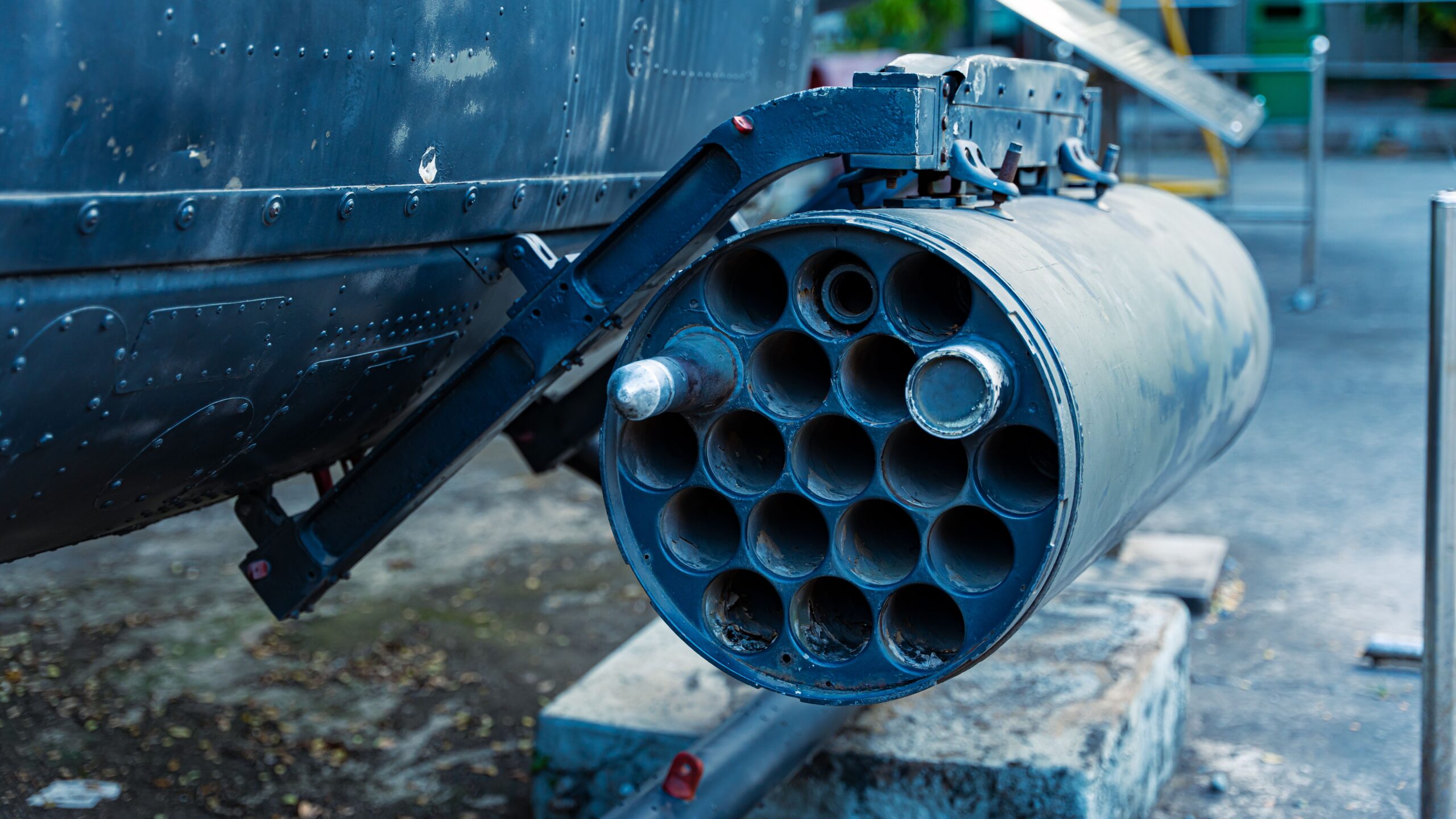
The museum also features cruise missiles, surface-to-air missiles, naval systems, tanks, multiple-rocket launch systems (MLRS), and small arms. In his address at the opening, Kim stated that the “powerful Juche-based weaponry” will be developed and completed in a “more strenuous manner” in the future. He further indicated that the scale and content of the museum are expected to be expanded and enriched over time.
The museum is operated under the Second Economy Commission. The recent missile tests have drawn international condemnation. South Korea’s presidential office stated that Pyongyang’s repeated launches violate United Nations Security Council resolutions and urged an immediate halt to such activities. JCS spokesperson Jang Do-young described the latest launches as a show of force, noting they occurred days after South Korea tested its own hypersonic weapon.
These developments occur against a backdrop of heightened tensions on the Korean Peninsula, where both North and South Korea have been conducting weapons tests. While North Korean state media claims the Monday missile test heralded “an important change” in the improvement of all weapons systems, independent verification of specific technical capabilities remains limited. The juxtaposition of a ceremonial unveiling of existing and new hardware with active ballistic missile testing highlights the dual track of Pyongyang’s military strategy: the public consolidation of its deterrent capabilities and the ongoing refinement of its launch technologies.
Analysts observing the situation note that the underground nature of the facility suggests a focus on survivability and protection of strategic assets. The display of both solid-fuel ICBMs, which are generally faster to deploy, and liquid-fuel models indicates a diverse inventory aimed at maintaining a credible second-strike capability. The inclusion of hypersonic IRBMs and various drone systems reflects an effort to diversify attack vectors beyond traditional ballistic trajectories.
Despite diplomatic signals, including expressions of interest in further dialogue, the immediate military posture remains focused on capability enhancement. The next expected developments will likely involve continued monitoring of launch activities and potential official briefings regarding the specific technical parameters of the missiles tested on Monday.