
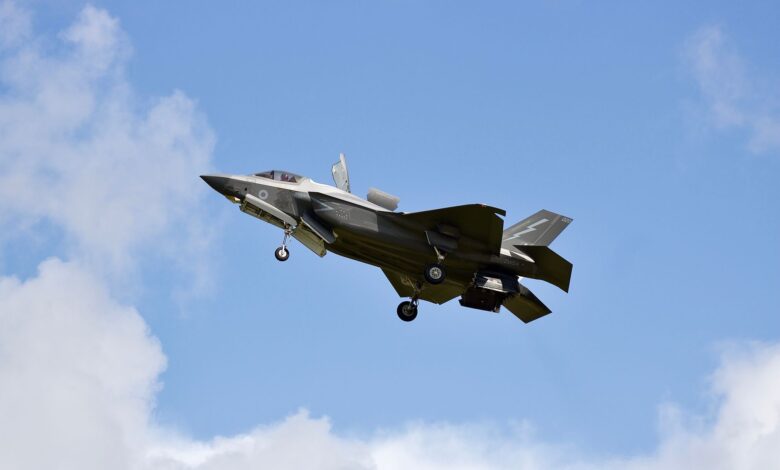
The central issue concerns the potential resumption of arms sales that have been frozen for years. Turkey was removed from the F-35 program in 2019 after it acquired the Russian S-400 missile defense system. Washington argued that the Russian system posed a security risk to the fifth-generation aircraft and to NATO’s collective security architecture. This dispute triggered sanctions under the Countering America’s Adversaries Through Sanctions Act (CAATSA), targeting Turkish defense procurement agencies and officials. However, US President Donald Trump recently suggested during a NATO summit in Ankara that Washington could lift these sanctions, a move that could pave the way for renewed negotiations on the F-35.
Dendias emphasized that Greece is not seeking to dictate US arms sales policy, noting that “that is the business of the US government.” Instead, Athens is asking a direct question: “Is it in the real interest of the US, yes or no?” Dendias argued that NATO unity and regional stability must be central to Washington’s calculations. “Giving a platform to one country in the Eastern Mediterranean without the caveat that this cannot be used against another allied member, is it in the interest of the US or not?” he asked. He warned that without clear safeguards preventing the aircraft from being used against other allied members, the sale could undermine stability.
Maritime Disputes and Legal Frameworks
The diplomatic friction extends beyond aviation to the sea. On the same day Dendias spoke, the Turkish Ministry of Defense officially confirmed that a draft law is being prepared to codify Turkey’s rights in maritime zones under its jurisdiction. The statement noted that the legislation aims to plug gaps in domestic law and that Turkish armed forces would protect these rights with “unshakable determination.” The law would grant the Turkish president the authority to designate special status areas for fishing and marine environment protection, effectively providing Ankara with maneuvering room regarding its maritime claims.
Greek officials reacted swiftly to this confirmation. Foreign Minister George Gerapetritis stated that any unilateral measures taken by a country, which under international law must be agreed bilaterally or multilaterally, are only for internal consumption and cannot be applied internationally. Dendias described Turkey’s actions as having “revisionist designs, which have been escalating recently, and which invoke nonexistent rights.” He pointed to the United Nations Convention on the Law of the Sea (UNCLOS), which entered into force in 1994 and has been ratified by 169 countries. Turkey has not ratified the treaty. One of Turkey’s major claims is that islands do not possess an exclusive economic zone (EEZ) or a continental shelf, a position that contradicts UNCLOS provisions, which grant islands the same maritime entitlements as other land territory, with exceptions only for sea rocks and islets that cannot sustain human habitation.
The Context of Reconciliation
These tensions arise against a backdrop of broader diplomatic resets in Turkish foreign policy. In recent years, Ankara has re-engaged with several countries with which it had long-standing disputes, including the United Arab Emirates, Egypt, and Israel. A rapprochement with Syria is also under consideration. The deadly earthquakes of February 6 appear to have paved the way for mending ties with neighbors, a phenomenon analysts have termed “earthquake diplomacy.” While this approach has opened channels of communication, the fundamental geopolitical and legal disagreements in the Eastern Mediterranean remain unresolved.
The convergence of the F-35 debate and the new Turkish maritime legislation suggests that the coming months will test the durability of this diplomatic thaw. For Greece, the introduction of advanced Western military hardware to a neighbor it views as pursuing revisionist maritime policies represents a strategic threat. For the United States, the decision involves balancing its alliance commitments with Turkey against the security concerns of Greece and the broader NATO framework. As Dendias’ questions suggest, the final determination rests with Washington, but the pressure from Athens is clear: any transfer of technology must come with guarantees that it will not be used to destabilize the region.