
Germany’s economic outlook has also improved, with the IMF raising its 2026 growth forecast to 1.3%, up from 0.7% in July. The revision is attributed to increased investment in infrastructure and defense, stronger exports, and demand linked to AI. While the UK is expected to see growth slow in 2027, the immediate upgrade signals a strengthening domestic environment where companies are investing more, hiring more workers, and consumers have greater spending power. Conversely, a shrinking economy would result in reduced investment and hiring, but current data points toward expansion for both major European economies.
Fiscal management remains a key differentiator for the UK in the group of major advanced economies. The IMF noted that the UK “basically stands out, along with India” in addressing rising borrowing concerns. Projections indicate that by 2031, the UK is expected to have the lowest annual borrowing rate among the G7 nations, which include Canada, France, Germany, Italy, Japan, and the United States. Sir Howard Davies, former deputy governor of the Bank of England, attributed this relative strength to the UK government holding a parliamentary majority and committing to tackle the deficit. He noted that this is expected to be achieved through tax rises, cuts to public services, or a combination of both.
Davies contrasted the UK’s position with other G7 members, stating that the United States has provided little detail on reducing its deficit, while France and Germany lack majority governments, complicating fiscal adjustments. “So, we [the UK] are not great students, but we look somewhat better than some of the others we are sharing the class with,” Davies said. This fiscal discipline is critical as the global economy faces headwinds from the widening gap between rich and poor countries, a trend exacerbated by the Middle East conflict. The IMF warns that while the AI boom is providing a buffer, the risks posed by market corrections in the AI sector, ongoing warfare, and unsustainable debt levels remain significant.
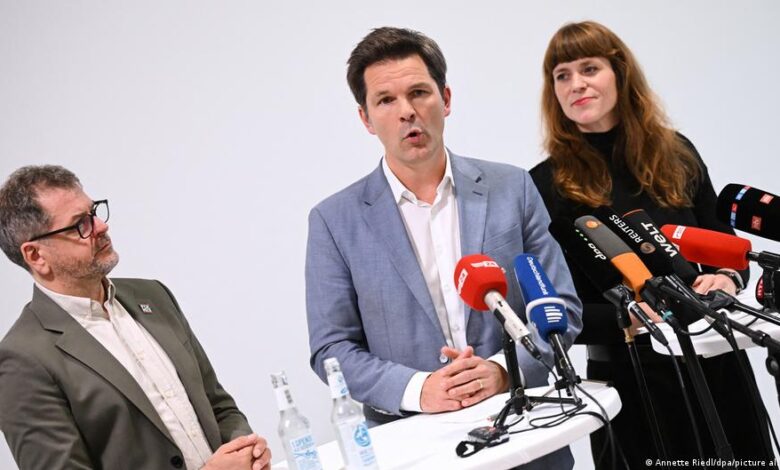
In Germany, specifically in the capital region, political developments are also influencing the economic landscape. In Berlin, exploratory coalition talks between the SPD, the Greens, and the Left Party have been halted amid disputes over policy stances regarding Israel and concerns about associations with organized crime. The breakdown stems from criticism of the Left Party’s position on the wars in Gaza and the Middle East, as well as the attendance of a figure linked to organized crime at an election-night event. Although the parties drafted a joint statement on antisemitism and Israel’s right to exist, internal criticism within the Left Party led to the adoption of a different text. The SPD and Greens have left the door open to restarting these talks, but the political uncertainty adds a layer of complexity to Germany’s otherwise improving economic indicators.
The IMF’s updated forecasts suggest that while the global economy is resilient, the path forward remains fragile. The interplay between energy costs, fiscal policy, and technological investment will determine whether the upgraded growth rates for the UK and Germany can be sustained beyond 2026. For now, the data indicates that targeted fiscal commitments and AI-driven productivity gains are offsetting the negative impacts of geopolitical instability and energy shocks.