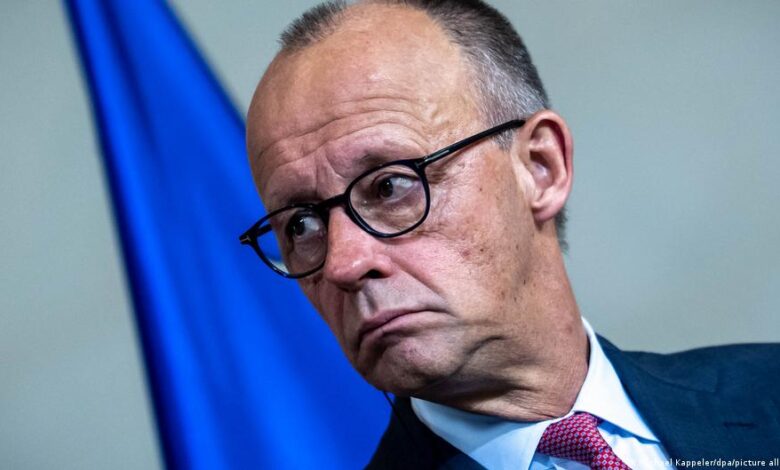
The political fallout is characterized by a seismic shift in the German electorate, with surveys now indicating that more Germans prefer to vote for a far-right party than for the centre-right establishment. This polarization has placed Merz on increasingly shaky ground; his approval rating has plummeted to 13 per cent, a record low that underscores the erosion of trust in the current government. In response to the rising tide of extremism, Merz has publicly asserted that political extremism threatens Germany’s existing social order. He specifically warned against sympathizers of the Alternative für Deutschland (AfD), a party that has been labelled as xenophobic and extremist by German intelligence agencies.
The AfD’s ascent has been particularly pronounced in eastern Germany. Just weeks prior to the Mecklenburg-Western Pomerania vote, the party achieved a major parliamentary victory in the eastern state of Saxony-Anhalt, winning a near-majority and coming in first place for the second time in a short span. This success highlights a growing divide within the country, with the far-right capturing significant ground in the East while the hard-left gains traction in other areas. The simultaneous rise of these opposing extremes signals a crisis for the country’s mainstream politics, a system originally designed for stability following the Second World War.
Amidst this domestic turbulence, German President Frank-Walter Steinmeier embarked on a three-day state visit to France, a trip he described as “something of a farewell tour with a truly committed European and a good friend.” Both Steinmeier and French President Emmanuel Macron took office in 2017, and both are expected to leave their posts early in 2027. However, Steinmeier’s role is far more ceremonial and removed from daily politics than that of his French counterpart. During his arrival at Paris’ Orly airport on a damp evening, Steinmeier framed the European context of Germany’s internal strife through the lens of Franco-German reconciliation.
Steinmeier invoked a 19th-century quote from French writer Victor Hugo, who described Germany as the “heart” and France as the “head” or reason of Europe. The German president argued that Europe needed to face its current security and political challenges with a mixture of the head’s reason and the heart’s emotion. “Reason and heart, that’s what Europe needs again today, in a time of wars and crises, in which our democracies are under attack to an extent not seen since the second World War,” Steinmeier said. He emphasized that while the modern division of labor between the two nations might be open to debate, the response to current circumstances must be unified: “Europe must, now above all, stand up confidently and in unison for the values that made us what we are: respect for human dignity, peace, freedom, democracy.”
The visit coincided with considerable political unrest among young people in France, characterized by ongoing school funding protests. Steinmeier intimated that a new deal on Franco-German youth cooperation might be signed during the visit, describing it as a “promise for a new generation of German and French youth, who want to learn to understand, value and love each other.” On Thursday, Steinmeier planned to visit the Pantheon monument in Paris with Macron to honor Marc Bloch, the Jewish historian and resistance fighter murdered by Nazi Germany. This symbolic gesture stood in contrast to the domestic scene in Berlin, where supporters of the rising parties were celebrating the shift in the political balance.
In Berlin, Leonie Siwter, a supporter of Die Linke, was among those celebrating at a watch party on Sunday night. “People are getting polarized more and more these days,” Siwter said, attributing the shift to the Chancellor’s inability to maintain popularity. “In the last few years, our Chancellor Merz has managed with every single announcement to make himself less and less popular,” she claimed. “They’ve lost a lot of trust.” Such sentiments illustrate the disconnect between the governing coalition and a significant portion of the electorate, who view the current administration as out of touch with their concerns.
While Merz has vowed to stay in his role, the political ground beneath him continues to erode. The Transport Ministry’s recent proposal of a five-year plan to improve Germany’s ailing railroad infrastructure represents one of the few concrete policy initiatives in a landscape dominated by political crisis. However, the severity of the CDU’s losses, combined with the intelligence agencies’ warnings regarding the AfD, suggests that the government faces an uphill battle in reasserting its dominance. The next political development will likely hinge on whether Merz can translate his warnings about extremism into a coherent strategy to rebuild trust, or if the polarization between the far-right and hard-left will continue to fragment the centre, testing the resilience of Germany’s postwar democratic institutions.