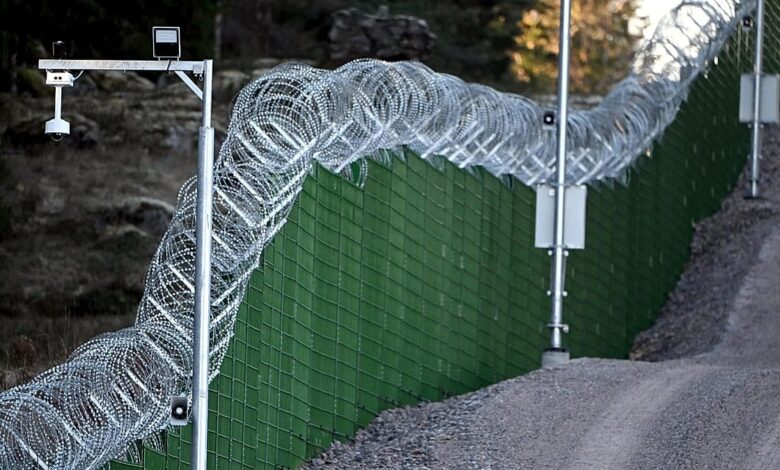
The project, which cost 356 million euros ($413 million), represents a significant escalation in border security measures following Finland’s accession to NATO in April 2023. Rantanen stated that the fence is designed to support surveillance and prevent unauthorized entry into Finnish territory if necessary. “Today, it is calm but tense, and we really don’t know about tomorrow,” Rantanen told reporters, emphasizing the need for preparedness given the potential for rapid changes in the security environment.
The construction of the fence follows a sharp deterioration in relations between the two neighbors. In late 2023, Finland closed its 1,340-kilometre land border with Russia after more than 1,300 migrants arrived without visas. Helsinki accused Moscow of orchestrating this movement as a form of “hybrid warfare” to destabilize the country, accusations the Kremlin has denied. Sari Arho Havrén, an associate fellow at the Royal United Services Institute (RUSI), noted that the threat of instrumentalized migration remains high and that the fence serves as a primary tool for crowd control in such scenarios.
The barrier covers approximately 200 kilometres of the total frontier, with the majority of the structure located in the southeast. Sections also extend into the North Karelia, Kainuu, and Finnish Lapland regions, with the longest continuous stretches measuring around 80 miles. The infrastructure includes patrol roads, loudspeakers, and night lighting to enhance monitoring capabilities. Annual maintenance costs are estimated at between 2 and 3 million euros. Similar physical barriers have been established by Estonia, Latvia, Lithuania, and Poland along their respective borders with Russia and Belarus.
Finland’s government is also proposing to extend the Border Security Act, which restricts entry due to “serious incidents of instrumentalized migration,” until the end of 2028. Havrén observed that the continuation of these restrictions and the construction of the fence indicate a persistent concern that Russia may repeat such tactics. All land border crossings between the two countries remain indefinitely closed by government decision. The fence completes a partial fencing plan agreed upon by Finnish political leaders in October 2022, with pilot construction beginning in April 2023.
As Finland integrates further into NATO’s defense structures, including orders for 64 F-35A fighter jets, the physical border barrier stands as a key element of its dual defense strategy. The next phase will likely involve the continued monitoring of the border and the potential legislative extension of current security restrictions, keeping the frontier under heightened security until further notice.