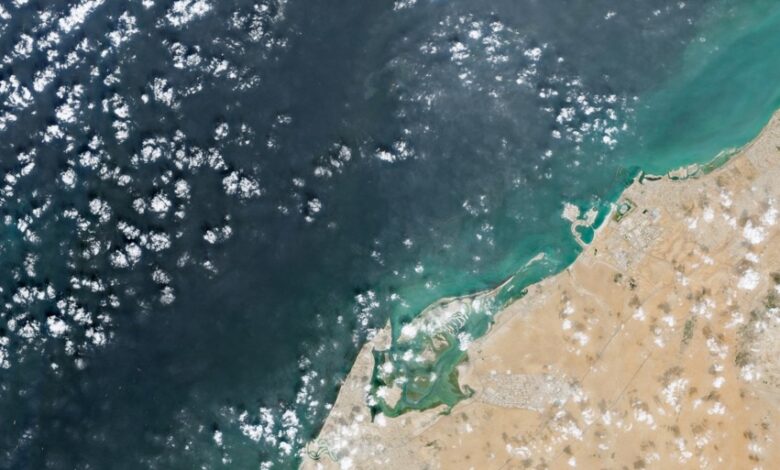
Images from the European Union’s Copernicus satellite observation network dated October 24 show the spill has widened over the last few days and is reaching close to the shores of the northern Umm Al Quwain emirate, with dark layers of oil spreading at sea and along its coastline. The UAE Ministry of Climate Change and Environment stated on Friday that efforts are underway to contain the leaking oil and that an environmental assessment is being conducted. Authorities have not officially named the tanker or confirmed the cause of the spill, but experts told Reuters the source is the vessel *Gem No 2*, which shipping sources identified as having been struck by an unidentified projectile last month, causing a fire that was later extinguished.
Authorities across various northern emirates responded to the widening spill by restricting access to coastal areas. The Ministry of Climate Change and Environment announced that all beaches and coastal areas around the city of Umm Al Quwain were temporarily closed. In neighboring Sharjah, authorities shut access to Al Hamriyah Beach as a precaution. In Ras Al Khaimah, known for its beaches and luxury resorts, officials stated on Saturday that all beaches in the emirate would remain closed until further notice.
“The reported oil spill off Umm Al Quwain is a serious environmental concern. The temporary closure of beaches and coastal areas is a prudent precaution while the extent of the spill and the movement of the oil are assessed,” Nidal Hilal, Professor of Engineering and Director of New York University Abu Dhabi’s Water Research Center, told Reuters.
The incident occurs against a backdrop of heightened maritime security risks in the region. Since the start of the US-Israeli war with Iran, attacks on commercial vessels in Gulf shipping lanes have driven up security risks for maritime traffic and heightened fears over the conflict’s environmental fallout. According to data compiled by the Washington Institute for Near East Policy think tank, October has been the worst month for attacks on commercial shipping in the Strait of Hormuz and nearby waterways.
The potential ecological impact is significant given the biodiversity of the area. The International Union for Conservation of Nature (IUCN) notes that UAE marine life is rich in fish, plants, and corals, with over 500 different species of fish inhabiting the Gulf waters. The region is also home to dolphins and marine turtles, species that could be affected by the spread of the oil.