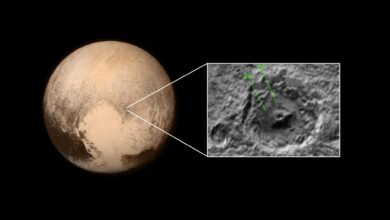
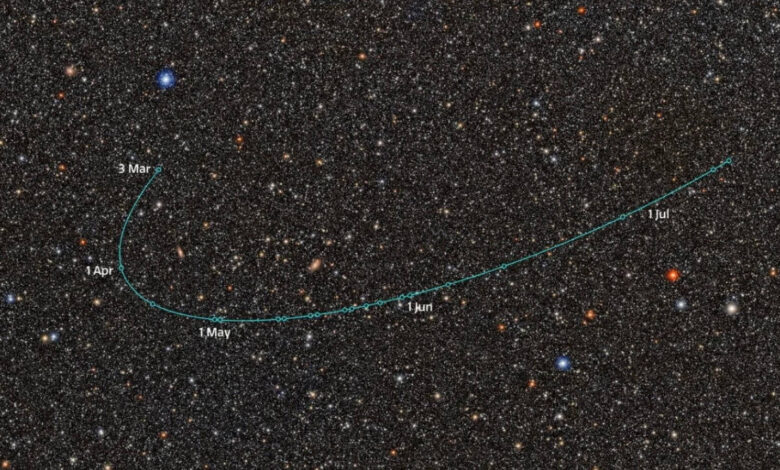
The core of this controversy lies not in the discovery itself, but in the classification frameworks established by the International Astronomical Union (IAU). Since 2006, the IAU’s definition has required a planet to meet three specific criteria: it must orbit the Sun, have sufficient mass for its self-gravity to overcome rigid body forces so that it assumes a hydrostatic equilibrium (nearly round) shape, and have “cleared the neighborhood” around its orbit. The latter criterion is the most contentious, as it requires a body to be the dominant gravitational force in its orbital path, effectively clearing out other debris.
The newly identified icy object, like many bodies in the Kuiper Belt, is a large, frozen body that likely meets the shape criteria but fails the “clearing” test because it shares its orbital zone with numerous other similar objects. This places it in the category of a dwarf planet, a classification that has been a source of frustration and debate within the astronomical community. Critics of the current definition argue that the “clearing” criterion is arbitrary and does not reflect the physical nature of the object, while proponents maintain that it is necessary to distinguish between the eight major planets and the thousands of smaller bodies in the outer solar system.
This debate is not merely semantic; it has implications for how scientists categorize and study the formation and evolution of the solar system. The Kuiper Belt is considered a fossil record of the early solar system, and accurately classifying its inhabitants helps researchers understand how planets formed and how the architecture of the outer solar system evolved. If the definition of a planet is too narrow, it may obscure the diversity of planetary bodies that exist; if it is too broad, it may dilute the significance of the eight major planets.
Researchers studying these objects emphasize that the current classification system is a human construct designed for organizational purposes rather than a reflection of natural law. As telescopes and detection technologies improve, more objects are being discovered in the Kuiper Belt and beyond, each of which challenges the existing boundaries. The new icy object serves as a reminder that our understanding of the solar system is still evolving, and that the categories we use to describe it may need to be revisited.
The scientific community remains divided on how to resolve this issue. Some propose a more nuanced classification system that takes into account the object’s mass, composition, and orbital dynamics, rather than relying solely on the “clearing” criterion. Others argue that the current system, while imperfect, is the most practical and widely accepted framework for communicating scientific findings. Until a new consensus is reached, the status of objects like the newly discovered icy body will remain a subject of ongoing discussion and debate.
This situation highlights the dynamic nature of scientific classification. As new data emerges and new objects are discovered, the criteria used to define them may need to be adjusted. The debate over the new icy object is a testament to the complexity of the solar system and the challenges of categorizing the diverse range of bodies that inhabit it. It underscores the importance of ongoing research and discussion in refining our understanding of the cosmos.