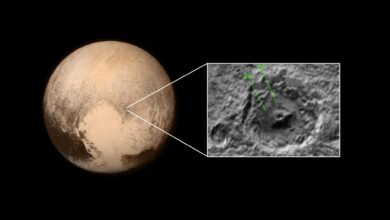
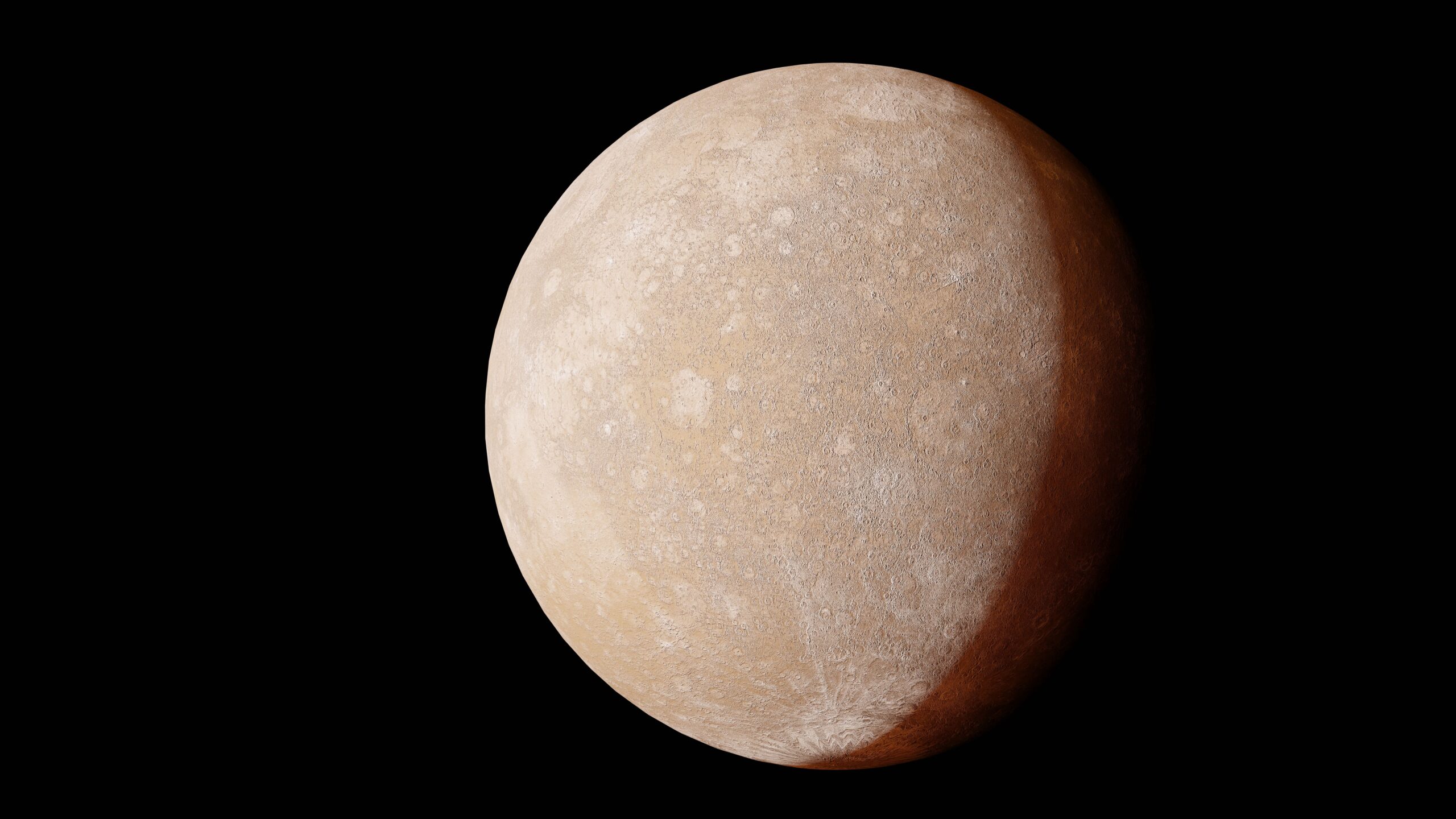
The scientific significance of ED138 lies primarily in its estimated size. Current measurements place its diameter between 600 and 1,500 kilometers. In planetary science, the distinction between a large asteroid and a dwarf planet is defined by hydrostatic equilibrium—the point at which an object’s own gravity compresses it into a roughly spherical shape. While direct measurement of the mass or shape of such distant, small bodies is extraordinarily difficult, the general scientific consensus holds that objects with a diameter exceeding approximately 600 kilometers possess sufficient mass to achieve this spherical form. Consequently, ED138 is one of the largest dwarf planet candidates identified to date within the solar system.
Currently, the International Astronomical Union (IAU) recognizes five official dwarf planets: Ceres, Pluto, Haumea, Makemake, and Eris. A larger, unofficial group includes bodies such as Sedna and Quaoar. Given its size, ED138 is poised to enter this broader classification, potentially expanding the known population of dwarf planets in the outer solar system.
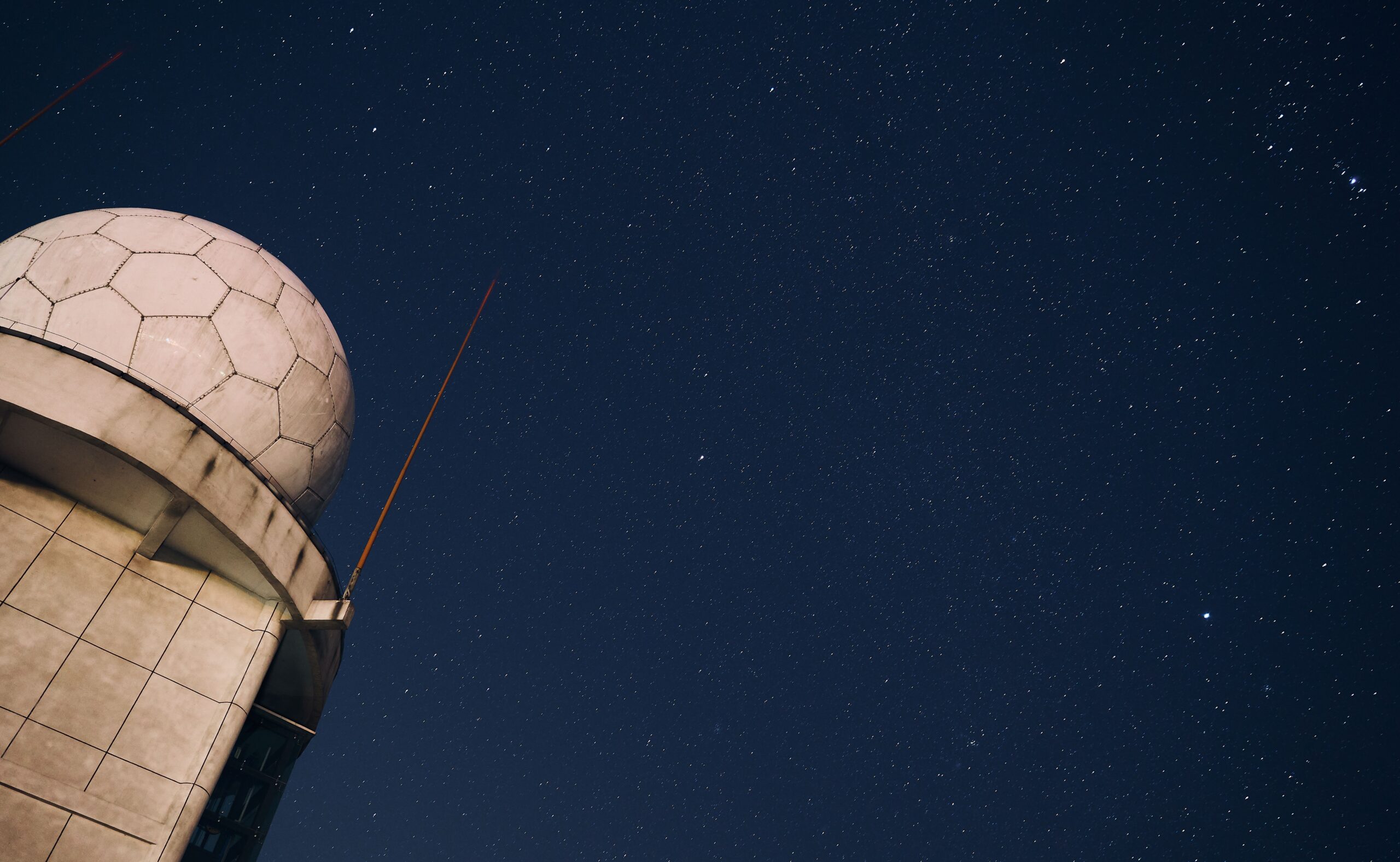
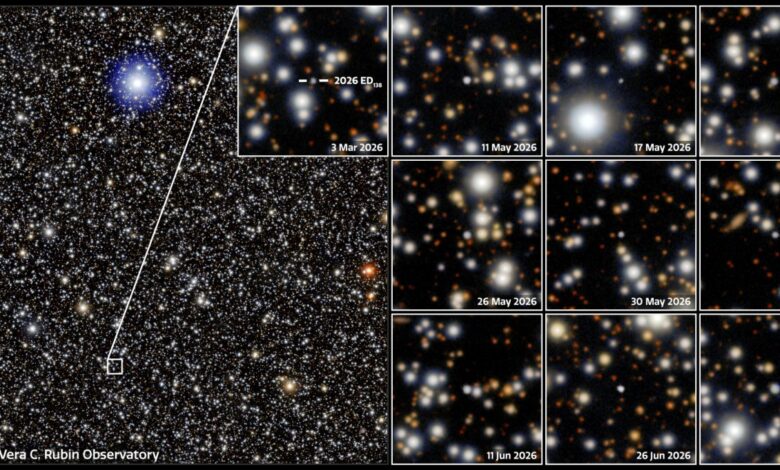
The discovery process itself underscores the limitations of previous observational infrastructure. Despite being relatively large and bright, ED138 was difficult to detect because of its position in the sky, located close to the plane of the Milky Way. The dense concentration of bright background stars in this region had previously obscured the object from other observatories. Mario Jurić, a researcher at the University of Washington, noted that the Rubin Observatory provides an unprecedented capacity to explore the sky. Once a new object is identified, the observatory’s data allows researchers to search back through months or even decades of images, locating the object in archival data where it was previously unrecognizable.
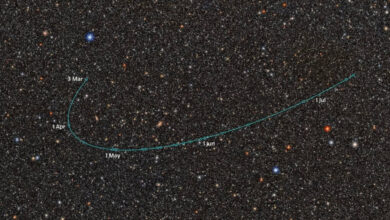
Following Holman’s initial spot in October, Jurić analyzed Rubin’s past catalogue and identified 30 additional observations of ED138 dating back to March. Further searches through the archives of other telescopes revealed observations extending as far back as 2017. This extensive trail of data enabled the researchers to reconstruct ED138’s orbit with greater accuracy. Their analysis indicates that the object takes approximately 281 years to complete one orbit around the sun. The orbital path is tilted about 25 degrees with respect to the plane of the solar system. This orbital inclination is consistent with expectations for objects whose orbits have been shifted through gravitational interactions with Neptune.
These findings were presented by Holman and Jurić at the Annual Division for Planetary Sciences meeting in Washington on October 27. While the orbital data is robust, the confirmation of ED138’s physical status remains provisional. The current diameter estimate is a range rather than a precise figure, and further observations are required to confirm its size and, by extension, its qualification as a dwarf planet. The distinction between a large asteroid and a dwarf planet hinges on that 600-kilometer threshold, which ED138 appears to meet or exceed, but definitive classification requires more rigorous measurement.
The discovery also points toward future capabilities in solar system exploration. The Vera C. Rubin Observatory is designed to image the entire southern sky repeatedly over a period of ten years. This systematic approach aims to catalog objects that previous surveys may have missed, particularly those hidden in complex regions of the sky like the Galactic plane. Holman noted that any other dwarf planets hiding in places skipped by earlier surveys are now within reach of detection.
As the scientific community awaits further data to confirm ED138’s dimensions, the object serves as a test case for the new infrastructure. The ability to recover archival data and track long-period orbits demonstrates the operational value of the Rubin Observatory. If ED138 is confirmed, it will not only add to the roster of known dwarf planets but also validate the methodology used to find it, suggesting that the outer solar system may contain more such bodies than previously cataloged. The next stage of research will focus on refining the size measurements to ensure the object’s hydrostatic equilibrium is definitively established, thereby securing its place in the solar system’s taxonomy.