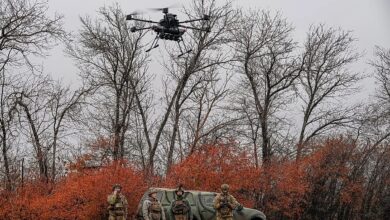
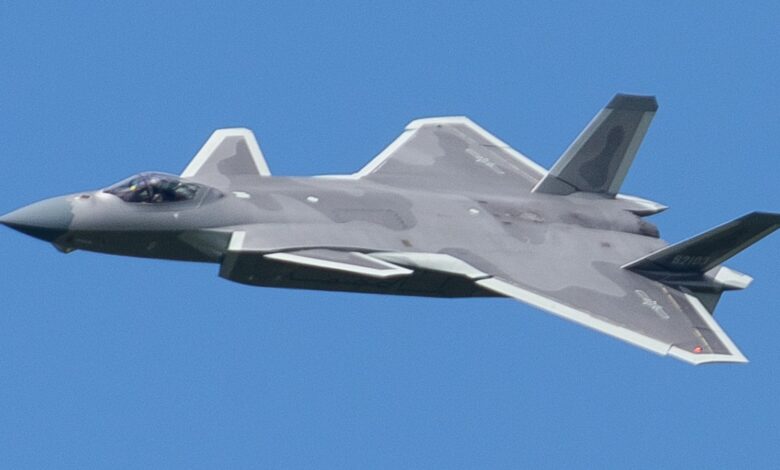
The J-20S is not merely a cosmetic update; it represents a strategic pivot in how China plans to project power across the vast distances of the Pacific. While the baseline J-20, which entered operational service in 2017, was designed primarily for air superiority and long-range interception, the new twin-seater configuration expands mission flexibility. The second crew member is believed to support roles such as electronic warfare coordination, drone control, and complex strike mission management. This aligns with the concept of manned-unmanned teaming, a domain where Western defense contractors have long invested. By integrating collaborative combat aircraft (CCA) capabilities, the J-20S aims to manage a swarm of drones while maintaining its own combat readiness, a capability that mirrors the United States Air Force’s own CCA program.
However, the significance of the J-20S extends beyond its individual capabilities. The broader context is defined by an unprecedented surge in production capacity. Satellite imagery analyzed by experts, including those presenting at the 2026 Air & Space Forces Association symposium, indicates that the Chengdu Aircraft Industry Group has expanded its floor space by approximately 278,700 square meters since 2021. This expansion reportedly exceeds the entire footprint of the U.S. F-35 production complex. Analysts estimate that Chengdu is now operating about five assembly lines simultaneously, turning out roughly 100 to 120 J-20s per year. When combined with the Shenyang J-35 program, the total Chinese advanced fighter output could reach 300 to 400 units annually by 2027.
This industrial acceleration challenges the long-held Western assumption that qualitative superiority alone dictates air combat outcomes. For two decades, the standard analysis was that U.S. platforms like the F-22 Raptor and F-35 Lightning II out-sensed, out-stealthed, and out-networked their Chinese counterparts. Western experts continue to credit American jets with advantages in low-observable performance and sensor fusion. Yet, the Chinese strategy appears to be betting on the old Soviet maxim: quantity has a quality all its own. In a protracted conflict across the Pacific, where logistics are strained and attrition is certain, a force that can absorb losses and maintain sortie generation rates holds a decisive advantage over a smaller, more specialized fleet.
The technical limitations of the J-20 remain a point of contention. Early variants relied on Russian-derived engines, though later models have transitioned to the domestically produced WS-10C. The WS-15 engine, intended to provide supercruise capabilities comparable to the F-22, has been in development for years, with production status still evolving. While the J-20S addresses the need for versatility in maritime strike and electronic warfare, it has not yet closed the gap in raw stealth and sensor fusion that characterizes the latest U.S. aircraft. Nevertheless, the J-20’s angular airframe geometry and internal weapons bays provide a credible stealth profile, allowing it to engage targets at beyond-visual-range before being detected.
The strategic implications for deterrence and regional security are profound. China’s goal in the South China Sea and the wider Pacific is to establish an anti-access/area-denial (A2/AD) bubble. The J-20’s long-range interception role and newly announced maritime strike capability directly target Western naval assets. By fielding a large number of these aircraft, Beijing aims to make the cost of projecting force into the region too high for its adversaries. This is not merely about winning individual dogfights; it is about saturating the airspace, overwhelming enemy air defenses, and sustaining operations over time.
Uncertainties remain regarding the exact combat readiness of the latest variants and the full extent of their networked capabilities. While state media claims are specific, independent verification of performance metrics in contested environments is difficult. Furthermore, the integration of manned-unmanned teaming is complex, and operational proficiency in such scenarios may take years to achieve. Yet, the trajectory is clear. China is industrializing its air power at a scale not seen since the Cold War, shifting the balance from a contest of individual excellence to a battle of industrial endurance and numerical dominance.
As the PLAAF continues to deploy these aircraft, the focus will likely remain on refining the J-20S’s role in maritime operations. The next confirmed development will be the operational integration of the J-20S with unmanned systems in joint exercises, demonstrating the practical application of the manned-unmanned teaming capabilities touted in the 2025 parade. Until then, the sheer volume of airframes rolling off the Chengdu production lines serves as a tangible indicator of China’s long-term strategic intent.