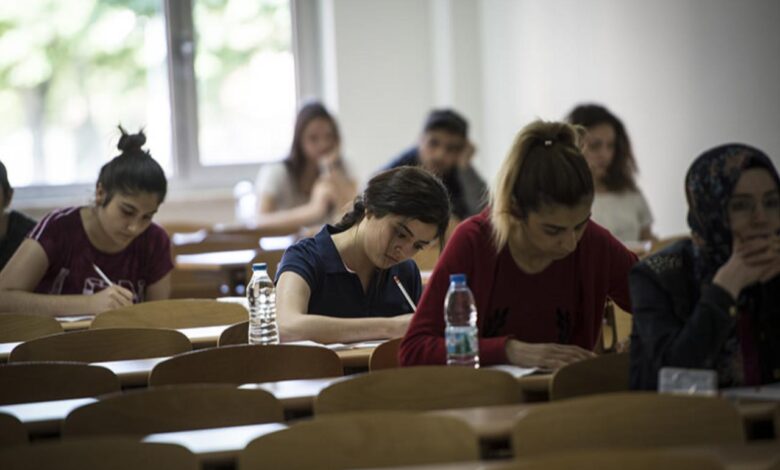
The centerpiece of this operation is the Higher Education Institutions Exam (YKS), the country’s primary gateway to university education. With 2.4 million candidates registered for this year’s cycle, the scale of the examination has drawn specific attention to logistical and environmental conditions. ÖSYM President Professor Bayram Ali Ersoy issued a public appeal for civic cooperation, urging residents near exam centers to minimize noise. His directive explicitly called for the suspension of construction work and the avoidance of vehicle horns during the testing window, highlighting the critical need for a controlled environment for millions of students competing for limited seats.
The domestic data reveals a persistent pattern of repetition in the applicant pool. Of the 2.4 million candidates, 921,248 are sitting the exam for the first time. However, a substantial portion of the cohort consists of repeat applicants: more than 665,000 are attempting the exam for a second time, while 447,067 are on their third attempt. A further, unspecified number of candidates are in their fourth attempt or beyond. This demographic distribution underscores the competitive intensity of the Turkish higher education landscape, where securing a place in a preferred university often requires multiple years of preparation and retesting.
While the domestic YKS dominates the headlines, ÖSYM is simultaneously executing a strategic pivot in international education policy. The agency has taken full control of the Exam for Foreign Students for Higher Education in Türkiye (TR-YÖS), a process previously decentralized among individual universities. This centralization, mandated under the Council of Higher Education (YÖK) following a policy shift in 2023, has enabled ÖSYM to standardize assessment protocols and expand the exam’s geographic footprint to 27 countries.

The international expansion is marked by both high-volume participation and logistical innovation. Azerbaijan has emerged as the leading source of foreign applicants, a trend ÖSYM Deputy President Cengiz Ceylan attributes to geographic proximity and established cultural ties. “We receive the highest number of applications from Azerbaijan,” Ceylan stated, noting that even when the exam was previously administered only within Türkiye, Azerbaijani students remained the top foreign cohort. According to Ceylan, this sustained interest reflects Türkiye’s growing status as an international education hub, with over 70,000 foreign students enrolling in Turkish universities annually.
A notable milestone in this international rollout is the first-time administration of the TR-YÖS in the United States. Held at the Maarif Schools campus in New Jersey, the U.S. session represented a strategic move to capture the diaspora population and international applicants in the North American market. The implementation required adapted operational protocols to maintain exam integrity, including time-zone synchronization and the use of differentiated exam versions to prevent content leakage across borders. The U.S. session began at 09:15 a.m. local time, diverging from the simultaneous start times used in other regions.
The TR-YÖS is designed as a dual-assessment framework, measuring numerical reasoning and fundamental mathematics competencies. Each section comprises 40 questions, with a total response time of 100 minutes. To accommodate its diverse global applicant pool, the test is currently administered in six languages. Officials describe the initiative not merely as an admissions tool but as a strategic soft-power instrument, leveraging ÖSYM’s operational capacity to project institutional credibility globally.

Despite the operational successes in logistics and international reach, the academic outcomes of the domestic exams have raised concerns. Recent results have indicated “alarming scores in all fields,” suggesting a potential mismatch between test difficulty and student preparedness, or a broader decline in academic performance metrics. While specific statistical breakdowns of these scores were not detailed in the immediate reports, the characterization of the results as alarming signals a critical area for policy review by YÖK and educational planners.
As ÖSYM continues to manage the post-exam evaluation and placement processes, the institution stands at a crossroads. Domestically, it must address the high rate of repeat candidates and the perceived decline in academic scores. Internationally, it must sustain the momentum of its centralized testing model to maintain its position as a leading global education gateway. The next formal step will be the release of detailed performance analyses and the commencement of the placement allocation process, which will determine the final distribution of the 2.4 million domestic candidates and the integration of the growing cohort of foreign students into Türkiye’s university system.