

The strategic and operational significance of these events lies not in confirmed kinetic damage, but in the synchronized nature of the alerts. On Tuesday, security services in Poland, Spain, and Bulgaria responded to four separate bomb threats targeting commercial passenger flights. In addition to the LOT flight at Modlin, a SAS Scandinavian Airlines aircraft traveling from Copenhagen was diverted to Warsaw Chopin Airport, the city’s central hub. Simultaneously, a Ryanair flight from Manchester, UK, to Murcia, Spain, and a separate flight originating from Israel were subjected to urgent security protocols in their respective destinations. The immediate military and police objective in each instance was the neutralization of potential explosive devices through rapid containment, passenger evacuation, and thorough physical inspection of the airframes.
Polish authorities confirmed that the threats were not verified. Adam Szablowski, a spokesman for Warsaw Modlin Airport, stated that passengers were evacuated and the plane underwent security checks, during which no explosives were detected. “The airport has been reopened and is operating normally,” Szablowski told the AFP news agency. At Warsaw Chopin, the SAS flight also landed safely, with passengers disembarking and the aircraft undergoing inspection without the discovery of any hazardous materials. The convergence of two distinct threats on the same metropolitan area—Modlin, located 36 kilometers from the capital, and Chopin within the city limits—raised operational questions regarding coordination, though authorities noted it was not immediately clear whether the two Polish incidents were linked to each other or to the broader European pattern.

The geographic and logistical constraints of the response were evident in the handling of the diversions. The modulation of air traffic required precise coordination between airline operations centers, civil aviation authorities, and national security agencies. In Spain, the government’s delegate in the region of Murcia, Francisco Lucas, confirmed on social media that police “ruled out the presence of explosives on the plane” after the Ryanair flight landed safely. Lucas thanked the emergency teams for their participation, noting that the International Airport of the Region of Murcia had resumed normal activity. This swift resolution underscores the effectiveness of existing counter-terrorism protocols in preventing ground-level casualties and minimizing economic disruption to regional air connectivity.
In Bulgaria, the incident involved a flight from Israel that landed at Sofia Airport after a bomb threat was received via email. Lyubomir Nikolov, Secretary General of the Interior Ministry, confirmed to the BTA news agency that counter-terrorism units were actively checking the plane for possible explosive devices. The use of email as a vector for the threat, distinct from the unspecified methods in other incidents, adds a layer of complexity to the intelligence assessment. While no details were provided regarding the specific content of the email or the origin of the communication, the involvement of high-level counter-terrorism units indicates a serious evaluation of the threat’s credibility, even in the absence of physical evidence.
This cluster of incidents on Tuesday follows a similar event on Monday, when a Wizz Air flight from London to Sofia was redirected to Budapest after receiving a bomb threat mid-air. Hungarian Defence Minister Romulusz Ruszin-Szendi confirmed the diversion on Facebook. The recurrence of such alerts across different jurisdictions over a two-day period suggests a persistent, if currently unverified, pattern of harassment or targeted intimidation against European air travel. While previous similar incidents in recent weeks have turned out to be false alarms, the frequency and geographic spread of the Tuesday threats—spanning Poland, Spain, Bulgaria, and the United Kingdom—necessitate a heightened state of readiness among security forces.
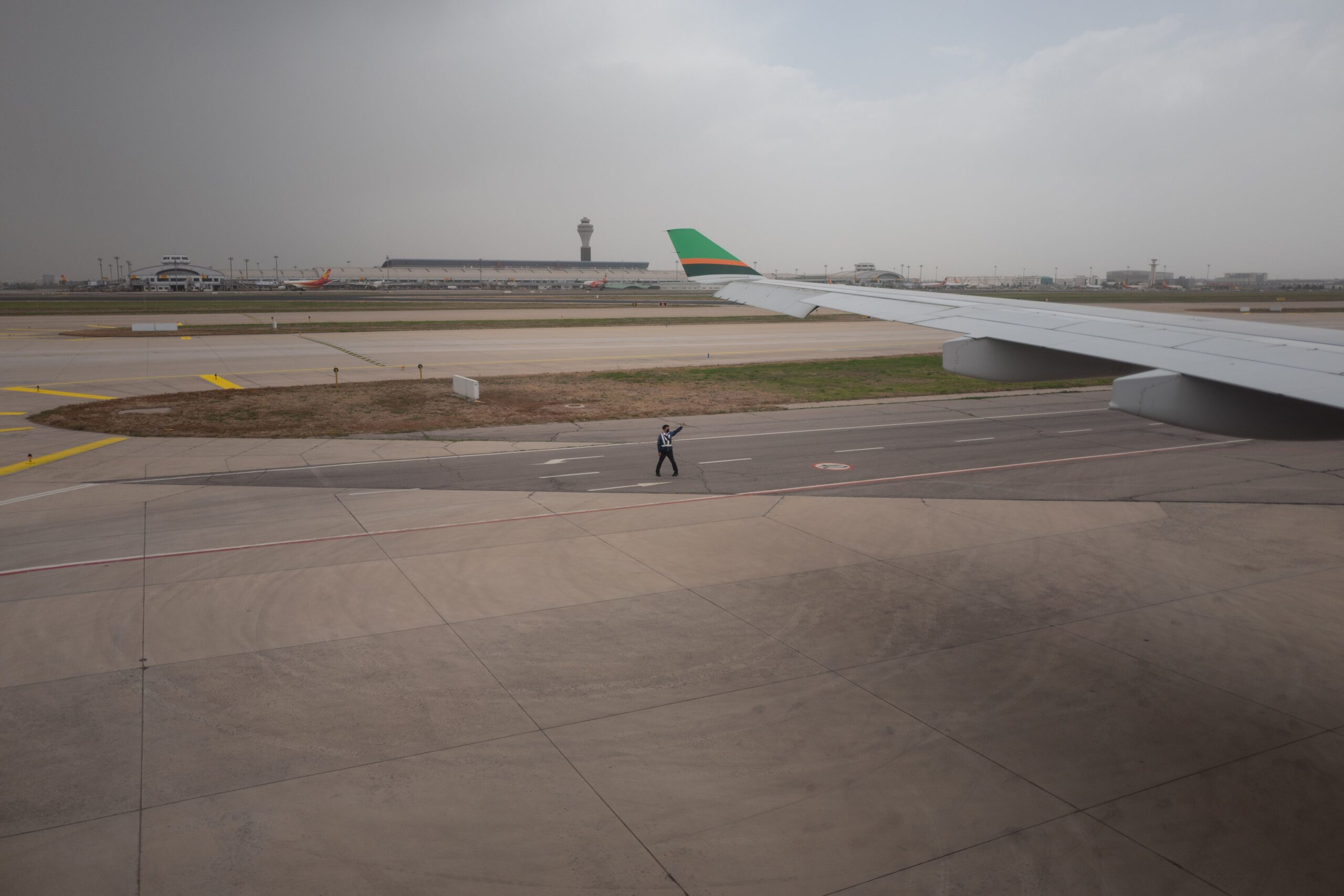
The capabilities involved in these responses are primarily those of specialized aviation security and counter-terrorism units, equipped to conduct rapid explosive ordnance disposal (EOD) inspections and crowd control in active airport environments. The limitation of these systems is not technical but procedural: the inability to distinguish between a genuine threat and a hoax without extensive physical inspection, which inevitably halts operations. The political consequence is a tangible impact on civilian confidence and the economic efficiency of the aviation sector, as even brief closures incur significant costs and operational delays.
What remains disputed and uncertain is the motivation behind the threats. Without confirmed evidence of a specific perpetrator or group, analysts and officials must treat these events as potential coordinated acts or isolated incidents that coincidentally occurred in proximity in time. The lack of explosives found on any of the four planes confirms the success of the security screenings, but does not resolve the intelligence gap regarding who issued the warnings. The next confirmed development will depend on the completion of the forensic and digital investigations into the origin of the communications, particularly the email sent to the Sofia-bound flight. Until then, European air traffic control and national security agencies will likely maintain elevated vigilance, balancing the need for security with the imperative to restore normalcy to the continent’s flight paths.