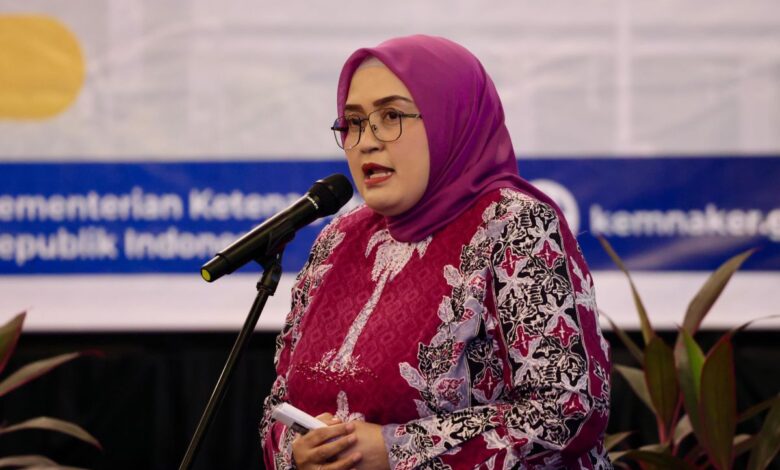
The BSU program serves as a critical mechanism for supporting workers within Indonesia’s industrial relations and social security framework. According to the Ministry, the fourth-quarter 2026 disbursement is not yet automatic; it requires the completion of specific fiscal and bureaucratic processes. Indah Anggoro Putri, the Director General of Industrial Relations and Workers’ Social Security (PHI and Jamsos) at the Ministry of Manpower, indicated that the agency is actively engaged in these coordination efforts. The delay is procedural rather than indicative of a policy reversal, but it introduces a variable of timing that affects household cash flow for eligible recipients.
Central to the eligibility of this support is the income threshold. Recent ministry guidelines set the maximum monthly salary for BSU beneficiaries at Rp900,000. This figure defines the scope of the program, targeting lower-income workers who are most vulnerable to economic shocks. By capping eligibility at this level, the government aims to direct limited fiscal resources toward those with the greatest need for financial assistance. The distinction between workers earning below and above this threshold is significant, as it determines who receives the quarterly transfer and who must rely on other forms of social protection or personal savings.
The current status of the fourth-quarter 2026 BSU highlights the intersection of labor policy and fiscal management. While the Ministry of Manpower oversees the labor relations and social security aspects of the program, its execution is tied to the broader national budget cycle. The phrase “awaiting budget approval” suggests that the funds have not yet been fully allocated or released from the state treasury for this specific quarter. This process involves coordination between the Ministry of Manpower, the Ministry of Finance, and other relevant state bodies to ensure that the disbursement aligns with the fiscal year’s constraints and priorities.

For the affected workers, the uncertainty surrounding the timing of the transfer carries practical implications. Households planning their expenditures around the receipt of the subsidy may need to adjust their budgets if the delay persists. The program is designed to provide a direct boost to disposable income for eligible workers, helping to maintain consumption levels and support local economies. However, without confirmed dates for the transfer, businesses and consumers in sectors that rely on this income stream may face minor disruptions in cash flow. The Ministry’s emphasis on “coordination” implies that technical and administrative hurdles are being resolved, but the outcome remains dependent on the final budgetary sign-off.
The role of the Director General of Industrial Relations and Workers’ Social Security is pivotal in navigating these challenges. As the head of the department responsible for labor rights and social security, this office must balance the urgency of worker support with the strict requirements of public financial management. The coordination process likely involves verifying beneficiary lists, ensuring that the funds are targeted accurately according to the Rp900,000 salary cap, and establishing the logistical channels for the transfer. These steps are essential to prevent misallocation and ensure that the assistance reaches the intended demographic.
While the specific amount of the subsidy for the fourth quarter of 2026 is not explicitly detailed in the immediate release, the structure of the program remains consistent with previous iterations of the BSU. The focus remains on providing a fixed sum to eligible workers, distinct from wages or additional bonuses from employers. This separation is crucial for maintaining the integrity of the social security system, ensuring that state support supplements rather than replaces labor income. The program’s continued existence underscores the government’s commitment to supporting the formal and informal workforce, particularly in the face of economic fluctuations.
The delay in the fourth-quarter distribution also reflects the broader challenges of implementing large-scale social programs in a dynamic economic environment. Budget approvals can be subject to political and economic reviews, leading to shifts in timing and scope. For the Ministry of Manpower, the priority is to communicate clearly with the public about the status of the funds, managing expectations while completing the necessary administrative steps. The coordination mentioned by the Ministry suggests that technical solutions are being developed to expedite the process once the budget is secured.
As the fiscal year progresses, the outcome of these coordination efforts will determine whether the fourth-quarter BSU is distributed according to the standard schedule or if adjustments are made. The reliance on the Rp900,000 eligibility cap ensures that the program remains targeted, but the timing of the disbursement is the most immediate concern for recipients. The Ministry of Manpower’s ongoing engagement with the budgeting process highlights the complex interplay between labor policy and state finance, where the goal is to provide timely support without compromising fiscal discipline.
For now, the fourth-quarter 2026 Wage Subsidy Assistance remains in a state of anticipation. Workers eligible under the Rp900,000 salary threshold await the final budget approval that will trigger the distribution. The Ministry of Manpower’s coordination efforts continue, aiming to resolve the administrative steps necessary for the release of these funds. The resolution of this process will mark the completion of another cycle of social security support, reinforcing the state’s role in protecting the livelihoods of its workforce. The next critical step is the formal allocation of the budget, which will signal the commencement of the transfer process and provide clarity to the millions of workers depending on this aid.