
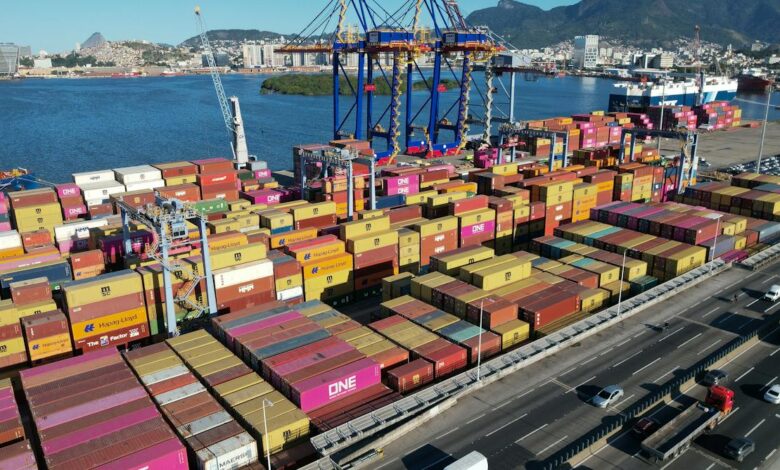
This disruption stems from a series of policy actions taken in 2025. In April of that year, US President Donald Trump imposed a 10 percent tariff on Brazil as part of the administration’s broader “Liberation Day” tariffs, which targeted nearly every country in the world. The pressure intensified in July 2025 when an additional 40 percent tariff was imposed specifically on Brazil. This additional duty further raised tariffs on products not already affected by the administration’s Section 232 duties on certain industrial goods. Combined, these measures have reshaped the economic landscape between the two nations, which have enjoyed decades of robust economic ties.
The impact of these tariffs is most visible in the import data. Brazil is a critical supplier for the United States in specific commodity sectors. In 2024, Brazil supplied at least 20 percent of US imports for a range of goods, including coffee, orange juice, cane sugar, iron ore, aluminum oxides and hydroxides, vanadium products, various tropical woods, pig iron, fuel ethanol, meat, and agricultural byproducts. Since the implementation of the new tariffs, US imports of these products have declined significantly. The data indicates that US purchases of goods in which Brazil plays a key role as a supplier have dropped sharply, breaking away from the trends observed prior to the tariff imposition.
Contrastingly, the flow of goods in the opposite direction has not shown the same volatility. US exports to Brazil have remained consistent with the pre-tariff trend line. This asymmetry highlights the complex nature of the current trade environment. While the US is a primary source of foreign direct investment for Brazil, the tariff regime has not immediately curbed American exports to the South American market, nor has it reversed the structural trade deficit Brazil runs with the US. The persistent US trade surplus means that, on a net basis, the US sells more to Brazil than it buys, a dynamic that has not been altered by the recent policy shifts, even as the volume of specific imported commodities falls.
The motivation behind this trade dispute appears to diverge from purely economic calculations. Analysis suggests that the administration’s decision to impose these steep tariffs was driven by concerns regarding Brazilian politics rather than a desire to address trade imbalances. Because the dispute is rooted in political tensions, there is speculation that upcoming presidential elections in Brazil might quell the friction. However, the immediate economic effects are tangible and documented in trade data, regardless of the underlying political intent.
For industries reliant on Brazilian inputs, the decline in imports signals a shift in supply chains. Sectors such as agriculture, specifically coffee and sugar, and industrial inputs like iron ore and aluminum compounds, are seeing reduced volumes entering the US market. The 40 percent specific tariff, layered on top of existing duties, creates a significant cost barrier that has likely contributed to the deviation from historical import trends. Meanwhile, the stability of US exports to Brazil suggests that American producers have not yet faced a reciprocal collapse in demand, or that the goods exported are less sensitive to the specific tariff structure currently in place.
The situation presents a unique case study in how political leverage is applied through trade policy. While the US maintains a surplus, it has chosen to restrict access to Brazilian markets for key commodity imports. This approach contrasts with traditional tariff strategies aimed at protecting domestic industries from cheaper foreign competition. Here, the domestic industries may already be competitive, or the goods imported are distinct from those produced domestically, yet the tariffs remain. The divergence between import and export trends—imports falling, exports holding steady—suggests that the policy is acting as a selective filter on the types of goods entering the US, rather than a blanket reduction in trade volume.
Observers and analysts are monitoring the evolving dynamics closely. The Atlantic Council’s Adrienne Arsht Latin America Center tracks these changes, noting that the tariffs are reshaping the trajectory of US-Brazil commerce. The data shows that the initial shock of the April 2025 tariffs was compounded by the July 2025 escalation, leading to the current state of significantly reduced imports of Brazilian specialties. The persistence of the US trade surplus amidst these restrictions underscores that the economic fundamentals of the relationship have not been fully upended, even as the specific composition of trade flows changes.
As the dispute progresses, the focus remains on how these policy decisions interact with broader geopolitical and domestic political factors in both countries. The potential for de-escalation through Brazilian elections offers a path to normalization, but in the interim, the market has adjusted to the new reality of higher costs and reduced volumes for Brazilian goods in the US. The next steps will likely depend on whether the political motivations for the tariffs evolve or if the economic pressure continues to drive a long-term restructuring of the trade relationship, with the US potentially seeking alternative sources for coffee, iron ore, and other key commodities previously supplied by Brazil.