
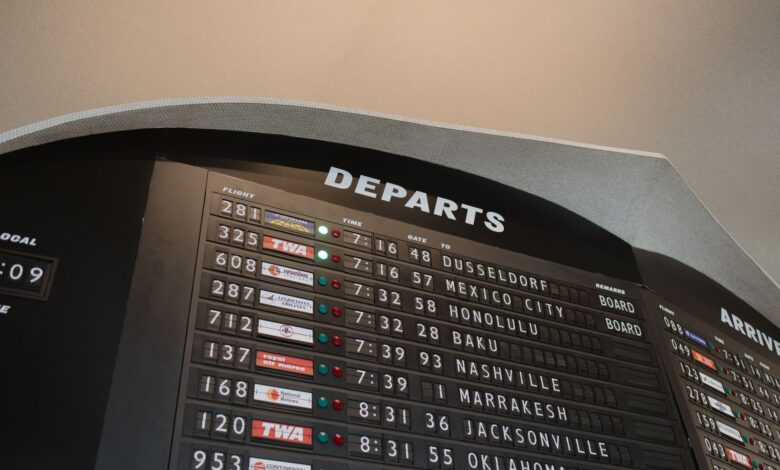
The disruption began on Thursday when an email, seen by the BBC, was sent to Aeroporti di Roma (ADR), the managing company for Rome’s airports, and directly to Fiumicino airport. The message, written in perfect Italian and originating from an email address linked to state health services in Bogotá, Colombia, claimed that “fighters” of the “Male State” had planted explosives on two incoming flights. The threat cited an attack on Italy’s “feminist regime” as motivation. As a result, one Aer Lingus flight bound for Rome was diverted to a military base in France, while another was escorted into Rome by Italian Air Force jets. No explosives were found on either aircraft.
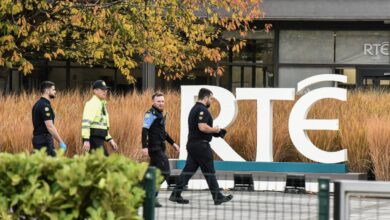
The incident is part of a wider pattern of anxiety-inducing disruptions across Europe. On Friday, a Ryanair flight from Rome to Lisbon and a Wizz Air flight from Prague to Rome faced similar scares, with the latter diverted to Venice. Simultaneously, high-profile Irish media organizations received bomb threats, forcing evacuations and drawing a response from the Irish government, which described the events as a “co-ordinated campaign of disruption.” At least one of these warnings was reportedly delivered by phone rather than email, suggesting varied methods of delivery.

In response to queries from the BBC Russian Service, an account on Telegram linked to the “Male State” and its founder, Vladislav Pozdnyakov, mocked the suggestion that the group was responsible. The post stated: “What Male State? Where have you seen it? It hasn’t existed for many years.” It further taunted the questioner, asking if they would contact the Russian president if a threat were signed by him. The group, which was banned in Russia in 2021, is believed to have renamed itself the “Male Legion” in some contexts. Pozdnyakov is thought to now reside abroad.
Despite the digital denial, Italian media remains skeptical. The newspaper La Stampa asserted that the “Male State” was behind the threats, characterizing the group as potentially acting as “the regime’s armed wing.” The paper suggested that the ability to execute attacks and subsequently deny them is “part of the Russian game plan.” Previous analysis by the online investigation team Bellingcat described the group in 2022 as a “vocal and vile online booster” of the Russian invasion of Ukraine, noting its extremist far-right ideology. A Telegram channel associated with Pozdnyakov continues to disseminate pro-Russian messaging regarding the war in Ukraine and highlights social tensions in Europe, including recent youth protests.
The strategic significance of these events extends beyond immediate aviation safety. Guido Crosetto, Italy’s defense minister, warned on Thursday of a deliberate “strategy to increase chaos.” He linked the bomb threats to a broader pattern of “hybrid threats” he has cited for years, including recent cyber-attacks that altered temperatures in supermarket refrigerators, destroying produce, and disruptions to the blood supply in France. “It seems to me that, day after day… there are those who have an interest in fuelling tensions,” Crosetto stated. “Our interest is to do the opposite and ensure the country’s security.”

For airport authorities, the novelty of the threat vector added to the operational urgency. A source at ADR noted that such specific, coordinated email warnings are “extremely unusual,” with no similar incidents recalled in recent years. The origin of the email from a Colombian state health service address remains unexplained, adding a layer of complexity to the forensic investigation. It is not yet clear if other countries’ airports or airlines received identical or similar threats, nor is it definitively established whether the campaign is centrally coordinated or consists of independent copycat actions.
The incident highlights the vulnerability of civilian infrastructure to low-cost, high-impact disruption tactics. While no military combat was engaged, the operational impact was substantial, requiring the use of military air assets for escort and the diversion of commercial traffic to non-standard landing sites. The denial by the “Male State” does not preclude the possibility that the threats were issued by state-aligned actors or proxies, a distinction that remains central to the ongoing European security assessment. The hunt for the perpetrators continues, with investigators examining the digital footprints and the coordination between the various incidents across Italy, Ireland, and the broader region.


One Comment