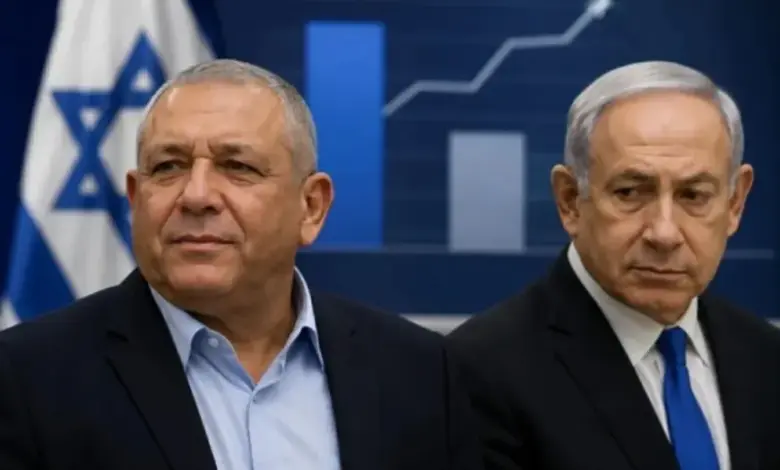
The political landscape in Israel remains fractured despite the clear numerical advantage held by the opposition. Eisenkot, who spent his early mornings consulting with party delegations, stated on social media that it was “time for a national emergency government.” He shared a photograph with President Herzog, pledging to do his best to be worthy of the task. However, the path to forming this government is obstructed by deep ideological rifts within the anti-Netanyahu camp, specifically regarding the role of Arab-led parties in the new administration.
The 2026 election saw a significant surge in political participation among Arab citizens of Israel, who constitute approximately 20 percent of the population. Two Arab-led parties, the Joint List and the Muslim Ra’am party, won a record 19 seats combined, nearly doubling their previous tally of 10. According to the Israel Democracy Institute, voter turnout in Arab localities surged to about 77 percent, up from 53.2 percent in 2022. Eyal Zisser, a professor at Tel Aviv University, noted that this surge reflected hostility toward the outgoing coalition of right-wing, pro-settler, and ultra-Orthodox parties, with voters seeking to remove Netanyahu from office and assert greater political influence.
Despite this numerical weight, the formation of a stable government faces a critical hurdle: the refusal of most Jewish opposition leaders to enter into a formal coalition with Arab parties. Eisenkot’s four-party alliance holds 48 seats. Of these, three parties reject Arab support, while only the left-wing Democrats advocate for cooperation. This leaves the anti-Netanyahu majority without an agreed-upon path to power. Yousef Jabareen, leader of the Joint List, stated that his alliance would act as a “safety net,” supporting a new government from outside the coalition to ensure it has the necessary majority to function. He cited the precedent of the 1990s, when Arab parties supported Yitzhak Rabin’s government to advance the Oslo peace accords.
Netanyahu, who secured the support of only 46 members of the Knesset during his consultations with President Herzog, has launched a counter-offensive. In a video statement on social media, he called for a “national unity government” composed of Zionist parties, excluding the Arab-led blocs. His party, Likud, and its ultra-Orthodox coalition partners argue that a government relying on Arab support is untenable. In response, a written statement from the Yesh Atid party dismissed Netanyahu’s appeal as hysterical, accusing him of using the language of unity only as his term ends and suggesting that his previous “emergency” governments were always worked against from within. The statement further contended that if Likud is interested in a unity government, it must first dissolve its alliance with “extremists.”

Analysts suggest that the outcome of these consultations may not result in a fundamental shift in Israel’s strategic direction. Dina Yacoub, an Egyptian researcher, argued that Eisenkot’s alliance is not necessarily less militaristic than Netanyahu’s bloc. While the difference may lie in how confrontations are managed and how military and diplomatic tools are utilized, the fundamental security and strategic objectives of the state may remain unchanged. This perspective tempers expectations that a change in leadership will lead to immediate alterations in Israel’s regional posture or domestic security policies.
As Eisenkot moves to finalize the coalition, political sources indicate that efforts are concentrated on resolving minor disagreements and the distribution of ministerial portfolios. The central negotiation point remains the precise nature of Arab party participation—whether they will be inside the government or provide external support to secure a parliamentary majority. Eisenkot recently announced that significant progress has been made in these consultations, aiming to submit a list of recommendations to President Herzog before the official designation deadline.
The uncertainty surrounding the coalition’s stability casts a shadow over the immediate future of Israeli governance. While the opposition holds the arithmetic majority, the lack of consensus on incorporating Arab parties into the executive branch threatens to replicate the gridlock that has characterized recent Israeli politics. The next critical development will be whether Eisenkot can bridge the gap between his Zionist allies and the Arab-led opposition to form a durable cabinet, or if the refusal to cooperate will force further rounds of consultations, potentially returning the mandate to Netanyahu or triggering a repeat election.