The sentencing is the latest flashpoint in a rapidly deteriorating relationship between France and Algeria, a tie historically anchored by colonial legacy, migration, and cultural exchange. For Daoud, the legal action represents more than a personal risk; it is a confrontation with the state’s refusal to acknowledge the “black decade,” the period of civil conflict in the 1990s that claimed an estimated 200,000 lives. By criminalizing the depiction of this era, the Algerian judiciary has drawn a line around one of the nation’s most traumatic chapters, effectively silencing a genre of literature that seeks to process collective trauma.
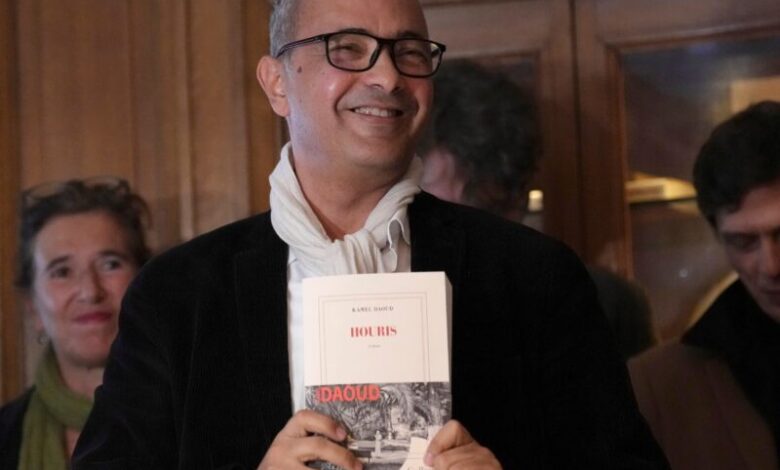
Houris, translated in English as Virgins, centers on the character of Aube, a young girl who survives a nighttime terrorist attack in the village of Had Chekala in western Algeria. Despite having her throat slit, she survives, though she loses her voice. The novel serves as a testament to the victims of the war, specifically highlighting the disproportionate suffering of women, who faced kidnapping, rape, and psychological torment at the hands of Islamist insurgents. Daoud, who previously reported on the conflict, stated that while statistics like “400 victims” are necessary, they fail to capture the visceral reality of stepping over dead bodies. The book challenges the official narrative maintained by the Algerian state, which has sought to close the chapter on the civil war through legal mechanisms designed to prevent re-litigation.
The legal basis for Daoud’s conviction is the Charter for Peace and National Reconciliation, adopted by referendum in 2005. This legislation granted widespread amnesty to both armed Islamists and security forces, effectively punishing any public mention or criticism of the civil war. Daoud criticized the law, noting the asymmetry of its application: “Ten years of war, nearly 200,000 dead according to estimates, thousands of terrorists granted amnesty … and only one guilty party: a writer.” The conviction under this charter signals that the state’s commitment to “reconciliation” is contingent on silence regarding the state’s own role and the nature of the insurgency.
The case against Daoud is inextricably linked to the civil suit filed by Saâda Arbane, an Algerian woman who claims the novel’s protagonist is based on her own life story. Arbane stated that she had been treated by Aicha Dahdouh, Daoud’s wife, a psychiatrist at Oran University Hospital specializing in trauma linked to the civil war. Arbane alleges that Daoud and his wife asked for permission to use her story, which she refused, yet found the details of her therapy sessions in the published book. In November, Arbane appeared on Algerian television using a speech aid to assert that the main character was modeled after her. Daoud has denied that the novel is based on Arbane’s life, labeling the accusations as defamation and alleging that the legal proceedings were orchestrated by the regime to suppress the book.
The diplomatic fallout has been immediate and severe. Following the issuance of two international arrest warrants against Daoud in May 2025, the French foreign ministry confirmed that the Algerian judiciary had informed Paris of the move. Christophe Lemoine, the French foreign ministry spokesman, stated that France is “monitoring and will continue to monitor developments in this situation closely,” emphasizing that Daoud is a “renowned and respected author” and reaffirming France’s commitment to freedom of expression. The arrest warrants, however, were not accepted by Interpol, the global police organization, limiting their immediate practical impact on Daoud’s movements outside of Algeria.
This legal battle does not occur in a vacuum but against a backdrop of broader geopolitical friction. Tensions between Paris and Algiers surged last year after France recognized Moroccan sovereignty over the disputed Western Sahara, a region where Algeria backs the pro-independence Polisario Front. In this context, the prosecution of a high-profile literary figure serves as a symbolic assertion of national sovereignty and a warning to other critics. Daoud is no longer the sole target of such measures; his fellow French-Algerian writer Boualem Sansal was previously sentenced to five years in prison for undermining national unity and insulting public institutions. Sansal was eventually granted a humanitarian pardon after an appeal by the German president and returned to France after serving one year. Daoud, however, remains under threat of having his Algerian nationality stripped, a move that would sever his legal ties to the country of his birth.
For the publishing industry and literary communities, the case raises urgent questions about the reach of state power over cultural expression. All of Daoud’s books have been removed from stores in Algeria, a form of cultural erasure that extends beyond the specific novel in question. Gallimard, Daoud’s French publisher, has defended the author and his wife, characterizing the legal actions as “orchestrated attacks” following the book’s ban. The dispute also has a parallel legal track in France, where Arbane is suing Daoud for invasion of privacy, with a preliminary hearing scheduled in Paris. This dual jurisdiction highlights the complex interplay between domestic legal rights in France and the extraterritorial assertions of Algerian law.
As Daoud remains in France, protected by police in cities like Berlin, the immediate threat of imprisonment is mitigated by international legal barriers and diplomatic standoff. Yet, the economic and social cost of this rupture is becoming apparent. The prohibition of his works removes a significant voice from the Algerian literary market, while the diplomatic friction complicates cultural and economic exchanges between the two nations. The case underscores a broader trend in which states utilize legal instruments to manage historical memory, prioritizing political stability over judicial transparency or historical accuracy.
The next critical step in this saga will likely be determined by the outcome of the Parisian civil trial and any further diplomatic responses from the European Union or international human rights bodies. For Daoud, the sentence is not just a legal status but a marker of the price paid for bearing witness. In a region where the “black decade” remains a sealed archive, the act of writing has become an act of resistance, and the courtroom has become the final battleground for who controls the narrative of the past.