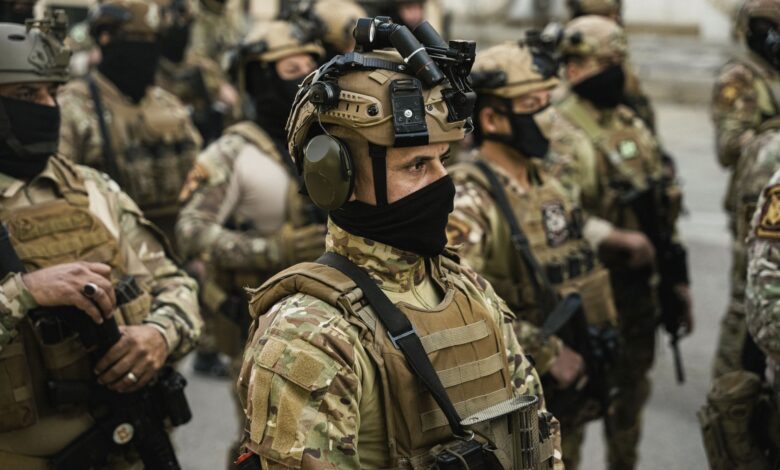
The court martial was framed by the army as a necessary measure to improve discipline among troops battling armed groups in a region that has endured decades of conflict. However, the harshness of the sentences underscores the deep-seated dysfunction within the Democratic Republic of Congo’s armed forces. The soldiers, arrested on 20 October in Walikale, were reportedly part of a campaign against the M23 that has long been undermined by poor discipline, inadequate equipment, and complaints from ranks regarding low pay. The government has repeatedly accused neighboring Rwanda of supporting the M23, an allegation denied by both the Rwandan government and the rebels, despite what international observers describe as overwhelming evidence.
This domestic crackdown on military discipline coincides with a significant escalation in external pressure on the conflict’s other key player. The United States has imposed sanctions on Rwanda’s defense ministry, a move announced barely a week after the US Treasury sanctioned Rwanda’s defense ministry again. The US cited the ministry’s role in the conflict in DR Congo as the primary justification. This diplomatic and economic pressure signals a shift in how the international community is engaging with the geopolitical dimensions of the war, moving beyond diplomatic statements to tangible punitive measures against state institutions.
The scale of the judicial purge in DR Congo is substantial. According to figures compiled by French broadcaster RFI, since the beginning of 2025, at least 507 soldiers have been convicted, including 381 death sentences. This trend accelerated following a pivotal policy change in March 2024, when DR Congo lifted a 20-year moratorium on the death penalty. The government cited the need to remove “traitors” within the army, expanding the scope of capital punishment to include involvement in armed groups, insurrection, treason, and war crimes. Rights groups widely criticized the reinstatement, but no formal executions have been carried out since the moratorium was lifted, leaving the legal status of the convicted soldiers in a state of suspended animation.
The conflict in eastern DR Congo is not merely a military engagement but a complex web of regional rivalry and internal governance failure. The FRN, which includes the M23, continues to challenge government authority, while the Congolese army struggles with professionalism. The recent sentences are part of a broader pattern; last month, another 27 soldiers were sentenced to death on similar charges of cowardice after withdrawing from the frontline. These actions suggest that the military leadership is prioritizing strict obedience over strategic effectiveness, a tactic that may fail to address the root causes of the troops’ reluctance to fight, such as poor conditions and lack of trust in government leadership.
Amidst this military and diplomatic tension, other geopolitical figures have been drawn into the legal fray. In October 2025, former Congolese President Joseph Kabila was sentenced to death in absentia on charges including war crimes and treason. Kabila denied the accusations and did not appear in court to defend himself. He has since been named as the leader of the FRN, further blurring the lines between political opposition and armed rebellion. His case adds a layer of high-stakes political consequence to the ongoing conflict, suggesting that the war is increasingly being fought as a struggle for national legitimacy and control.
While the focus remains on the military and diplomatic fronts, the region continues to face public health challenges that complicate the humanitarian landscape. The source material notes a doctor tested positive in DR Congo, where there is an outbreak of a rare virus. Government data indicates that more than 10,000 people have contracted this virus. However, the government states that the risk to the public remains low, and a UK government spokesperson similarly assessed that the wider risk to the UK public from the deadly virus remains low. While this health crisis is distinct from the armed conflict, it operates within the same fragile environment, where infrastructure and governance are strained by the ongoing fighting.
The interplay between US sanctions on Rwanda and DR Congo’s internal military justice system highlights the dual-track approach to the crisis. Externally, the pressure is being applied to state security apparatuses in Rwanda, aiming to curtail their involvement in the Congolese conflict. Internally, the DR Congo government is using the threat of capital punishment to force compliance among its own troops. Yet, the effectiveness of these measures remains uncertain. The army’s lack of professionalism and the rebels’ continued presence in Walikale and other areas suggest that neither sanctions nor executions have resolved the underlying instability. The next critical development will likely hinge on whether the US sanctions lead to tangible changes in Rwandan military support for the M23, or if the DR Congo army’s brutal internal discipline leads to further desertions and operational failures in the field.