
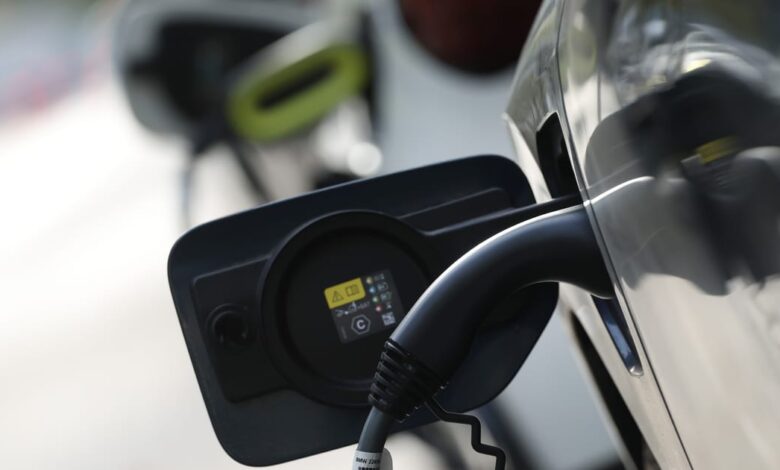
The rapid spending is driven by a surge in consumer demand. In early October, the Federal Office for Economic Affairs and Export Control (BAFA), which administers the scheme, reported approving 100,000 applications and disbursing over €430 million. Government estimates suggest the current funding is sufficient for approximately 800,000 vehicles, with individual grants reaching up to €6,000. While the federal budget initially earmarked €803 million for 2027, current projections anticipate payouts of €1.7 billion for that year. Environment Minister Carsten Schneider stated in October that demand has exceeded all expectations, reassuring buyers that funds are available for those currently registering vehicles. However, a structural risk remains: subsidies are granted only upon first registration, not at the time of order, leaving buyers with long delivery times vulnerable if the fund runs dry.
Market data confirms the boom. The Federal Motor Transport Authority recorded over 94,000 new EV registrations in October, representing a record 37% market share. Constantin Gall, an automotive expert at EY, noted to the AFP news agency that the market is booming primarily due to the subsidy. He warned that registrations could fall sharply once the funds are depleted, similar to the drop observed in 2024 following the discontinuation of previous subsidies in late 2023. The government has not yet confirmed a deadline for when the scheme will officially cease if the budget is exhausted ahead of schedule.

Amidst the financial strain on European incentives, long-term vehicle reliability data from the United States offers context on the technology’s durability. Ford Motor Company analyzed data from 36,000 2021 model-year Mustang Mach-E vehicles, finding an average battery health of 92% after 5.2 years of use. This measurement, derived from onboard battery management systems rather than laboratory tests, indicates that 95% of the fleet retains between 87% and 97% of its original capacity. These figures significantly exceed the 70% battery capacity threshold typically required to trigger warranty replacement claims, which most manufacturers guarantee for eight to ten years or 100,000 to 175,000 miles.
Industry analysts and third-party data providers corroborate these findings, suggesting that widespread premature battery failure is not the norm. Recurrent, a third-party data aggregation group, reports an average range retention of 95% after five years across a database of 50,000 vehicles. Furthermore, the reported battery replacement rate for vehicles from 2022 onward is only 0.3%, excluding major recalls. Tesla’s 2024 Impact Report similarly noted that Model 3 and Model Y vehicles with 200,000 miles on the odometer averaged 80% capacity. While Ford did not disclose specific warranty replacement statistics for the Mach-E, the aggregate fleet data suggests that real-world battery degradation is slower than many consumer fears indicate.
The contrast between Germany’s looming budget crisis and the robust longevity data from US manufacturers highlights a complex market dynamic. While financial incentives are driving immediate sales spikes in Europe, the underlying hardware appears capable of withstanding long-term use without significant capacity loss. For German policymakers, the immediate challenge is managing the cash flow of the subsidy program; for consumers, the data suggests that the vehicles purchased with these subsidies are likely to retain substantial value and utility well beyond the initial warranty period. No specific date has been set for the potential early termination of the German subsidy scheme, though the 2027 budget negotiations will be the next critical decision point.