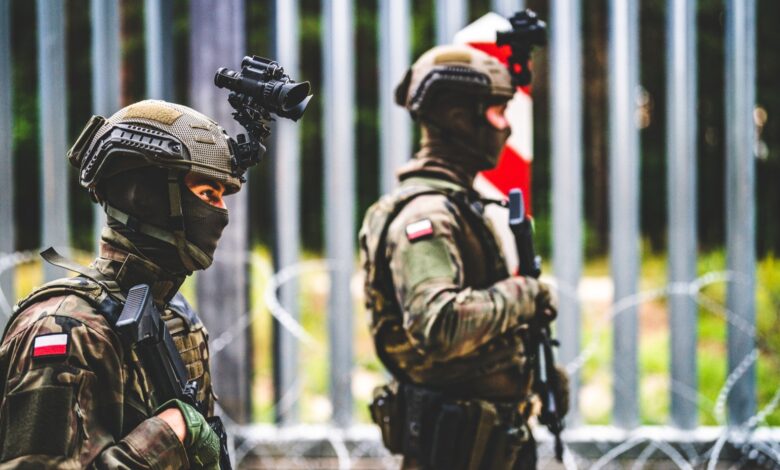
The acquittal is not merely a legal outcome for a single service member; it is a strategic signal regarding the rules of engagement along Poland’s eastern flank. For years, the Polish government has faced intense pressure to secure its border against what it describes as a hybrid migration crisis engineered by Belarus. The court’s decision reinforces that military personnel supporting civil border guards do not lose their status as soldiers, nor their right to use proportional force, when fulfilling their constitutional obligation to defend the state. This ruling arrives at a critical juncture, just as the intensity of the border conflict has dramatically shifted, and as the legal system grapples with the aftermath of the first fatal victim of this border standoff.
According to the indictment filed by the District Prosecutor’s Office in Warsaw, the incident on March 25, 2024, began when a group of migrants forced apart sections of the steel border barrier using a car jack. They carried ladders to navigate coils of razor wire and were throwing stones at Polish officers. Prosecutors argued that Karol S., who was present to support the Border Guard, exceeded his authority by firing in the direction of a border road where migrants, Border Guard officers, and other soldiers were all present. The prosecution alleged that three bullets ricocheted off a concrete post, the ground, and wire, while the remaining nine passed near the group, potentially exposing individuals to the immediate risk of death or serious injury.
However, the defense presented a different operational reality. Karol S. maintained throughout the investigation and trial that he shouted warnings, including “Polish Army, stop” and “Polish Army, stop or I’ll shoot,” before firing what he described as warning and alarm shots in a safe direction, slightly upward, to alert nearby posts. Judge Hunek rejected the prosecution’s case as “entirely misguided.” The judge emphasized that the accused was a well-trained marksman with very good shooting results, noting that if the intent had been lethal, the outcome would have been different. Crucially, the court found that the shots were not aimed at any specific individual, and expert opinions did not support the claim that anyone was actually exposed to a loss of life or health. Furthermore, Border Guard officers and soldiers who were formally listed as injured parties testified that they did not feel endangered and did not seek prosecution.
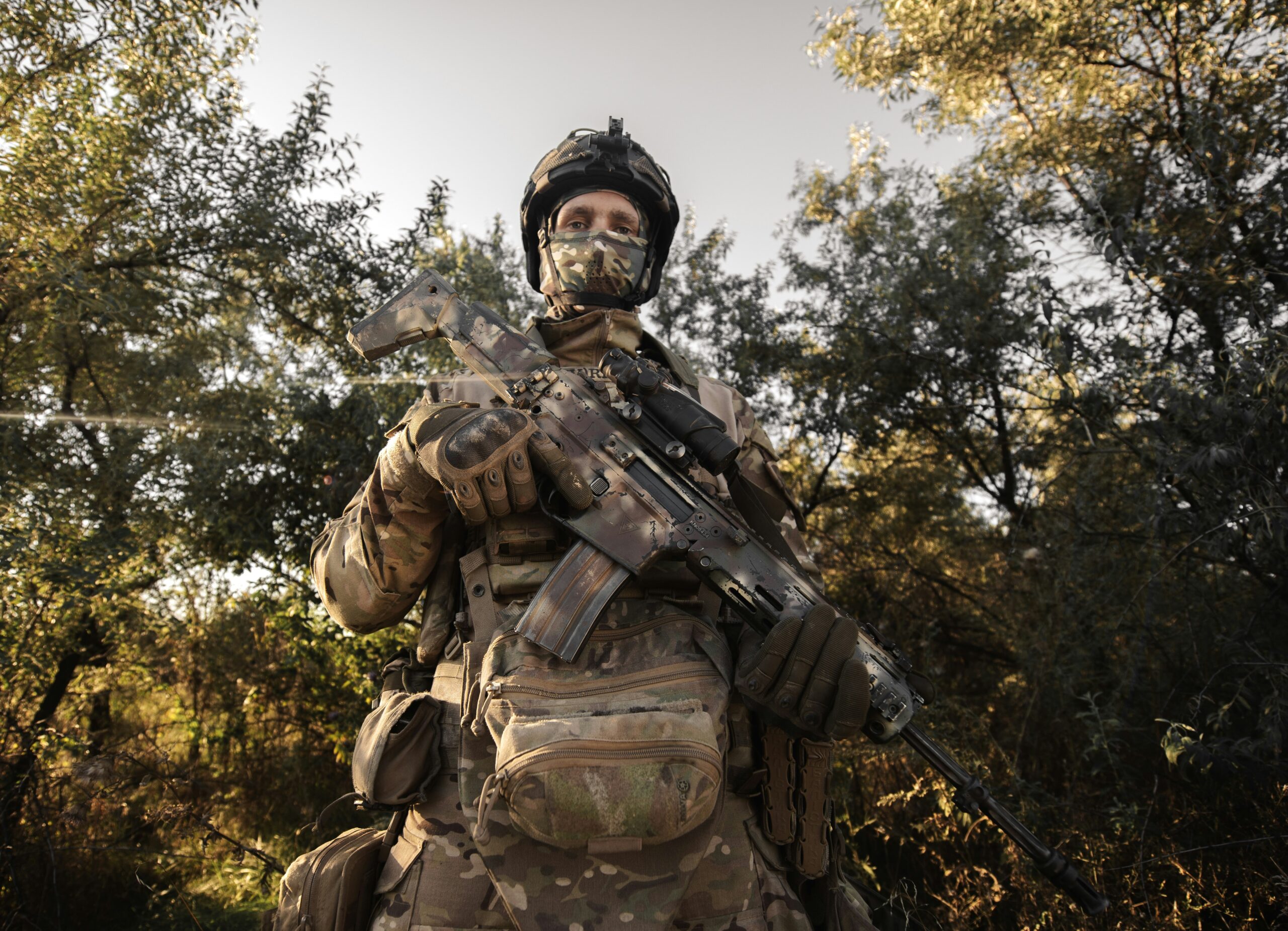
The legal significance of the ruling lies in the clarification of military powers. The court rejected the argument that soldiers assigned to support the Border Guard lose their military status and may only use weapons to raise an alarm. Judge Hunek stated that while these soldiers may receive certain civil powers, such as checking documents, this does not remove their military powers regarding the use of weapons. The judge’s ruling underscored the constitutional duty of every soldier to protect the border, stating, “The law cannot yield to lawlessness.” This interpretation provides a clearer legal shield for the tens of thousands of military personnel deployed to the border, ensuring that defensive actions taken in the face of aggression are protected under the principle of proportionality.
This legal clarification occurs against a backdrop of shifting operational dynamics. Since 2021, tens of thousands of migrants, primarily from Asia and Africa, have attempted to cross into the European Union with the encouragement of Belarusian authorities. These attempts have often involved violence against Polish border officers, including the throwing of sticks, stones, and Molotov cocktails. However, the intensity of these crossings has recently plummeted. In the first half of the current year, Polish authorities recorded only 250 attempted crossings, a 98% drop from the 15,500 attempts recorded in the same period of 2025. Poland now claims a 100% success rate in apprehending those who do manage to cross.
While the volume of crossings has decreased, the legal and political fallout from the 2024 peak remains unresolved. The most serious incident of that period occurred on May 28, 2024, when 21-year-old private Mateusz Sitek was stabbed in the chest with a knife through the fence while trying to stop a group of migrants. He died a week later. The death of Sitek caused significant outrage in Poland and prompted the government to further toughen border security measures, including easing restrictions on the use of firearms against migrants attempting illegal crossings.
In contrast to the swift acquittal of Karol S., the prosecution of the individual responsible for Sitek’s death has stalled. On June 10, 2026, Polish prosecutors named Mohamed Addamrou, a Moroccan national, as the suspect in the murder. Addamrou was charged with murdering a public official, a crime carrying a potential life sentence. However, because Addamrou remains in Belarus, and Minsk has not complied with extradition requests—including a European Arrest Warrant and a Red Notice from Interpol—prosecutors have suspended the investigation. Polish broadcaster RMF reported, citing unnamed sources, that investigators believe it is “highly unlikely” Belarus will extradite him. This divergence in judicial outcomes highlights the geopolitical constraints on domestic law enforcement; while the state can defend its soldiers from legal liability for defensive actions, it currently lacks the leverage to pursue justice for a soldier’s death when the suspect is held by a foreign ally of Russia.
The acquittal of Karol S. serves as a definitive legal precedent for the Polish military’s role in border defense. It confirms that in the context of an ongoing security threat, the use of force by trained personnel is governed by military law and constitutional duty, provided it is proportional. As the physical threat at the border recedes, the focus shifts to the institutional and diplomatic challenges. The next confirmed development will likely center on the diplomatic efforts to secure the extradition of Mohamed Addamrou, a case that remains suspended but unresolved, underscoring the complex interplay between national security, judicial sovereignty, and international relations in the post-crisis period.