
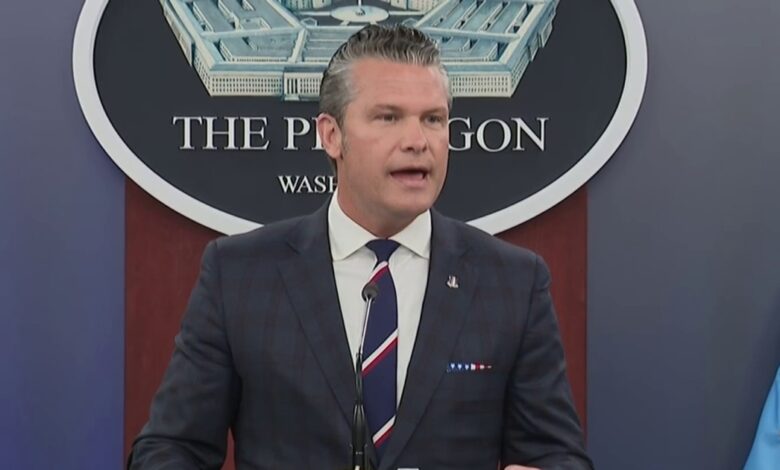
The resolution, introduced by Kentucky Republican Thomas Massie, sought to refer eight articles of impeachment to the Judiciary Committee. Massie was the sole Republican to vote in favor of the measure, a stance he had warned would lead to the termination of the impeachment effort if the committee was not engaged. The articles alleged that Hegseth engaged in the illegal conduct of war without congressional authorization and abused his powers as the head of the Department of Defense. The charges centered on the administration’s military hostilities in Iran, Yemen, Venezuela, and the Caribbean.
The vote occurred against the backdrop of significant political turbulence for the Republican Party. Following “sweeping midterm losses,” some party leaders had attributed their electoral defeat to the ongoing conflict with Iran and the subsequent surge in gasoline prices. This internal friction created a precarious environment where the party’s unity was tested. However, President Trump’s explicit backing of Hegseth solidified the Republican majority’s position. On Truth Social, Trump stated that “All Republicans, except Thomas Massie — a true loser — voted for Pete,” framing the resistance to impeachment as a necessary defense against Democratic overreach.
Trump’s comments emphasized his support for Hegseth’s handling of foreign affairs and domestic military affairs. He described Hegseth as a “great American patriot,” citing “victories in Venezuela and Iran” and claiming that the administration’s policies had resulted in “record military recruitment” and improved morale within the armed forces. The President also accused Democrats of “continuing to use the United States of America as a weapon” and “abusing” it, calling for their efforts to be stopped. These statements underscored the administration’s narrative that the impeachment push was a partisan tactic rather than a substantive legal inquiry into the conduct of war.
Politically, the rejection of the referral is significant because it prevents the immediate escalation of the impeachment process. In the House, sending articles to the Judiciary Committee is a critical step that allows for legal review and potential drafting of formal charges. By stopping the motion at the floor vote, Republicans avoided creating a formal record of articles in a judicial body, thereby preserving the status quo. Hegseth, who had downplayed the risks of the initiative on Monday, November 9, retains his position as Defense Secretary.
The procedural outcome highlights the mechanics of congressional impeachment and the power of party discipline. While the House has the sole power to impeach, the decision to refer charges to a committee is a gatekeeping mechanism. Massie’s strategy, which relied on the assumption that a committee referral would inevitably lead to a stalled or failed inquiry, has been validated by the vote count. The 211-204 tally indicates that while there is dissent within the Republican ranks, the majority remains aligned with the President’s directive to protect the Secretary.
However, this reprieve may be temporary. The source material notes that following the midterm elections, Democrats are expected to control both the House of Representatives and the Senate starting in January 2027. This shift in legislative control could alter the political calculus surrounding Hegseth’s tenure and the administration’s military decisions. If Democrats hold a majority, they may re-introduce impeachment efforts or hold new hearings, potentially bypassing the current Republican-led procedural hurdles.

The articles of impeachment raised by Massie accused Hegseth of violating the Constitution by waging war without congressional consent. This is a longstanding legal and political debate in the United States, particularly regarding the executive branch’s authority in matters of national security and foreign intervention. The specific conflicts in Iran, Yemen, Venezuela, and the Caribbean were cited as the primary examples of these alleged unauthorized actions. Whether these operations constitute a violation of the War Powers Resolution or other constitutional statutes remains a matter of legal and political contention, though the House vote on Tuesday did not adjudicate the legal merits, only the procedural path.
For the public and governance, the immediate effect is the continuation of the current defense leadership amidst ongoing military engagements. The administration maintains that these operations have yielded strategic successes and bolstered national security, while critics, including the proponents of the impeachment resolution, argue that such actions require explicit legislative approval to ensure democratic accountability. The vote serves as a clear signal of the current House’s intent to shield the executive branch from legislative censure in these specific areas.
As the House moves forward, the focus will likely shift to other legislative priorities, but the shadow of the impeachment effort remains. The next major political development will be the transition of power in January 2027, when the newly elected Congress convenes. The actions of the incoming lawmakers will determine whether the impeachment question is revisited or if the current administration’s military conduct is deemed settled by the electoral mandate. Until then, Hegseth remains in office, with the President’s full support and the House Republican majority’s protection.





One Comment