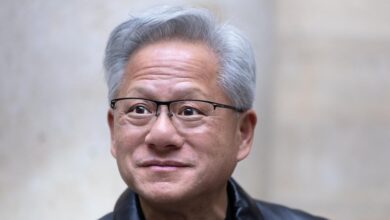
The controversy centers on reports that Huang, the co-founder of the world’s leading supplier of artificial intelligence chips, was the victim of a Chinese espionage plot. Huang has admitted to having an extramarital affair with Alice Huang, a former executive at the Singapore-based firm Megaspeed. US officials reportedly believe Alice Huang worked for Chinese intelligence, suggesting the relationship was a deliberate “honey trap” designed to compromise the Nvidia executive. In response, Beijing dismissed these allegations as “groundless speculation” and “an attempt to smear China.” Foreign Ministry spokeswoman Mao Ning told a regular briefing: “China’s technological progress is driven by independent innovation and open cooperation. The US side should stop fabricating such ‘spy’ narratives as a pretext for imposing a technological blockade.”
The incident has significant implications for the ongoing debate over export controls for advanced semiconductor chips. Huang has spent years lobbying against curbs on the sale of high-performance chips to China. Last year, President Trump cleared Nvidia’s H200 chips for export to China, a decision that generated objections from hawks in both political parties who fear Beijing will gain a dominant position in AI technology. The current diplomatic dispute therefore intersects with broader strategic concerns regarding the global AI race and the integrity of US export control regimes.

China’s sharp rebuttal comes on the eve of a high-stakes diplomatic meeting. President Trump is scheduled to meet with Chinese President Xi Jinping next week at the Asia-Pacific Economic Cooperation (APEC) gathering in Shenzhen, southern China. The timing of the accusation and the US response suggests that the “spy” allegations may be a bargaining chip or a point of contention in the upcoming bilateral discussions. While the US has not confirmed the specifics of the intelligence operation, the official stance implies that the relationship between the Nvidia CEO and the alleged Chinese agent poses a national security risk. Conversely, China maintains that its technological advancements are the result of independent innovation and open cooperation, rejecting the narrative that its progress is dependent on illicit espionage.
No independent verification of the espionage claim has been provided in the available materials. The dispute highlights the increasing entanglement of corporate leadership in geopolitical strategy, particularly in the semiconductor sector. As both nations prepare for the APEC summit, the resolution of this specific allegation may influence the tone of broader trade and technology negotiations. The US position relies on the credibility of the intelligence regarding Alice Huang’s background, while China’s position relies on the principle of sovereign non-interference and the rejection of US-led technological containment. The outcome of the Trump-Xi meeting will likely determine whether these tensions lead to further regulatory tightening or a temporary de-escalation in the tech war.