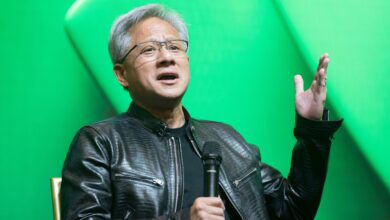

The core driver of this market behavior appears to be the entrenched demand for Nvidia’s high-performance computing chips, which remain the industry standard for training large language models and deploying AI infrastructure. In the current economic climate, where capital expenditure on AI by major technology firms is accelerating, Nvidia’s revenue trajectory is viewed as a direct proxy for the health of the broader AI ecosystem. Consequently, the market is treating the company’s operational metrics as decoupled from executive leadership dynamics, at least in the short term.
This scenario presents a distinct contrast to typical market reactions to executive governance crises. Historically, calls for a CEO’s departure, particularly in high-growth tech firms, can trigger volatility as investors reassess strategic continuity and management stability. However, the rise in Nvidia’s stock indicates that the perceived supply constraint on AI capabilities outweighs the risk associated with potential leadership transitions. The “moat” created by Nvidia’s CUDA software ecosystem and hardware dominance provides a buffer against sentiment-driven shocks that might otherwise affect a company with less differentiated products.
It is important to distinguish between reported sentiment and verified policy or action. There is no confirmed announcement of a leadership change, resignation, or board-level vote to remove Mr. Huang. The “calls” referenced in recent discourse remain in the realm of speculation, activist investor pressure, or internal dissent, none of which have resulted in an implemented policy change or formal governance restructuring. Until such a step is taken, the company’s operational strategy remains unchanged, and its supply chain commitments to hyperscale cloud providers are not under immediate threat.
From a trade and supply chain perspective, the stability of Nvidia’s leadership is critical for its partners, including Advanced Micro Devices (AMD) and Intel, who are also navigating the competitive landscape. However, the immediate commercial consequence of the current stock price movement is minimal for supply chain logistics. The primary economic force at play is the valuation of future cash flows, which are currently projected to remain strong due to the ongoing global race for AI supremacy. This suggests that the market is betting on the durability of the AI investment cycle rather than the personal tenure of the chief executive.

Investors and analysts should monitor whether this governance-related chatter escalates into concrete action, such as shareholder resolutions or board resignations. If the situation remains contained to speculative reports, the stock’s trajectory will likely continue to be dictated by quarterly earnings, data center revenue growth, and broader semiconductor cycle indicators. The current divergence between governance risk and stock performance underscores a market that is highly focused on technological adoption rates and revenue realization, potentially undervaluing the long-term strategic risks associated with executive continuity in a monopoly-like market position.
The next critical data point for assessing the sustainability of this trend will be Nvidia’s most recent quarterly earnings report, where management commentary on demand visibility and competitive threats will be scrutinized. If the company can demonstrate consistent supply allocation and strong order backlogs, the market may further discount governance concerns. Conversely, any signs of demand slowdown or supply chain disruption could amplify the impact of leadership instability, leading to a sharper re-rating of the stock. For now, the economic consensus remains that the AI boom provides a sufficient cushion to absorb non-operational shocks.