
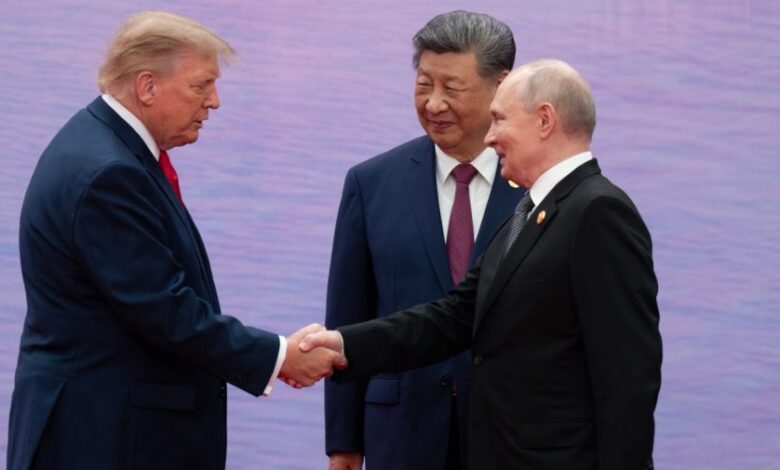
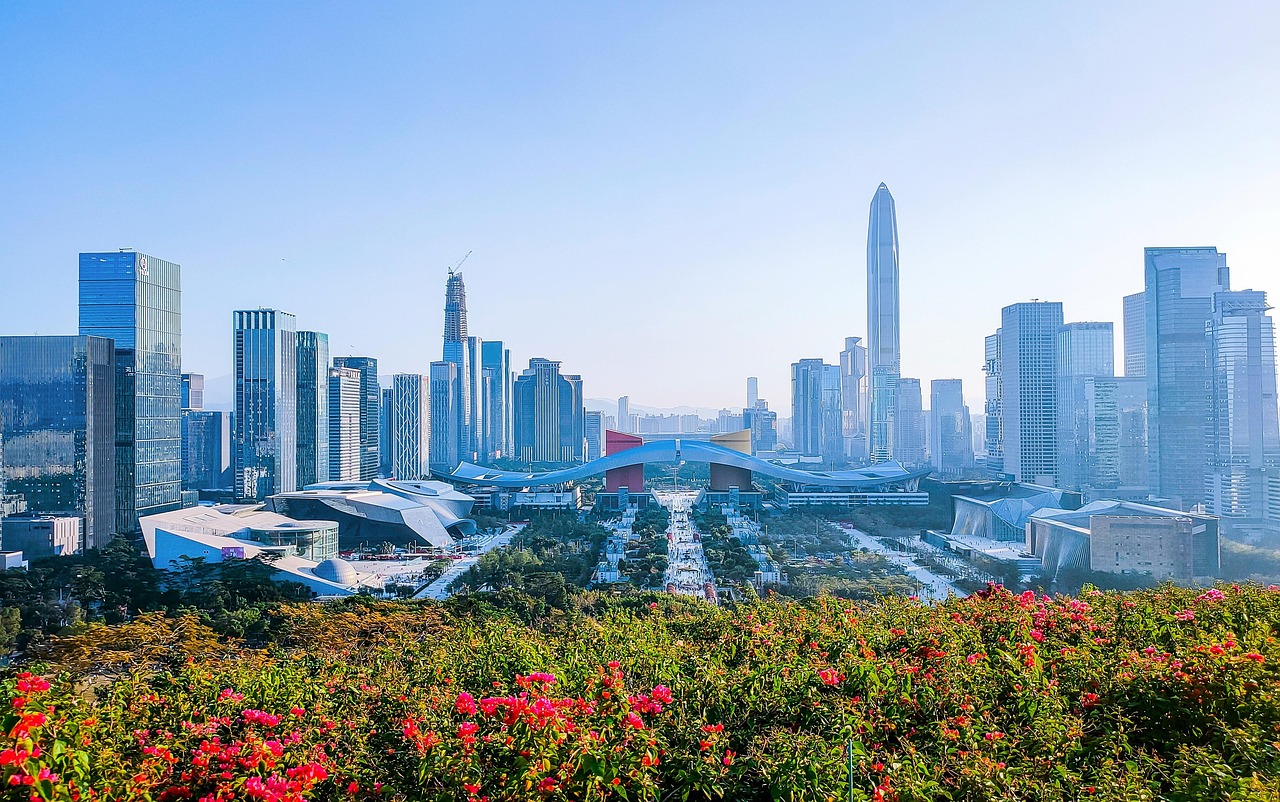
The convergence of the world’s three most powerful economies in the southern Chinese tech hub is being watched with a mixture of anticipation and anxiety. The agenda, according to Kremlin Foreign Policy Advisor Yuriy Ushakov, remains fluid but broad. Ushakov stated that because the international situation is characterized by “flaring conflicts,” the leaders could discuss any topic. However, the core of the discussions is expected to revolve around the war in Ukraine, the conflict involving Iran, nuclear proliferation, artificial intelligence, and escalating trade tensions.
The economic backdrop for these talks is fraught with tension. Just hours before the leaders gathered, Washington announced further restrictions on China’s access to advanced AI chips from companies such as Nvidia. This move threatens to complicate an already fragile trade truce between the U.S. and Beijing. In response, China has pledged to retaliate. At the Asia-Pacific Economic Cooperation (APEC) summit, where the summit’s leaders delivered opening addresses, President Xi Jinping positioned China as a stabilizing force against what he termed “trade protectionism.”
“We must firmly uphold the rules-based multilateral trading system with the World Trade Organization at its core, support free and open trade and investment, maintain the stability and smooth operation of global industrial and supply chains,” Xi told an audience of business executives. This rhetoric stands in stark contrast to the current U.S. approach under Trump, which has been defined by the imposition of global tariffs and a more muscular foreign policy. Xi’s remarks were a direct attempt to portray China as a stable partner on the global stage, even as his counterpart Vladimir Putin criticized Western sanctions against Russia and China during the same event.

The diplomatic maneuvering has drawn sharp comparisons to the 1945 Yalta Conference, where the U.S., Britain, and the Soviet Union formalized spheres of influence and set the stage for the post-World War II order. For many European and Asian capitals, the current summit evokes fears that the world’s greatest military powers may be arranging a new global order that disregards the interests of smaller nations. The Wall Street Journal recently noted that the summit is “creating more anxiety among allies than adversaries,” a sentiment that reflects the unease in Brussels and other capitals.
Despite the historical parallels, the Kremlin has downplayed the Yalta comparison, dismissing such narratives as “games of political scientists.” However, Ushakov acknowledged that the meeting will have a “major impact on global affairs.” He emphasized that the Russian side is not interested in “playing cards” or making empty gestures. Instead, he highlighted a specific proposal by President Putin regarding a humanitarian aid operation in the Konstantinovka district of Donetsk, stating that Russia would welcome any support for this initiative. Ushakov also indicated that a joint statement from the three leaders is being drafted, with work continuing on its final text.
The economic implications of this trilateral engagement extend beyond the immediate geopolitical flashpoints. The interplay between trade policy and national security is becoming increasingly difficult to separate. As the U.S. tightens its grip on high-technology exports, particularly in the realm of artificial intelligence, China’s commitment to “free and open trade” faces its first major test under this new administration. The retreat from multilateralism by the U.S. has prompted Beijing to step into the vacuum, positioning itself as the defender of the existing global trading order.
For businesses and consumers, the uncertainty surrounding these negotiations presents a complex environment. The potential for a coordinated response from the U.S., Russia, and China could reshape supply chains and energy markets, while a breakdown in talks could lead to further fragmentation. The coming days will reveal whether this summit results in a concrete framework for cooperation or merely a reaffirmation of competing interests. The world watches to see if the handshake in Shenzhen will lead to a new era of great-power coordination or deepen the divisions that have characterized international relations in recent years.
As the leaders prepare for their Thursday meeting, the focus remains on the tangible outcomes: Will there be a joint statement? Will the trade truce hold against the backdrop of new chip restrictions? The answers will likely determine the trajectory of global economic stability in the near term.

4 Comments