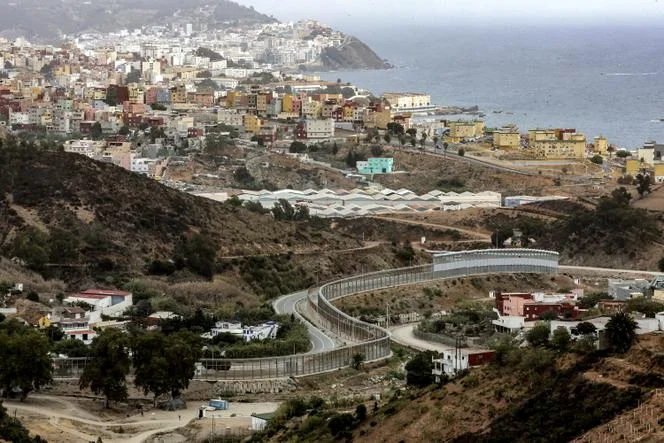
In the weeks preceding September 23, social media platforms were saturated with rumors of a second mass crossing, echoing the humanitarian crisis of July, when more than 70,000 people irregularly crossed from Morocco into Ceuta. The potential for a repeat event led Spanish authorities to bolster border controls, deploying additional police and military personnel to the perimeter. Meanwhile, the tension was mirrored on the Moroccan side. On Wednesday, September 23, Spanish Prime Minister Pedro Sánchez, addressing the United Nations General Assembly in New York, acknowledged the joint security efforts. “In Morocco, yesterday, for example, we saw a very significant police deployment at both the Ceuta and Melilla borders. That should also be acknowledged,” Sánchez stated, praising the Moroccan authorities for their response to the renewed calls for migration.
The underlying drivers of these tensions are as much socioeconomic as they are geopolitical. While Morocco has experienced an economic boom, a significant portion of its young population remains struggling to find employment or envision a future within the country. Reporters ahead of the elections captured the sentiment of many young Moroccans looking longingly across the Mediterranean or just across the border to European territory, imagining lives they believed were accessible only through irregular migration. This demographic pressure creates a constant strain on the border infrastructure, transforming the enclaves into sites of both humanitarian concern and strategic contestation.
Within Spain, the response to this strain has fractured along political lines, revealing deep divisions over how to manage the relationship with Rabat. In Ceuta itself, the local assembly recently rejected a proposal put forward by the far-right party Vox. The motion, introduced by Vox spokesman Juan Sergio Redondo, had called for a significantly tougher Spanish response. It sought to demand a public Moroccan commitment to respect Spanish sovereignty, suspend the 1991 friendship and cooperation treaty, and review all bilateral cooperation. The motion also proposed diplomatic escalations, including summoning the Moroccan ambassador and potentially recalling the Spanish ambassador for consultations if the migration crisis continued. The assembly voted 17 to 4 against the measure, leaving the hardline approach without institutional backing from the body that administers the territory.
Conversely, other voices within the Spanish political spectrum are arguing for an even more radical shift, though in the opposite direction. The Sovereign Assembly of Mallorca (ASM), a pro-independence group led by retired educator Jaume Sastre, has urged Madrid to hand over Ceuta and Melilla to Morocco. Framing this as part of a broader “decolonization” initiative, the ASM argues that the recent “human tragedy” at the border would not have occurred if Spanish control had ended. The group contends that the enclaves are a “drain on public resources” and a “source of destabilization,” asserting that their transfer is “only a matter of time.” The ASM’s declaration challenges the historical narrative that Ceuta (conquered in 1640) and Melilla (1497) were inherently Spanish, comparing the situation to other decolonized territories and implicating the Spanish monarchy in perpetuating a “colonial conflict.” For the ASM, the return of these territories to Morocco is an “act of justice,” noting that “these two African cities belong to Africa.”
These internal debates in Spain highlight the complexity of the Spain-Morocco relationship. The central government, represented by Prime Minister Sánchez, appears to be prioritizing stability and cooperation, acknowledging the necessity of Moroccan police presence to maintain order. This stands in contrast to the parliamentary rejection of the Vox proposal, which suggests a lack of consensus in Ceuta for a confrontational stance. Yet, the existence of groups like the ASM introduces a third perspective: that the status quo is unsustainable not because of Moroccan aggression, but because of the inherent instability of Spanish colonial remnants in North Africa.
The historical weight of the enclaves remains a point of contention. Spain maintains that Ceuta and Melilla are Spanish territories, a position rooted in centuries of control. Morocco, however, views them as occupied territories, a stance that informs its diplomatic posture and its domestic policies regarding the border. The recent events, from the failed “assault” rumors to the assembly votes, demonstrate that this dispute is not merely a bilateral issue but one that permeates local politics, social media, and regional security strategies.
As the immediate threat of a second mass crossing recedes, the structural issues remain unresolved. The 1991 treaty, which Vox sought to suspend, remains in effect, but its durability is tested by the recurring cycles of migration and political rhetoric. The young Moroccans who looked across the border on September 23, and the Spanish citizens debating the fate of the enclaves in their local assemblies, are all participants in a long-term negotiation over sovereignty and identity. The next development in this geopolitical chessboard will likely be determined not by a single mass crossing, but by the slow, grinding friction of these competing narratives regarding who has the right to define the future of Ceuta and Melilla.