
Earlier that day, the ceremonial machinery of statecraft was visible in the background as Chinese President Xi Jinping broke decades of diplomatic precedent to greet US President Donald Trump on the tarmac. Cameras captured a woman in a striking yellow dress standing a few steps from the two leaders: Monica Crowley, the 35th chief of protocol of the United States. In the high-stakes arena of summitry, Crowley functions as an invisible stage manager, responsible for the logistical and ceremonial choreography that allows the political giants to move in sync. Her presence highlighted the meticulous preparation behind what is being billed as a historic encounter.
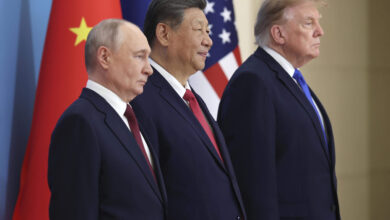
On Thursday, the leaders of the United States, China, and Russia are scheduled to hold their first-ever trilateral meeting on the sidelines of the Asia-Pacific Economic Cooperation (APEC) summit, which China is hosting in Shenzhen on November 18 and 19. The gathering has drawn immediate, albeit contested, historical parallels. Many observers have likened the summit to the 1945 Yalta Conference, where the United States, the United Kingdom, and the Soviet Union agreed on the post-war order. However, that comparison is fraught with nuance; the powers at Yalta had been allied during a world war, a context entirely absent from the current dynamic.
“It is a far cry from being a new Yalta,” cautioned Vuk Vuksanovic, a lecturer in foreign policy and grand strategy at King’s College, London. He noted that at Yalta, there was a concrete idea about how the world would look and where demarcation lines between superpowers would lie. “We don’t have anything similar, not even the contours of that, in the making at this moment,” Vuksanovic said. Instead, Scott Lucas, a professor of international politics at University College Dublin, characterized the meeting differently: “It’s a summit of Trump’s ego, Putin’s tactics, China’s strategy.”
The divergent goals of the three leaders define the constraints of the negotiations. The White House has stated that Trump plans to discuss the war with Iran and a possible three-way agreement on nuclear armament with Xi and Putin. Ukraine is notably absent from the formal agenda, as Xi is understood to be reluctant to be drawn into what he views as a European matter. This exclusion reflects a broader strategic calculation by Beijing to maintain distance from the conflict in Ukraine while managing its complex relationship with Moscow.
The timing of the summit is also significant within the broader context of US foreign policy. Trump traveled to China after attending the Association of Southeast Asian Nations (ASEAN) meeting in Manila. His administration’s approach has been marked by strained ties with traditional US allies, with the president at times floating troop withdrawals from South Korea and cuts to assistance for Japan. Despite these shifts, the administration continues to describe China as Washington’s main geopolitical rival. This creates a paradoxical dynamic: a search for a new arrangement with China and Russia while simultaneously signaling a reduction in security commitments to allies in the region.
Analysts suggest that few concrete outcomes can be expected from the trilateral talks. The meeting serves more as a platform for signaling and strategic posturing than for immediate policy breakthroughs. For the United States, the goal appears to be leveraging the meeting to assert a dominant position in global security architecture, particularly regarding nuclear armament and regional conflicts like Iran. For Russia, the engagement offers a tactical opportunity to reinforce its partnership with China and present a united front against Western influence. For China, the summit allows Beijing to position itself as the central mediator and a stabilizing force in the global order, hosting the APEC summit and facilitating direct dialogue between its two most powerful rivals.
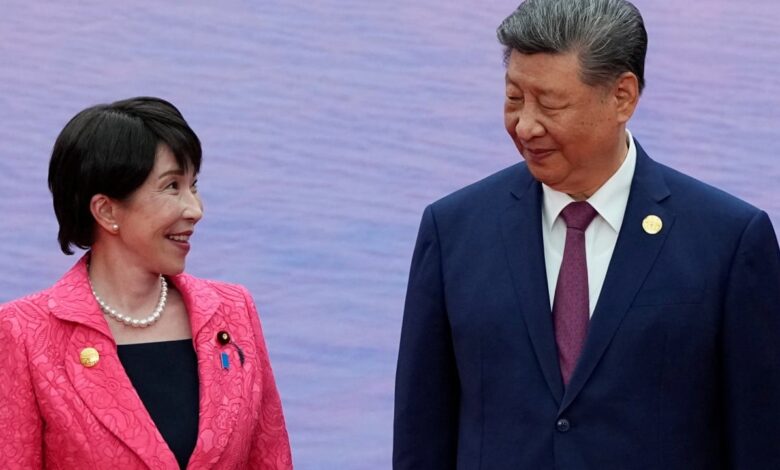
The diplomatic logistics of such a high-profile event are immense. The presence of figures like Chief of Protocol Monica Crowley illustrates the intricate choreography required to manage the interactions between leaders who have vastly different diplomatic styles and political objectives. The choice of music for other leaders, such as the bittersweet tune for Prime Minister Takaichi, further highlights the symbolic weight placed on every aspect of the summit, from the stage to the tarmac.
As the three leaders prepare to meet, the focus remains on what will not be said as much as what is. The absence of Ukraine from the agenda and the lack of a clear framework for a new world order suggest a meeting defined by ambiguity. The significance of the Shenzhen trilateral lies not in a potential breakthrough, but in the mere fact of the interaction itself—a direct, high-level engagement between the leaders of the US, China, and Russia that has not occurred in this format before.
In the end, the summit serves as a snapshot of a shifting global order. The bittersweet music played for the Japanese delegation and the unprecedented tarmac greeting for the US president both point to a world where traditional alliances are being tested and new, uncertain arrangements are being explored. The coming days will reveal whether the strategic posturing in Shenzhen yields any tangible results or remains a symbolic exercise in great power management.

One Comment