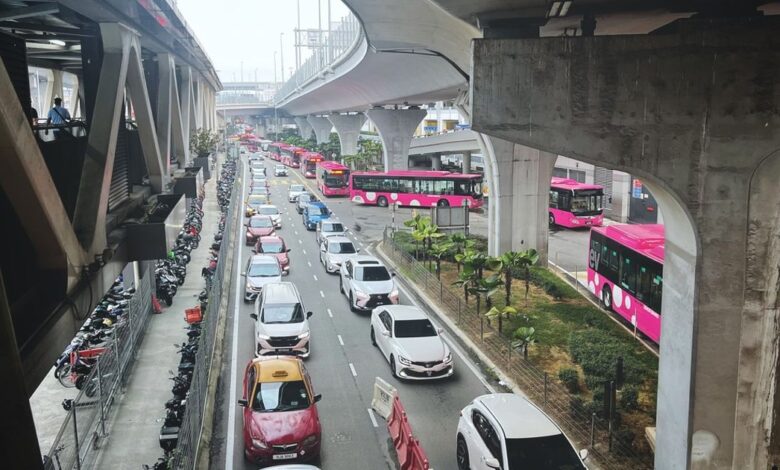
The central development of Budget 2027 is a dual focus on easing the anticipated surge in cross-border travel and stimulating private sector investment, particularly in Johor. Anwar stated that the government has agreed to implement the e-ART to improve public transport connectivity. This initiative is part of a broader package that includes adding new bus routes, increasing the frequency of bus and KTM Komuter services, and providing Grab shuttle services in high-demand areas. These steps are explicitly designed to prepare for the major boost in connectivity expected when the Johor Bahru-Singapore Rapid Transit System (RTS) Link opens next year.
The timing of these announcements is critical. On October 2, the Malaysian and Singaporean governments jointly announced that passenger service on the RTS Link is now expected to begin in February 2027. This timeline, communicated by RTS Operations Pte Ltd to the Land Transport Authority of Singapore and the Ministry of Transport Malaysia, sets a strict deadline for domestic infrastructure readiness. The federal government’s response, detailed in the budget, seeks to ensure that the local transport network can absorb the influx of commuters without collapsing under the weight of increased demand. By positioning the e-ART as the “main solution,” the administration is signaling a reliance on autonomous, elevated transit to bypass ground-level bottlenecks that have plagued Johor Bahru for years.
Beyond transportation, Budget 2027 introduces significant fiscal incentives aimed at bolstering Malaysia’s economic competitiveness. The budget includes enhanced investment perks for regional headquarters and increased spending on tourism. These measures are intended to attract multinational corporations and diversify the economic base, moving beyond traditional manufacturing into higher-value services and tourism sectors. The government’s approach combines immediate infrastructure relief with long-term structural economic policies, aiming to create a resilient ecosystem capable of supporting both domestic needs and international integration.
The private sector has responded positively to the budget’s emphasis on home ownership and industrial development. S P Setia Bhd, a major property developer, welcomed the measures in a statement on October 13. The company highlighted its approval of the extension of the stamp duty exemption for residential properties priced up to RM750,000 until 2030. S P Setia’s President and CEO, Datuk Zaini Yusoff, noted that this extension broadens support for prospective homebuyers and improves accessibility. The company also praised the continued focus on Johor as an economic and investment corridor, specifically referencing the Johor-Singapore Special Economic Zone (JS-SEZ).
Yusoff stated that the JS-SEZ and improvements in regional connectivity complement S P Setia’s established presence in the state and its expansion into industrial development. The budget’s inclusion of the Green Investment Tax Allowance (GITA) was also cited as aligning with the group’s plans for Setia Fontaines Industrial Park, which is being developed as a green industrial park. This alignment suggests that the government’s fiscal tools are effectively targeting specific industrial strategies, encouraging sustainable growth in key economic zones. Furthermore, the reintroduction of the variation of price (VOP) mechanism for the construction sector was lauded for providing greater certainty to contractors, helping manage fluctuations in key inputs such as diesel and bitumen.
The political significance of these moves lies in the government’s effort to balance macroeconomic stability with targeted regional development. By addressing Johor’s congestion “immediately,” the administration is acknowledging a specific geographic vulnerability in the national infrastructure. The opposition to such rapid infrastructure changes often centers on cost and environmental impact, though no specific opposing political statements were detailed in the provided materials. However, the reliance on autonomous technology for the e-ART introduces a layer of technological risk and regulatory complexity that remains to be fully assessed by the public and industry stakeholders.
For the public, the immediate consequence is a commitment to improved transit options before the RTS Link becomes operational. The extension of stamp duty exemptions offers tangible relief to homebuyers, potentially stabilizing the property market in the lead-up to 2030. The budget also emphasizes the 13th Malaysia Plan’s objective to increase affordable housing, suggesting that public-private collaboration will play a crucial role in delivering quality, sustainable, and well-connected communities. S P Setia stressed the importance of managing construction and housing development costs to ensure that quality homes remain accessible, balancing affordability with a sustainable property ecosystem.
As the February 2027 deadline for the RTS Link approaches, the success of the e-ART implementation will be closely monitored. The integration of autonomous rapid transit with existing bus and rail networks represents a complex logistical challenge. While the government presents this as a definitive solution, the actual execution will determine whether Johor Bahru can handle the increased cross-border mobility without severe disruption. The budget’s combination of infrastructure investment and tax incentives aims to turn this potential crisis into an opportunity for economic expansion, positioning Johor as a pivotal node in the regional economic landscape.
The next critical phase will involve the detailed planning and tendering processes for the e-ART system, as well as the operational adjustments to the RTS Link. Stakeholders, including developers like S P Setia and transport authorities, will need to coordinate their efforts to ensure that the promised improvements in connectivity and investment climate materialize on the ground. The political narrative has shifted from announcement to implementation, with the coming months testing the government’s ability to deliver on its pledges of immediate congestion relief and sustained economic growth.