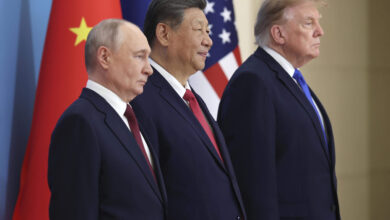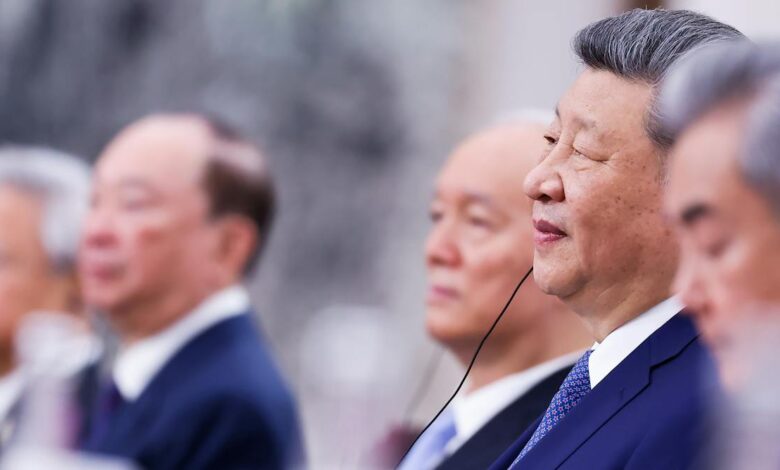
This arrangement illuminates the central dynamic of the upcoming Asia-Pacific Economic Cooperation (Apec) summit in Shenzhen, where the leaders of the US, China, and Russia will sit down together for the first time in history. While the event is billed as a trade forum addressing tariffs and the fragile truce expiring in January 2027, it is equally an “Iran summit.” The party with the most leverage in this specific negotiation is the host. Since the US–Israeli strikes in late February, Iran’s economy has relied on a single customer: China. The US Treasury estimates that Beijing buys approximately 90 percent of Iran’s oil exports, primarily through small independent “teapot” refineries in Shandong. Although the US naval blockade has reduced China’s Iranian imports by 48 percent since the war began, the flow has not stopped. Instead, the speed at which Iran’s financial resources deplete is now set in Shandong, not by the US Navy at sea, but by the pace of Chinese purchases.
China’s strategy in Shenzhen reflects a broader shift in its diplomatic posture. President Xi Jinping has welcomed over 25 world leaders to China in 2026, including Canada’s Mark Carney, Germany’s Friedrich Merz, and Spain’s Pedro Sánchez. This surge in high-level hosting marks a decisive break from the “wolf warrior” diplomacy of the 2010s, an era characterized by belligerent social media sparring and confrontational rhetoric that was largely retired in the early 2020s. By removing former figures like Qin Gang and Zhao Lijian from prominent roles, Beijing has signaled an acknowledgment of the limitations of that aggressive approach. The current strategy is one of consolidation: Beijing seeks to evolve from being a participant in the existing international system to the architect of a new global order where China and the Global South play a dominant role.

This vision was codified in a 45-page white paper released by China’s State Council in June, and reiterated by Foreign Minister Wang Yi in late October, who declared that “the rise of the global south is the most momentous shift since the second world war.” The Apec summit serves as the vehicle to convey this message, offering China a platform to gain legitimacy for its proposed restructuring of international norms. The timing favors Beijing significantly. With the US reeling from a punitive electoral defeat and bogged down in conflicts in Iran and Ukraine, and Russia mired in its own quagmire, Xi Jinping holds the strongest geopolitical hand. The summit offers an opportunity to adjust the terms of engagement with both Washington and Moscow, driven by favorable geopolitical conditions created by their respective military setbacks.
However, the interests of the three leaders in the room remain divergent. Donald Trump, facing pressure to lower fuel prices and exit a war that contributed to his party’s midterm losses, seeks Chinese help to end the conflict in Iran. He is also pushing for a three-way nuclear arms control agreement, a demand China has historically refused, citing the disparity in warhead stockpiles between its own arsenal and those of the US and Russia. Vladimir Putin, meanwhile, aims to make Ukraine a central topic, seeking support for a settlement favorable to Moscow. China has sought to keep Ukraine off the agenda entirely, fearing political backlash and deeper economic countermeasures from the European Union. Instead, Beijing is positioning itself as a guarantor of an Iran–Gulf arrangement, a role it has been edging toward since its envoy Zhai Jun’s first wartime tour in March. Zhai’s recent itinerary, which includes Tehran, Muscat, and Riyadh, traces a path toward a regional settlement rather than a bilateral US–Iran deal. Oman, which shares the Strait of Hormuz with Iran, sent its sultan to China for the first state visit since diplomatic relations began in 1978 in the same fortnight.

China’s objectives are clear: it wants the Strait of Hormuz, through which approximately 45 percent of its oil imports pass, to remain open, and it wants a seat at the table in any settlement. It does not view an American victory that leaves a client-free Gulf under US naval control as desirable, nor does it want an Iranian collapse that would destroy its cheapest oil supplier. The leverage China holds is not a leak in the blockade, but a policy. When the US Treasury sanctioned the Hengli refinery in April, China’s commerce ministry issued an injunction blocking the sanctions, declaring them a violation of international law. This protection extends to the broader infrastructure that keeps the Iranian economy alive.
The outcome of the Shenzhen summit will likely be subtle. The linkage between the end of the Iran war and the extension of the trade truce or restraint on technology controls will never be stated explicitly. It will appear in what each leader leaves out of his readout. Skeptics argue that China’s leverage is overstated, noting that Beijing holds an estimated one billion to 1.4 billion barrels in reserves and has cut imports rather than paying war premiums. Yet, as long as the US strategy relies on economic attrition to bankrupt Tehran, the customer who sets the clock remains in Shenzhen. The next major pressure point will be the expiration of the current trade truce in January 2027, a deadline that looms over every handshake in the conference room.