The Houthi military wing claimed responsibility for the incident, stating that they had launched a ballistic missile at King Khalid International Airport in Riyadh. The group asserted that the missile struck its target, though independent verification of the impact and its specific effects on the facility remains pending. The claim represents a notable tactical shift, as previous Houthi operations have primarily focused on maritime targets in the Red Sea or locations closer to the Yemeni-Saudi border.
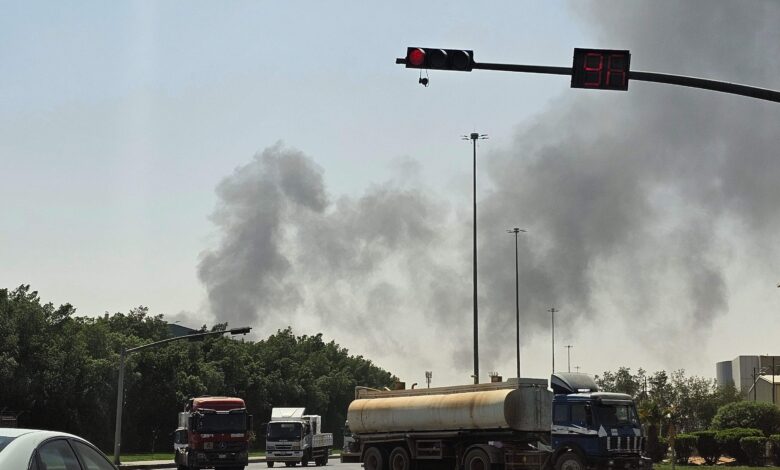
Witness accounts and initial reports indicate that smoke was seen rising from an aircraft at the airport following the blasts. However, details regarding the extent of damage to the plane, the cause of the fire, and whether the missile directly struck the aircraft or an adjacent area have not been fully confirmed. There is currently no official word on what specifically caused the explosions beyond the Houthi claim, nor are there verified reports of casualties at this time.
The timing of the incident coincides with a broader intensification of the Middle-East conflict. The Houthis have increasingly aligned their operations with wider regional tensions, often framing their attacks as solidarity actions. By targeting Riyadh, the capital and a symbol of Saudi political power, the group seeks to project reach and impose strategic pressure on the Kingdom. The use of ballistic missiles in this context suggests a focus on overcoming air defense systems to deliver a high-visibility impact on a major urban center.
Saudi Arabia maintains a multi-layered air defense network designed to intercept ballistic and cruise missiles. The fact that explosions were heard in the capital raises questions about the trajectory of the projectile and the performance of existing defensive assets. Whether the missile was intercepted over the city or struck the airport directly is a key operational detail that requires further clarification. The potential for civilian casualties and the disruption of air travel at one of the region’s busiest airports represent significant humanitarian and economic concerns.
The Houthi claim of a successful strike on a major international airport, if verified, would demonstrate a capability to threaten high-value targets deep within Saudi territory. This development could influence the strategic calculus of regional actors, potentially prompting further retaliation or a reassessment of force postures. International observers are monitoring the situation closely, noting that such escalatory moves risk widening the scope of the conflict beyond the immediate theater of operations in Yemen and the Red Sea.
As of the latest reports, the situation remains fluid. Authorities have not released detailed assessments of the airport’s operational status or the condition of the aircraft involved. The absence of confirmed casualty figures and independent damage assessments means that the full scale of the incident is still under investigation. The coming hours are critical for determining whether this event marks a new phase in the conflict, characterized by direct threats to Saudi capital infrastructure, or remains an isolated incident within the broader pattern of Houthi missile and drone attacks.