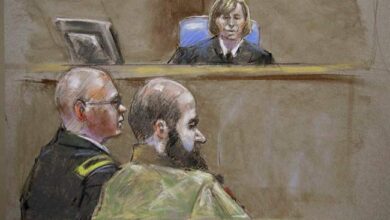

The decision to broadcast the execution live has generated significant scrutiny regarding the administration of capital punishment in the United States. Pentagon spokesperson Sean Parnell announced on Monday that President Donald Trump had approved the execution. Hegseth, who made the initial comments while visiting the USS Abraham Lincoln aircraft carrier, emphasized the public nature of the event, stating, “We’ll make sure that people are able to watch it, that it’s public.” When pressed on whether Hasan had made any final requests or contacted the administration, Hegseth responded, “Don’t care. We’ll see him on December 3rd.”
The choice of a firing squad, rather than lethal injection, addresses logistical and practical challenges currently facing the death penalty system. As many states struggle to access execution drugs or find medical professionals willing to participate in lethal injections, firing squads are increasingly viewed as a viable alternative. Brenner Fissell, a professor at Villanova Law and vice president of the National Institute of Military Justice, noted that firing squads can be a quicker and more precise method of execution. However, Fissell also suggested that the method carries a specific cultural weight, describing a “perceived masculinity and military-ness” that aligns with a broader “lethality culture” being emphasized by current leadership.

Legal experts have raised concerns about the unprecedented nature of a government-initiated broadcast. Elisabeth Semel, co-director of the Death Penalty Clinic at UC Berkeley Law, stated that while there has been long-running discussion about televising executions, she could not recall a situation where the government itself instigated the broadcast. She argued that this raises serious questions about the administration’s motivation and the dignity of the defendant. Conversely, Deborah Denno, a law professor at Fordham University, suggested that livestreaming could offer benefits in terms of transparency, allowing the public to be fully aware of the procedures involved in capital punishment. This perspective gains context following the botched lethal injection of Christa Pike in Tennessee, which has renewed debates over the manner in which criminal defendants are put to death.
Despite the confirmed date, the execution remains subject to potential legal intervention. Hasan retains the right to file a habeas petition in civilian court, a legal request to review the legality of his detention. Such a move could significantly delay or even halt the execution. Eugene R. Fidell, a visiting lecturer at Yale Law School specializing in military law, noted that these legal maneuvers could potentially outlast the current administration, creating uncertainty about whether a future administration would maintain the same stance on executions.

The case of Nidal Malik Hasan remains one of the most significant incidents of military violence in recent history. The 2009 shooting resulted in 13 deaths and 32 injuries, prompting a reevaluation of security protocols at military installations. As the December 3 date approaches, the focus shifts from the historical crime to the procedural finality of the state’s response. The livestreaming of the event marks a distinct departure from the historical discretion usually afforded to military justice, placing the mechanism of state power under the direct gaze of the public.