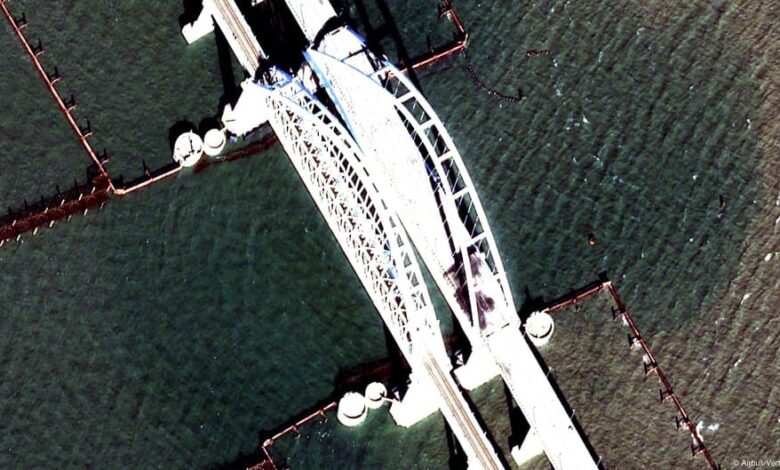
Aksyonov, speaking via the messaging platform Telegram, confirmed that the attack impacted the bridge but did not specify the exact nature of the damage in his immediate statement. He noted that the damage is “currently being assessed,” a statement that reflects the ongoing uncertainty regarding the structural integrity of the 19-kilometer-long crossing. The bridge supports a dual-purpose corridor: a four-lane roadway and a heavy rail line. Both components are vital for the logistical sustainment of Russian military forces stationed in southern Ukraine.
According to the German press agency DPA, the latest strike appears to have specifically impacted rail traffic. This follows a significant escalation earlier in the week. On Tuesday, Ukraine carried out a major combined attack utilizing both missiles and drones. Ukrainian intelligence authorities, specifically the Security Service of Ukraine (SBU), claimed that the steel arch of the 19-kilometer-long road section was destroyed, stating that the “road span beneath it has been completely destroyed.” This previous assessment suggests that the road portion of the bridge may already be out of service, leaving the rail line as the primary, and now potentially compromised, artery for military logistics.
The Crimean Bridge is not merely a logistical route; it is a potent political symbol of Russia’s 2014 annexation of Crimea. Its status as the only permanent fixed link between the peninsula and the Russian mainland makes it a high-value target for Kyiv, which seeks to degrade Moscow’s ability to reinforce and resupply troops in occupied territories. The repeated targeting of the bridge underscores the strategic priority Kyiv places on disrupting Russian supply lines in the Donbas and southern fronts.
The timing of this latest attack is strategically conspicuous. It occurred just hours before an unprecedented diplomatic event: a trilateral meeting between Russian President Vladimir Putin, US President Donald Trump, and Chinese President Xi Jinping. This gathering is scheduled to take place on the sidelines of the Asia-Pacific Economic Cooperation (APEC) summit in China. The coincidence of a major infrastructure strike with high-level diplomatic negotiations highlights the intersection of military pressure and diplomatic maneuvering in the current conflict posture.
From an operational perspective, the repeated attacks reveal the vulnerability of long-range, fixed infrastructure to modern precision munitions. The bridge’s length and its exposure to air and sea approaches make it a challenging but persistent target. While Russian authorities have previously claimed to have strengthened the bridge’s defenses, the success of three separate attacks in a single week suggests that existing air defense and counter-drone measures are being saturated or bypassed. The distinction between the road and rail sections is critical for understanding future Russian logistics. If the road span remains destroyed as per SBU claims, and the rail section is now damaged, the peninsula’s connection to mainland Russia could be severely restricted, forcing a reliance on slower, more vulnerable ferry services or air transport for heavy equipment.
The humanitarian and economic implications of such infrastructure damage are significant for the civilian population of Crimea, which relies on the bridge for daily commerce and travel. The suspension of traffic, even if temporary, disrupts the flow of goods and people, potentially leading to supply shortages and economic strain in the occupied region. Furthermore, the damage to the rail line could impact the broader Russian rail network, which is a critical component of the country’s industrial and military logistics.
As emergency services work to assess the damage, the focus will likely shift to the structural repair timeline. Rebuilding or reinforcing a major steel arch bridge in a conflict zone is a complex engineering challenge, particularly if the damage is extensive. The Russian government is expected to issue a formal assessment of the damage and its impact on military operations in the coming days. The diplomatic context of the upcoming APEC summit adds another layer of complexity, as any significant degradation of the bridge could influence the tone and substance of the high-level talks between Putin, Trump, and Xi.
The incident raises unresolved questions about the current operational status of the bridge’s rail section. If the rail line is indeed impaired, how will Russia maintain the flow of military equipment to the front lines in southern Ukraine? Will the attacks continue, or will the focus shift to other logistical nodes? The coming days will provide clarity on both the physical state of the bridge and the strategic calculations of the warring parties as they navigate the interplay between military action and diplomatic engagement.