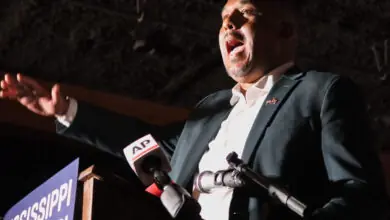
The legal proceedings against Lissu represent a pivotal moment in the governance landscape under President Samia Suluhu Hassan. Lissu’s political journey has been marked by periods of exile and subsequent return, a trajectory that initially signaled a thaw in political relations. He had previously gone into exile before returning to Tanzania in 2023, a move that followed President Samia’s decision to lift a ban on opposition political rallies. At that time, his return was widely interpreted as a sign of renewed political openness, a departure from the years of strict restrictions imposed under the late President John Magufuli, who died in office in 2021.
However, the political climate has since shifted markedly. As the country approaches the 2025 election, the cooperative atmosphere that characterized Lissu’s initial return has given way to heightened friction. Lissu assumed the position of national chairman of the Chadema party in January 2025, a role in which he has intensified his demands for electoral reforms. These demands have placed him in direct conflict with the administration, leading to the charges that resulted in his recent detention and trial. The conviction for inciting unrest is viewed by many observers as a signal that the space for opposition activity is narrowing, thereby deepening concerns about the state of democracy in Tanzania.

The institutional context of the case highlights the mechanisms through which the state is managing political dissent. While the specific details of the trial process are not fully elaborated in the available records, the outcome demonstrates the application of criminal law to political conduct. The acquittal on treason charges distinguishes the legal threshold between serious state security threats and acts of political agitation. Yet, the guilty verdict on inciting unrest suggests that the authorities are willing to prosecute opposition leaders under statutes that may be interpreted broadly to curb perceived threats to public order.
Human rights organizations have reacted strongly to the legal developments and the broader political environment. Last week, Amnesty International accused the government of continuing its crackdown following the election, alleging that the state is “weaponising counterterrorism laws to silence critics and instil fear.” This accusation points to a pattern of governance where security legislation is deployed against political opponents, a practice that raises significant questions about the rule of law and the protection of civil liberties. The Tanzanian authorities did not respond to a request for comment regarding these allegations or the specific charges against Lissu.
The political significance of Lissu’s conviction extends beyond his individual case to the broader dynamics of Tanzanian politics. President Samia’s administration has faced scrutiny for its handling of opposition activities, with previous reports detailing how police crushed election protests with lethal force. The current situation appears to be an extension of this trend, where the “aura of stability” associated with the country is maintained through the suppression of dissent. For the public, the case serves as a stark reminder of the risks associated with political opposition, potentially chilling the political discourse necessary for a healthy democracy.
It is important to distinguish between the verified facts of the trial and the political interpretations surrounding it. While the court has formally convicted Lissu of inciting unrest and acquitted him of treason, the motive behind the prosecution remains a subject of debate. Lissu’s claim that the charges are politically motivated is a political assertion that cannot be independently verified through the provided facts, but it aligns with the testimony of rights groups who view the legal action as part of a broader strategy to silence critics. Conversely, the government’s silence on the matter leaves a gap in the official narrative, allowing the opposition’s narrative to resonate more strongly in the absence of a state rebuttal.
The upcoming 2025 elections will be the next major test for Tanzanian politics. Lissu’s status as a convicted figure and former detainee complicates his role as Chadema’s national chairman, yet his prominence ensures that his case remains a central issue in the electoral debate. The tension between the government’s desire for stability and the opposition’s demand for electoral reforms creates an unresolved political landscape. As the election approaches, the interplay between legal consequences for opposition leaders and the potential for renewed political violence or protest will be closely watched. The conviction of Lissu stands as a symbol of the current political climate, where the boundaries of acceptable political opposition are being strictly defined by the state.