
The move comes amid a governance vacuum at the firm. Fortune reports that Nvidia currently has no board chair and lacks a clear succession plan. D.A. Davidson analyst Gil Luria noted that these circumstances would accelerate a transition for which the company is unprepared. Huang has led Nvidia for 33 years since co-founding it in 1993. Under his leadership, fiscal 2026 revenue reached $215.9 billion, a 65% increase. However, the August earnings call revealed a heavy reliance on Huang, who answered every substantive analyst question while CFO Colette Kress was the only other executive present.
The impetus for the board’s action appears linked to personal conduct and national security concerns. On Nov. 8, Huang acknowledged being unfaithful to his wife. The board opened an investigation, stating it has no reason to believe national security or company secrets were compromised. However, The New York Times reported that unnamed U.S. intelligence officials deemed the woman involved a Chinese spy, a claim China has called unfounded. The SF Standard noted that the Times also described a second, unconfirmed relationship that Huang has not addressed. A Blind survey cited by 24/7 Wall St. indicated that 88% of 232 Nvidia employees want Huang to stay, creating tension between internal loyalty and board strategy.

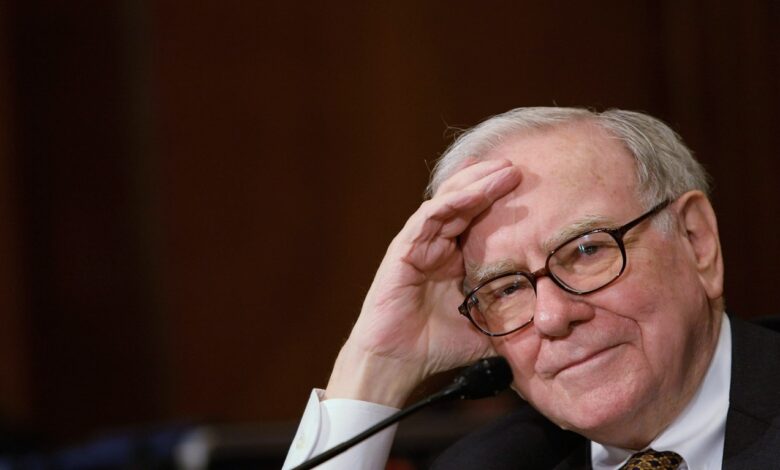
Investors are looking to historical precedents for guidance on how the board should proceed. The source material cites Warren Buffett’s 1991 takeover of Salomon Brothers after a regulatory scandal. Buffett, who served as interim chairman, emphasized that while he could forgive financial losses, he would be ruthless about protecting the firm’s reputation. He ordered full cooperation with regulators and brought in a monitor, leading to a $290 million settlement and significant staff reductions. The key lesson for Nvidia is the importance of speed, disclosure, and identifying a credible successor.
Modern examples further illustrate the impact of leadership transitions. When Intel CEO Brian Krzanich resigned in June 2018 without a successor ready, the stock fell 2.4% that day and trailed the S&P 500 by about 17 points a year later. In contrast, McDonald’s fired CEO Steve Easterbrook on Nov. 3, 2019, and named a successor the same day; its shares fell 2.7% the next day but beat the S&P 500 a year later. These cases suggest that the speed and clarity of the transition significantly influence market performance.
Nvidia’s financial outlook remains strong despite the leadership question. In an August 8-K filing, the company disclosed supply obligations of $279.0 billion, primarily for memory for its Vera Rubin product. It also guided third-quarter fiscal 2027 revenue to $108.0 billion, plus or minus 2%. Over the past 10 years, Nvidia stock has climbed 7,949.51%. Investors are now watching to see if the board follows the “Salomon playbook” of rapid, transparent action or if the lack of a prepared succession plan will mimic Intel’s slower, more volatile response. The next critical step is determining who will be named and how openly the board communicates its decision.




One Comment