
For investors, the upcoming earnings report is not merely a standard quarterly update; it is the first major financial disclosure under the stewardship of Colette Kress, Nvidia’s Chief Financial Officer, who has been named interim CEO. Kress, who has served as CFO for 13 years and has long co-managed the company’s earnings calls, is tasked with projecting continuity. Michael Monaghan, partner and portfolio manager for the Founders 100 ETF, noted that the expectation is for Kress to run the call as a “normal earnings call,” focusing on the fact that a team of 60 direct reports to Huang remains in place to ensure operational execution continues uninterrupted. “It just needs to be steady-eddy down the fairway,” Monaghan said, emphasizing that over-promotion or excessive commentary on the leadership change could spook the market.
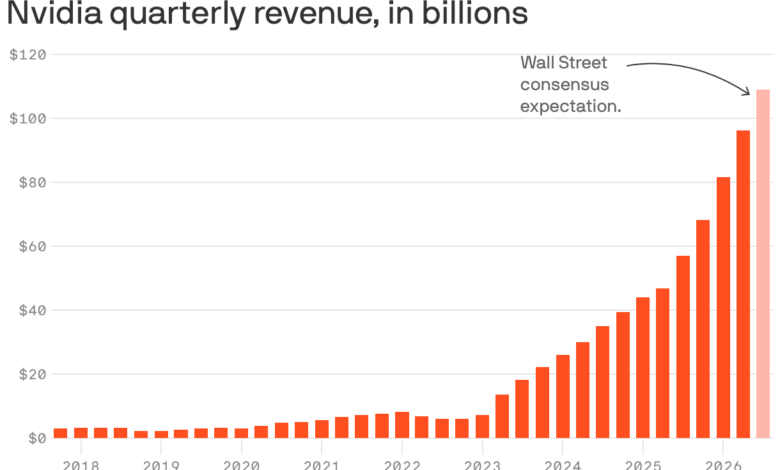
The financial stakes are high. According to data from FactSet and cited by SCMP, Wall Street expects Nvidia to post financial third-quarter revenue of approximately US$108.9 billion, representing a 91% increase from the same period in the previous year. Adjusted earnings are expected to be around US$2.47 per share. Dan Ives, senior managing director at Yorkville Ives, stated that he expects “robust business metrics” and demand indicators that have accelerated since the last quarter. The consensus among analysts is that Kress will highlight that operations, strategy, and execution remain on track, deliberately minimizing discussion of Huang to avoid amplifying the legal and political uncertainties surrounding his departure.

Beyond the immediate revenue figures, investors are scrutinizing the structural changes in how Nvidia engages with the broader AI ecosystem. Under Huang’s leadership, Nvidia became more than a chip vendor; it became a primary source of financial backing for the AI industry. The company has engaged in what some critics term “circular finance,” buying equity, making co-investments, and backstopping debt for partners ranging from neocloud providers like CoreWeave to fiber-optic cable providers like Lumentum. Notably, Nvidia struck a deal to provide a backstop for an OpenAI data center in Ohio and is planning to invest approximately $10 billion into Anthropic following its IPO, according to the latter’s prospectus. The central question for Tuesday’s call is whether Kress intends to maintain this aggressive strategy of using Nvidia’s resources to bolster the sector, or if the new leadership will step back from these unorthodox arrangements.
Compounding the internal leadership transition is the external pressure stemming from geopolitical and regulatory scrutiny. The circumstances of Huang’s resignation, which include allegations involving a woman suspected of being a Chinese intelligence asset, have raised concerns about potential shifts in global sales patterns. Analysts are warning that heightened scrutiny could lead to enhanced export restrictions. UBS analysts wrote that increased scrutiny on sales to geographies such as Singapore and Malaysia could, in a worst-case scenario, cut up to 10% of Nvidia’s revenue. Similarly, analysts at BofA Securities noted that greater scrutiny of Asia shipments that indirectly serve Chinese customers via cloud services, or more conservative funding allocations to U.S. emerging and neocloud customers, could impact the company’s market share.
HSBC analysts, who downgraded the stock to “hold” from “buy” last week, added that while the findings of the independent probe and Congressional scrutiny remain to be seen, one possible outcome is tighter export controls. They highlighted that in the past six quarters, 11% of Nvidia’s total revenue came from countries excluding the U.S. and Taiwan, making the company vulnerable to such geopolitical shifts. The stock itself has already reflected this volatility, with Nvidia shares bouncing ahead of the earnings report on Tuesday as broader market indices, including the Dow Jones Industrial Average, traded lower on other economic data such as strong October retail sales.
As the market awaits the numbers, the narrative has moved from the charisma of a visionary founder to the disciplined execution of a financial team. Kress must navigate a delicate balance: confirming the robustness of the AI chip demand that drives the sector while signaling that the company is insulated from the political fallout of its former CEO’s departure. The next few days will determine whether investors view the leadership change as a manageable transition or a precursor to significant strategic and regulatory headwinds.




One Comment