

Alibaba’s recent financial results highlight the scale of this transformation. The company topped revenue estimates, a performance attributed largely to its AI cloud division, where revenue rose by 45%. This growth signal is critical for a firm seeking to maintain relevance in the global tech sector. However, the engine driving this revenue is expensive. Capital spending for the last quarter jumped 75% to reach $10 billion. This sharp increase in expenditure underscores the capital-intensive nature of AI development, where upfront costs in data centers, chip procurement, and software development must be weighed against future returns. The market’s reaction, evidenced by the stock’s year-over-year decline, suggests that investors are currently prioritizing near-term profitability and return on invested capital over long-term growth potential.
The implications of this spending strategy extend beyond Alibaba’s balance sheet, touching on the broader dynamics of the US-China tech trade. Recent data indicates that US-approved sales of AI chips to Chinese tech giants, including Alibaba and Tencent, have been a factor in the industry’s supply chain. While access to these components is essential for maintaining AI capabilities, the regulatory environment remains a variable. Alibaba’s CEO has warned of potential impacts from new US chip rules, signaling that even approved sales are subject to shifting policy landscapes. This uncertainty contributes to the risk premium applied to the stock, as investors account for the possibility that supply constraints or regulatory changes could disrupt the very AI cloud growth that is currently propelling revenue.
Investor sentiment has been particularly polarized. Michael Burry, known for his value-oriented approach, has offered a pointed assessment of Alibaba’s current valuation. In comments to his Substack followers, reported by Stocktwits on November 18, 2026, Burry stated he would buy BABA “in the 60s.” This target price is significantly below the current $87.00 trading level, implying that Burry believes the stock must fall by another substantial margin to represent a compelling opportunity. Burry’s stance is rooted in his earlier decision to move his entire Alibaba position into JD.com (NASDAQ: JD) in August. At that time, he expressed concerns that Alibaba’s return on invested capital would continue to decline. His decision was further solidified when Alibaba announced plans to issue shares to finance its AI investments, a move that Burry viewed as dilutive to shareholder value.

The contrast between Burry’s caution and the actions of other market participants highlights the uncertainty surrounding the stock’s future trajectory. While Burry seeks a steep discount, reflecting his view that the current price does not adequately compensate for the risks associated with heavy capital expenditure and potential regulatory hurdles, other funds continue to buy. This divergence suggests that while some investors are focused on immediate capital efficiency, others are betting on the long-term dominance of Alibaba’s AI cloud services. The 45% growth in AI cloud revenue serves as the counter-argument to concerns over profitability, suggesting that the heavy spending is yielding tangible, albeit costly, results.
For households and consumers, the direct impact is less visible than in sectors like retail or energy, but the broader economic implications are present. The race to build AI infrastructure requires massive industrial investment, which can influence wider industrial production and employment in the tech sector. However, for the average consumer, the primary effect is indirect, manifesting through the potential for more advanced digital services and cloud computing capabilities that Alibaba provides to businesses. The cost of these advancements is borne by the company in the form of increased capital expenditures, which in turn affects the company’s ability to return cash to shareholders in the short term.
The situation also raises questions about the sustainability of the current spending model. A 75% jump in capital spending to $10 billion in a single quarter is a significant commitment. If the AI cloud revenue growth rate slows, or if regulatory barriers prevent the full utilization of AI chips, the return on this investment could be delayed or diminished. This risk is what Burry and other value investors are pricing into their potential entry points. The 45% drop in the stock price over the last year can be seen as the market adjusting to these risks, moving away from the high-growth expectations of recent years toward a more cautious assessment of profitability.

Looking ahead, the key metric to watch is the trajectory of Alibaba’s return on invested capital. If the company can demonstrate that its AI cloud growth leads to increasing efficiency and profit margins, the current valuation may be challenged. Conversely, if capital spending continues to outpace revenue growth, or if regulatory constraints limit the company’s ability to deploy its AI infrastructure, the stock may remain under pressure. The next policy decision from US regulators regarding chip exports, as well as Alibaba’s own guidance on future capital expenditures, will be critical in determining whether the stock can stabilize or if it will face further downside.
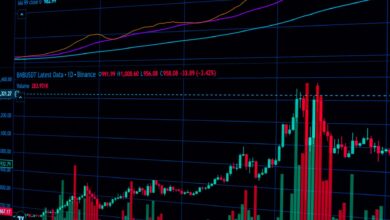
Returning to the trading floor, the $87.00 price tag stands as a testament to this ongoing debate. For investors like Burry, the price is still too high, reflecting a belief that the market has not fully accounted for the dilutive effects of new share issuance and the uncertainty of AI profitability. For those viewing Alibaba’s 45% AI cloud revenue growth as a sign of future dominance, the current price may represent an opportunity. The resolution of this tension will depend on whether Alibaba can convert its massive capital investments into sustainable, profitable growth, a challenge that will define its place in the global economy for years to come.




One Comment