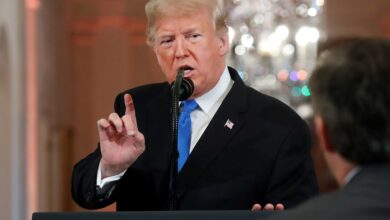

The statement marks a significant escalation in US rhetoric regarding the ongoing conflict, moving beyond military aid and diplomatic pressure to explicitly questioning the fitness of Ukraine’s current leadership for the task of ending the war. Trump argued that President Volodymyr Zelenskyy “could have stopped this war many, many times but chooses not to,” framing the continuation of the conflict not as a result of battlefield conditions or Russian aggression, but as a deliberate choice by Kyiv’s leadership.
These comments come in the immediate wake of a volatile diplomatic episode concerning energy sanctions. On October 9, Trump announced an “extremely successful conversation” with Russian President Vladimir Putin, resulting in an agreement to lift US sanctions on Russian diesel fuel. The move drew immediate and fierce criticism from Kyiv. President Zelenskyy labeled the lifting of sanctions an “absolutely terrible step,” describing it as a “birthday present to Putin” that would provide the aggressor with billions of dollars to continue the war.
Zelenskyy further accused the US of using the Ukrainian negotiation team in Washington as a “smokescreen” while behind-the-scenes deals on fuel supplies were being finalized with Moscow. The diplomatic fallout was swift. Following the announcement of the US-Russia fuel agreement, multilateral talks in Miami involving representatives from the US, Ukraine, European countries, and NATO regarding de-escalation and ending the war ended prematurely. By October 10, Ukrainian presidential communications advisor Dmytro Lytvyn confirmed that the Ukrainian delegation was already on its way home, signaling a breakdown in the collaborative diplomatic track.
Trump’s justification for criticizing Zelenskyy centers on economic and strategic pressures he perceives from Ukrainian military actions. “We said: ‘You can do anything to Russia, but don’t touch the refineries, because it’s a global problem,'” Trump said. He alleged that Zelenskyy aims to “create problems for the world,” specifically targeting diesel supply chains that affect US farmers, as Russia supplies a significant portion of the global diesel market. “He is hitting the refineries. It’s better for him to stop,” Trump added, linking Ukrainian strikes on energy infrastructure directly to domestic US agricultural concerns.
The Russian position remains firm and contradictory to the notion of a quick settlement. Yuriy Ushakov, an aide to the Russian ruler, stated that during a phone call with Trump, Putin rejected the possibility of peace negotiations. Ushakov emphasized that Russia would continue hostilities until it achieves “all of its goals,” suggesting that Moscow does not view the current moment as one for compromise, regardless of US pressure on its Ukrainian counterpart.
This development highlights a deepening divergence in objectives among the key actors in the conflict. The US administration appears to be prioritizing the cessation of global economic disruptions, particularly in the energy sector, over the broader geopolitical alignment of the war’s outcome. Kyiv, conversely, views any concession to Moscow, such as the lifting of fuel sanctions, as a direct threat to its security and survival, arguing that it funds Russian military operations. The clash between these perspectives has fractured the previously coordinated diplomatic efforts, leaving the path to a negotiated end to the war obscured by mutual accusations of bad faith and divergent strategic priorities.
As the Ukrainian delegation returns to Kyiv and the diplomatic signals sour, the focus shifts back to the battlefield and the internal political dynamics of Ukraine. Trump’s call for a new leader suggests a belief that the current diplomatic impasse is rooted in personal or political reluctance rather than structural impossibility. However, with Moscow stating it will fight until its goals are met and Kyiv condemning US actions as aiding the enemy, the prospect of a swift resolution remains distant, leaving the conflict in a state of heightened uncertainty and diplomatic isolation for Ukraine’s immediate partners.