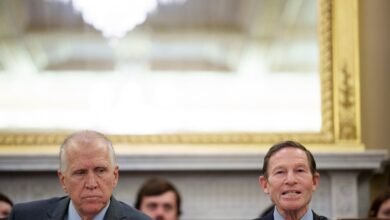
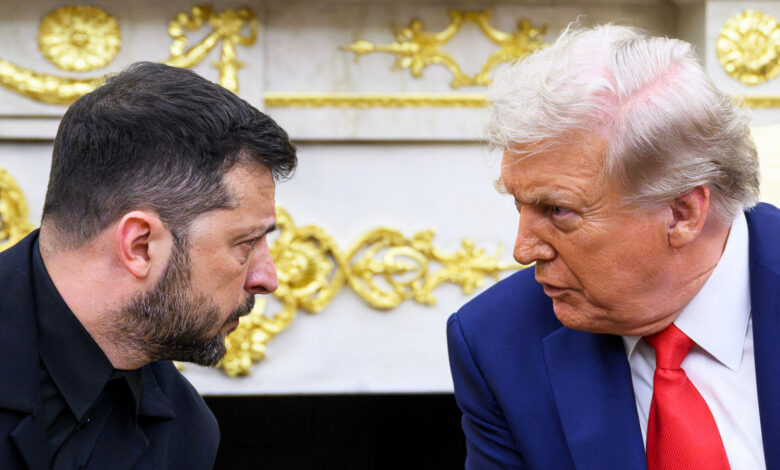
The atmosphere surrounding the talks was charged by public disputes that had intensified over the preceding days. On Monday, Zelenskyy addressed a bipartisan Congressional delegation, stating that he believed “some political decision has been made to slow down support for us.” He cited specific operational gaps, including the withholding of early warnings for Russian ballistic missile strikes and the imposition of speed restrictions on Starshield, the military-grade version of SpaceX’s satellite internet service. These claims were met with sharp rebuttals from the White House. Secretary of State Marco Rubio, speaking from India, denied that there had been a “deliberate political directive to harm Ukraine,” calling Zelenskyy’s suggestion that Ukrainians were dying due to U.S. withdrawal “scandalous.” Trump, for his part, dismissed the criticism, telling reporters that Zelenskyy “doesn’t know what he’s talking about” and renewing his longstanding call for Ukraine to appoint a new leader to negotiate a peace deal.
The friction extends beyond rhetoric into the tangible mechanics of Ukraine’s defense. Zelenskyy has pleaded with Washington for the delivery of Patriot missile interceptors, warning that Ukraine has nearly run out of the American-made systems required to counter Russia’s ballistic missile attacks. He noted that the Pentagon is delaying the transfer of interceptors that other nations have purchased for Ukraine. Simultaneously, the restrictions on Starshield have hampered battlefield operations, including drone strikes. Elon Musk, CEO of SpaceX, had previously shifted blame for these slowdowns to the U.S. government, stating that the administration is “ultimately” responsible. In response to Zelenskyy’s accusations, Treasury Secretary Scott Bessent urged the Ukrainian president to be “very careful” in his statements, while Rubio maintained that the U.S. was not responsible for the gaps in support.
Amidst these diplomatic tensions, the physical reality of the war continued to escalate. On Tuesday, Russia launched a new wave of missile and drone attacks across Ukraine, killing at least seven people. In the Obukhiv district, three people were killed and six wounded when warehouses were damaged. The Bucha district suffered significant casualties, with one woman killed and 21 people wounded, eight of them children, as hundreds of buildings were damaged. A Russian drone also struck a highway connecting Kyiv to the Black Sea port of Odesa, killing three people and injuring four when two vehicles caught fire.
The strategic context for these events is complicated by recent U.S. actions that have been interpreted by allies as a shift in policy toward Moscow. President Trump recently waived sanctions against Russia and agreed to a diesel deal, a move described as an apparent bid to lower fuel prices ahead of the Midterm elections. These actions, coupled with Trump’s public statements downplaying the severity of Russian attacks—claiming “Russia, frankly, has been fine on Ukraine”—have led members of Congress and U.S. allies to question the sincerity of American mediation efforts. Trump has also indicated he may meet with Russian President Vladimir Putin and Chinese President Xi Jinping to negotiate an end to the war, a process that could potentially exclude Zelenskyy.
For Ukraine, the stakes of the Oslo talks are immediate. Zelenskyy confirmed he had a “substantive conversation” with Rubio prior to the meeting, describing it as “constructive” and expressing gratitude for the Secretary’s “readiness to help.” However, he did not specify whether Rubio had committed to resolving the specific issues of interceptor delivery and intelligence sharing. The meeting represents a critical juncture: if the diplomatic channel fails to restore the flow of critical military assets and intelligence, Kyiv faces a defensive crisis on the eve of winter, while the U.S. risks further isolation from its European partners who remain committed to Ukraine’s sovereignty.
As the delegations worked through the agenda in Oslo, the unresolved tension between the two allies remained palpable. The next steps will likely hinge on whether the U.S. can reconcile its domestic political pressures with the operational realities of the battlefield, and whether Zelenskyy can secure the tangible assurances his government needs to withstand the ongoing Russian barrage.