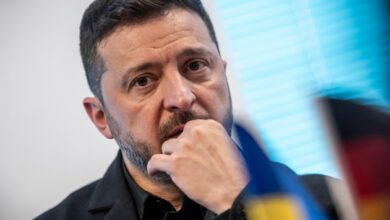
Following a video conference with regional leaders regarding the aftermath of recent Russian strikes and the state of energy supply, Zelenskyy identified Kyiv as having the “worst situation” among Ukrainian regions. He stated that people and companies in the capital are experiencing prolonged outages of electricity and water, creating serious challenges for daily life and economic activity. The President explicitly linked these failures to the city government’s non-fulfillment of decisions regarding preparation for the heating season and the ongoing Russian operation against Ukrainian energy infrastructure.
The economic and social impact of these outages has moved beyond mere inconvenience, sparking a direct confrontation between the central government and the local administration. On October 17, a protest action took place on Khreshchatyk, near the building of the Kyiv City State Administration, demanding the resignation of Mayor Vitali Klitschko. The demonstration highlighted the friction between the central authority, which oversees national energy resilience, and the local leadership responsible for municipal infrastructure readiness.
The political tension surrounding the energy crisis has intensified with conflicting narratives about the origins of the protest. While the rally was organized to press for the mayor’s removal, members of the “Udar” faction, led by Klitschko, urged citizens not to attend the gathering on October 17. Their warning cited security concerns, specifically the risk of a drone strike on a crowd of people. In response, Mayor Klitschko accused the central authorities of being the “masterminds” and “screenwriters” behind the action, suggesting the protest was orchestrated to target him personally.

Amidst this political dispute, the physical reality of the energy grid remains fragile. Zelenskyy reported that the government is ensuring additional resources to assist in the recovery. This includes the supply of equipment and the acceleration of repair works. Specific agreements have been reached with Germany and Spain for the provision of necessary generators, cables, and other critical equipment. These international supplies aim to bridge the gap left by damaged infrastructure and insufficient local reserves.
The crisis is not confined to Kyiv. During the same video conference, reports were presented on the situation in Dnipro, Kharkiv, and the Poltava, Cherkasy, Vinnytsia, Odesa, Zhytomyr, and Sumy regions. Representatives from both state and private energy companies were consulted on the need to mobilize additional repair crews to speed up restoration efforts. The widespread nature of the issues suggests a systemic strain on Ukraine’s energy sector, exacerbated by targeted attacks and seasonal demand.
Security measures have also been adjusted in response to the threat to energy infrastructure. Zelenskyy listened to reports from the Commander-in-Chief of the Armed Forces and the Commander of the Air Force regarding the use of combat aviation to shoot down “Shahed” drones. The military strategy now includes the use of cover groups for energy objects and infrastructure, as well as the deployment of mobile fire groups. Furthermore, preparations are underway for the additional supply of ammunition for F-16 fighter jets, with agreements already in place with international partners. These defensive measures are critical to protecting the remaining energy capacity from further degradation.
The immediate economic consequence of these outages is the disruption of both residential and commercial operations. Businesses in Kyiv face halted production and service delivery, while households struggle with the lack of heating and water during the onset of winter. The President’s assertion that the city failed to execute resilience plans points to a breakdown in the supply chain of preparedness, where logistical and administrative failures have compounded the physical damage caused by conflict.
As Ukraine prepares for the coldest months, the reliance on imported equipment from Germany and Spain underscores the vulnerability of the domestic energy sector. The next critical step involves the effective deployment of these resources and the resolution of the political impasse between Kyiv’s local and central authorities. Until the city’s infrastructure is stabilized and the administrative accountability is addressed, the energy crisis will remain a central driver of economic instability and social tension in the capital.