Defense Minister Antti Häkkänen stated that Finland takes the suspected territorial violation seriously and that investigations have been initiated by the Border Guard. The ministry noted that as the investigation progressed, it became apparent that three additional aircraft were involved in the breach beyond the one initially reported. This incident is believed to be the first confirmed infringement of Finnish airspace since August 2022 and the first since Finland’s accession to NATO in April 2023.
Operational Context and Aircraft Involved
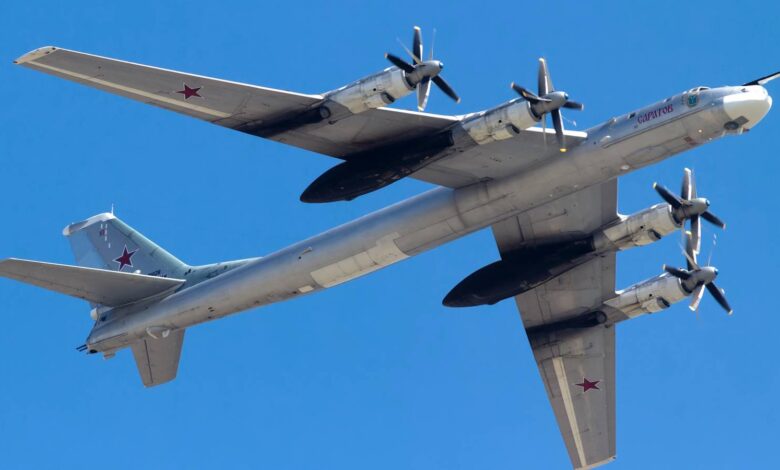
The aircraft involved in the breach included Tupolev Tu-95 strategic bombers and fighter jets. On the same day, Russian strategic bombers, including Tu-95MS and Tu-95M3 variants, were active across Europe, accompanied by Su-30SM, Su-27, and Su-33 fighter jets over the Barents, Norwegian, and Baltic Seas. These flights reportedly occurred without activated transponders or submitted flight plans. The Tu-95 is a quad-engine strategic bomber capable of deploying cruise missiles and performing maritime patrols, with more than 500 units produced between 1952 and 1993, many of which remain in service in the Russian Aerospace Forces.
Simultaneously, German-based Eurofighter Typhoon jets were scrambled to intercept two Su-27 fighters and an Il-20 electronic intelligence aircraft in the region. Finnish authorities described the period as one of “unusually intense Russian air activity” over the Baltic. The proximity of the Loviisa incident to Helsinki, located just 100 kilometers away, underscores the direct threat to Finnish sovereign territory.
Security Implications and Historical Context
Finland reversed decades of military neutrality to join NATO in response to Russia’s full-scale invasion of Ukraine in February 2022. Neighboring Sweden also joined the alliance, with its accession finalized earlier this year. Both countries cited the conflict in Ukraine as the primary driver for seeking collective security guarantees. Since the Winter War of the 1940s, Finland has maintained a posture of preparedness for potential conflict with Russia, including maintaining a dispersed air force capability to survive initial strikes on major bases.
The Finnish air force currently operates a fleet of F/A-18 fighter jets, which are being progressively replaced by fifth-generation F-35 Lightning II aircraft. This modernization effort is part of a broader “total defense” policy designed to ensure operational resilience. Despite the airspace violation, Finnish officials have reaffirmed their support for Ukraine, stating that it remains unwavering for as long as Ukraine needs to fight for its freedom.
The incident also coincides with a series of GPS jamming attacks in the region that have affected nearly 1,600 aircraft flying in the vicinity this year. While the specific link between the jamming and the airspace breach has not been definitively established, the concurrent aggressive air activity highlights the deteriorating security environment in the Baltic states. The investigation into the June 10 breach is ongoing, with Finnish authorities monitoring subsequent Russian air movements closely.