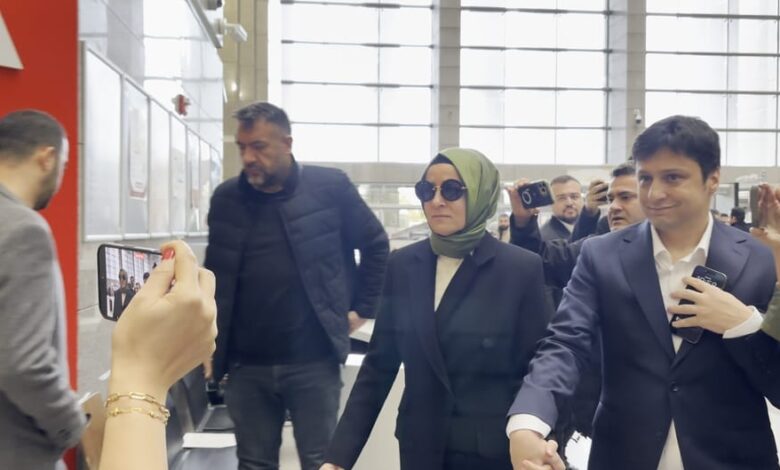
The legal action against Kaya is part of a broader probe into a multibillion-dollar investment fund crisis that erupted in September, which officials have described as a “Ponzi-like” scheme. The scandal has triggered a stock market crisis that led the financial regulator to dissolve 131 funds, affecting the savings of nearly half a million investors. This week, Justice Minister Akin Gurlek stated that more than 430 people are under investigation for “suspected market manipulation and insider trading,” with 112 individuals already arrested. The inclusion of Kaya, a senior figure in the ruling party, underscores the depth of the investigation and its potential impact on Turkey’s political landscape.
The political fallout began in earnest on September 26, when Kaya resigned from her position as AKP deputy chair. Her departure followed allegations by the Yeni Party, the main opposition force, that she and her husband, Ilyas Kaya, had profited immensely from the crisis. Yeni Party Chairman Özdemir Özer, speaking in parliament on Tuesday, claimed that Erdogan was ultimately responsible for the scandal. The opposition argues that Kaya and her spouse utilized insider information to manipulate the market, a claim the couple has denied. Kaya stated at the time of her resignation that she was taking “political responsibility” to ensure the investigation could proceed “independently” and “impartially,” while her legal team maintained their innocence.

Specific financial allegations suggest a massive transfer of wealth. Yeni Party spokesman Gokhan Gunaydin detailed that Kaya allegedly invested 63 million lira ($1.3 million) in shares in April and sold them in September, netting a profit of around 1.3 billion lira ($26.5 million). He further claimed her husband invested 100 million lira and recovered 826 million lira, resulting in a collective alleged profit of nearly 2.2 billion lira ($45 million). The prosecutor’s office accused Kaya of possessing undisclosed information likely to influence the price or value of capital market instruments and noted her contacts with Emre Tezmen, a former executive of one of the asset managers at the center of the turmoil. While the couple denied wrongdoing, they reportedly transferred some of the disputed funds to an account designated by banking regulators, and prosecutors have moved to freeze all assets of Kaya and her husband, Ilyas Kaya, as part of the ongoing inquiry.
The legal proceedings against Kaya have heightened the political stakes in Turkey. The Yeni Party leader, Özdemir Özer, has characterized the scandal as “the robbery of the century” and described Kaya’s case as “the tip of the iceberg,” pledging to unveil more names involved in the scheme. This rhetoric has intensified the conflict between the ruling AKP and the opposition, particularly as the crisis is expected to dominate the political agenda upon the reopening of parliament after the summer recess. For the AKP, the detention of a former senior official presents a challenge in maintaining public confidence, while the opposition views the arrests as evidence of systemic corruption within the governing structures.

The mechanics of this scandal reveal significant vulnerabilities in Turkey’s capital markets. The regulator’s decision to dissolve 131 funds indicates a widespread collapse of trust in these investment vehicles. The involvement of high-profile political figures raises questions about the intersection of political power and financial regulation. As the investigation continues, the focus remains on whether the judicial process will lead to broader accountability or if it will be contained to specific individuals. The uncertainty surrounding the final scope of the probe and the potential for further arrests leaves the political landscape in a state of flux, with both the government and opposition positioning themselves to capitalize on the narrative as the trial phase approaches.
Kaya’s detention represents a pivotal moment in Turkey’s response to the financial crisis. While her husband was released under judicial measures banning travel abroad, her continued custody highlights the severity with which prosecutors are treating alleged violations of capital markets law. The next phase of this development will likely involve further evidence gathering and the potential indictment of additional figures, as the Istanbul court moves to determine the extent of the organized criminal network alleged to have manipulated the market. The outcome of these proceedings will not only affect the careers of those involved but also shape the public’s perception of the integrity of Turkey’s political and financial institutions.