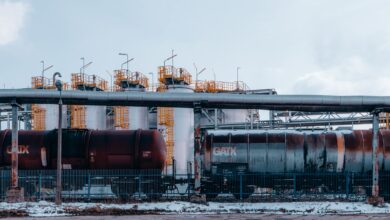
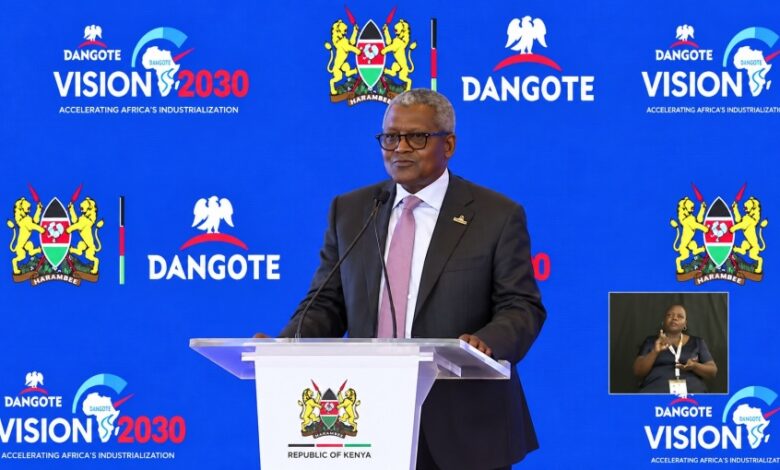
Dangote disclosed the investment on Tuesday during an event in London, describing the purchase as a critical step in securing the distribution network for petroleum products. “We bought 25% of their pipeline network for the distribution of petroleum products,” Dangote stated. While he did not specify the exact legal entity through which the stake was acquired, the move represents a substantial expansion of his energy footprint in East Africa, following the recent groundbreaking of a massive refinery project in the region.
The acquisition is intrinsically linked to the proposed Lamu Refinery, a $16 billion project with a planned processing capacity of 700,000 barrels per day (bpd). Dangote broke ground on this facility last month, stating that the project is designed to reduce the region’s reliance on imported refined fuels and to shift the continent’s economic model from exporting raw materials to selling finished products. The refinery is expected to take 40 months to complete and is intended to supply fuel to Kenya, as well as regional markets including Uganda and Tanzania.
This investment follows the privatization of KPC, a state-owned entity that has been the backbone of Kenya’s fuel supply chain for decades. The government sold a 65% stake in KPC through an initial public offering (IPO), with trading commencing on the Nairobi Securities Exchange on March 10, 2026. President William Ruto formally opened trading in the shares, noting that the process had taken longer than initially planned. The IPO raised Ksh106 billion, with proceeds earmarked for the National Infrastructure Fund to finance commercially viable development projects.
However, the initial market uptake from private investors was low, prompting the government to intervene and retain a significant portion of the shares. It was from these state-held assets that Dangote purchased his 24.76% stake. This move effectively transfers a quarter of the country’s most critical energy logistics infrastructure to a private operator, aligning with Kenya’s broader strategy to attract private capital into key infrastructure assets while generating revenue for public development.
For Dangote, the pipeline stake serves as a vertical integration strategy. His existing empire includes a 650,000 bpd refinery near Lagos, Nigeria, as well as operations in fertilizers, cement, and sugar. By controlling a significant portion of the Kenyan pipeline network, Dangote Industries secures a direct route to transport the output of the future Lamu refinery to domestic and export markets. The Lamu project is part of the larger Lamu Port-South Sudan-Ethiopia (LAPSSET) Transport Corridor, a multi-billion dollar infrastructure initiative that includes roads, railways, pipelines, airports, and power infrastructure.
The timing of the announcement is significant, occurring just weeks after the Lamu refinery’s foundation stone was laid. Dangote has previously stated that such projects are essential for Africa’s industrial journey, aiming to create value-added industries rather than remaining a raw material exporter. The proposed refinery in Lamu is designed to match the capacity of his existing operations in Nigeria, suggesting an ambition to replicate his industrial model in East Africa.

While the pipeline network is operational and currently transporting fuel, the refinery remains in the early stages of construction. The 40-month timeline for the refinery implies that the facility is not expected to become operational until late 2027 or early 2028. In the interim, KPC continues to operate under a mixed-ownership structure, with the government retaining a controlling interest alongside the newly introduced private stakeholder. This hybrid model aims to balance public service obligations with the efficiency and capital injection typically brought by private ownership.
The transaction underscores a broader trend in African energy markets where private sector participation is becoming central to infrastructure development. By acquiring a stake in KPC, Dangote Industries is not only investing in a revenue-generating asset but also positioning itself to dominate the regional fuel supply chain. The success of the Lamu refinery will depend heavily on the reliability of this pipeline network, making the acquisition a critical component of the project’s overall viability.
As Kenya navigates its transition from state-dominated energy infrastructure to a privatized model, the Dangote investment serves as a test case for the sustainability of such partnerships. The next major milestone for the sector will be the progress on the Lamu refinery construction, with the first phase of completion expected in the coming years, and the continued performance of KPC under its new mixed-ownership structure.