
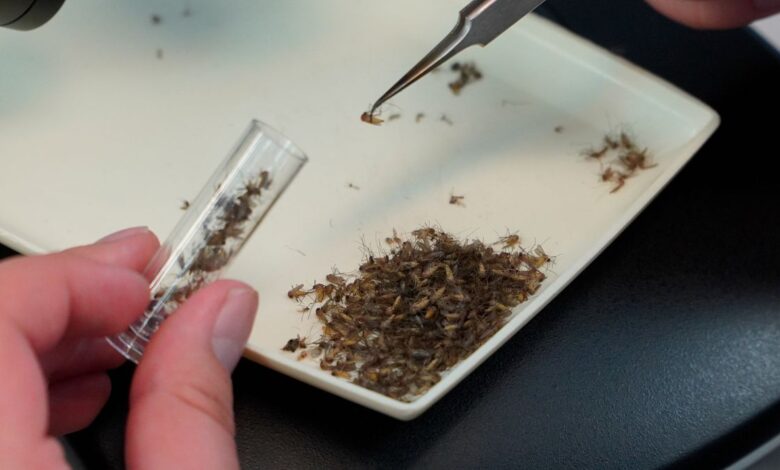
Amidst this rising activity, scientific efforts are underway to better understand and predict the virus’s spread, particularly in countries where cases have been more sporadic. In Germany, early-career researchers have focused on modeling the potential transmission corridors of the virus from 2019 to 2025. This modeling work aims to incorporate vertical transmission—the direct passage of the virus from an infected female mosquito to her offspring—into mechanistic frameworks. By accounting for this less common but biologically important route of transmission, scientists hope to create more accurate predictions for how the virus might persist and spread in temperate climates.
Modeling Vertical Transmission in Germany
Traditional models of vector-borne disease often focus primarily on horizontal transmission, where mosquitoes acquire the virus from infected hosts and transmit it to new hosts during subsequent bites. However, vertical transmission can allow the virus to overwinter within mosquito populations, potentially enabling the disease to establish itself in new geographic areas or persist during seasons when horizontal transmission is low. The recent modeling efforts in Germany seek to quantify this risk, providing data that can inform optimized control strategies. These strategies may include targeted mosquito surveillance, habitat management, or public awareness campaigns tailored to specific high-risk corridors identified by the models.

The timeframe of 2019 to 2025 suggests a long-term perspective, allowing researchers to assess trends and the potential impact of environmental changes on vector populations. By understanding the dynamics of vertical transmission, public health authorities can better prepare for scenarios where WNV might become more endemic in regions previously considered lower risk. This is particularly relevant as climate change continues to influence the geographic range and seasonal activity of mosquito vectors across Europe.
Public Health Implications
For the general public, the rise in WNV activity in Southern Europe serves as a reminder of the importance of personal protection measures against mosquito bites, especially during peak transmission seasons. Health authorities in Greece and Italy are likely emphasizing these precautions, which typically include using insect repellent, wearing long-sleeved clothing, and eliminating standing water where mosquitoes breed. While the situation in Germany is currently less severe than in the Mediterranean countries, the ongoing modeling work indicates that the risk is not static. The identification of specific transmission corridors allows for more precise and cost-effective intervention efforts, rather than broad, less targeted approaches.
It is important to note that while WNV can cause serious neurological disease in a small percentage of infected individuals, most people who contract the virus experience no symptoms or only mild, flu-like illness. However, the increasing frequency of outbreaks across Europe underscores the need for robust surveillance systems and rapid response capabilities. The integration of mechanistic modeling, such as the studies conducted by early-career researchers in Germany, represents a shift towards more data-driven and proactive public health management.

The distinction between the current surge in Southern Europe and the modeling efforts in Central Europe highlights the different stages of WNV management. In Greece and Italy, the focus is on immediate case management and containment of the active surge. In Germany, the focus is on long-term preparedness and understanding the fundamental biological mechanisms that could drive future spread. Both approaches are essential for a comprehensive European response to the virus.
As the season progresses, health agencies will continue to monitor WNV activity closely. The results of the German modeling studies may provide critical insights into whether vertical transmission plays a significant role in the virus’s potential expansion into new areas. Until further data is available, the primary recommendation remains vigilance and adherence to standard mosquito bite prevention guidelines, particularly for individuals traveling to or residing in areas with known high activity.